
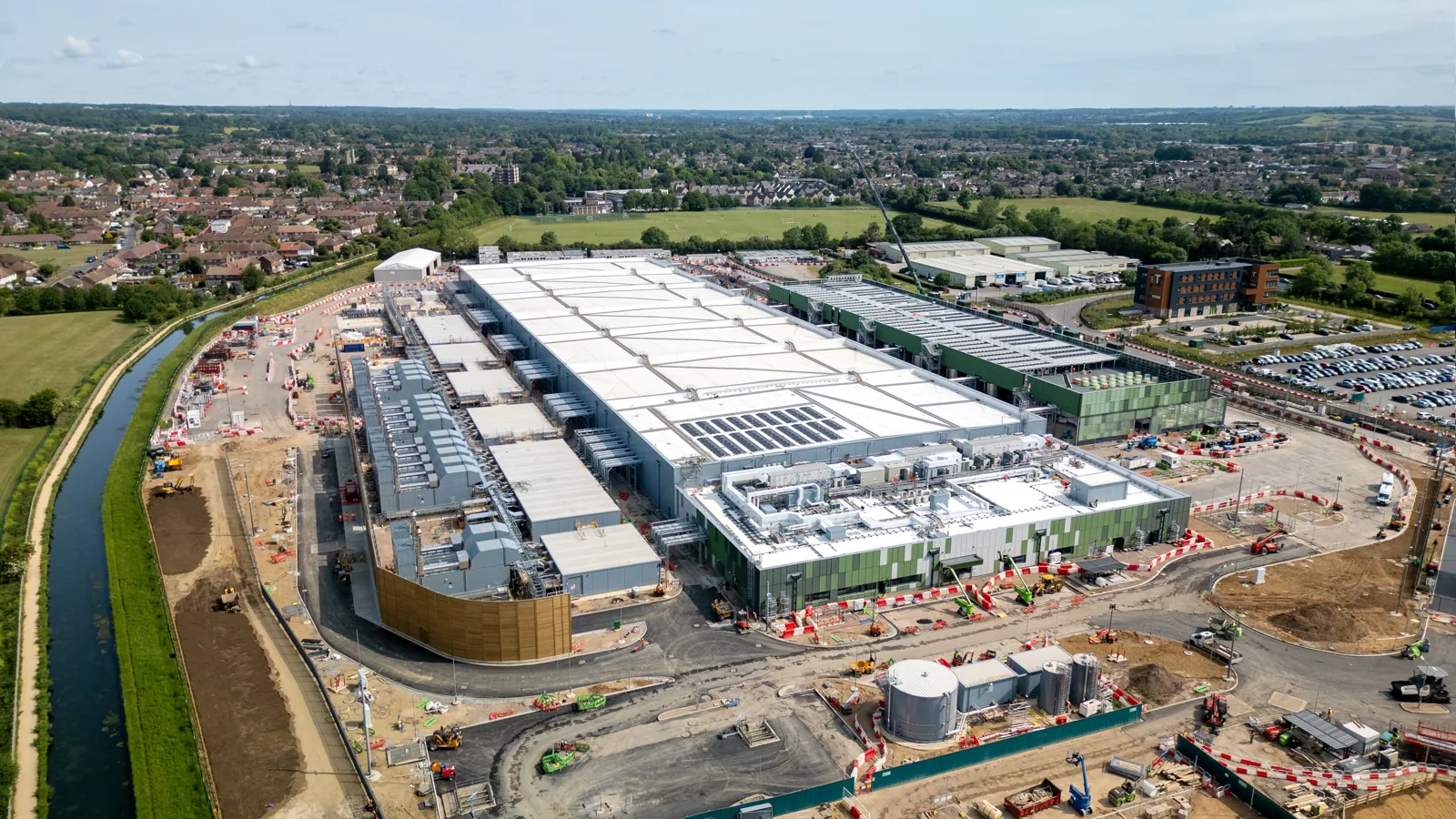
Data Center Roofing in Sherman, TX
Data center roofing in Sherman, TX: moisture scans, welded seams and flame-free repairs for roofs crowded with cooling plant, planned around change windows.
A membrane over a data hall behaves like any other membrane until something pierces it. Chillers, dry coolers, conduit racks and exhaust stacks all sit on that surface. Each support and each pipe boot is a seam in a sheet that otherwise sheds water well. In Sherman, TX the roof also rides a spread between 113 F and -3 F, both on record. That movement works every penetration a little harder each season.
We study these details before anything else. A leak over a server room is a short story with a long consequence. The goal is to find the weak joint while it is still a stain on the deck, not a drip on equipment.
Count What Sits on the Roof
Start with the equipment list. Cooling plant often lives outdoors, and on many technology buildings it lives on the roof. Dunnage rails, pipe supports and conduit stands each carry weight onto the deck. Each one needs flashing that can move.
Thermal movement is the quiet enemy. A rail stays put while the membrane around it expands and shrinks. Over years the flashing tears at a corner or lifts at its top edge. We check those corners first. Then we check sealant at pitch pockets and the fasteners under the stands.
Where the layout is crowded, walkway pads matter too. Technicians cross the same path every week. Bare membrane under that traffic wears thin. A protected path costs little and saves the sheet.
Trace Water Before It Reaches the Rack Rows
Water rarely drops straight down. It runs along deck flutes, follows a pipe, and shows up far from the entry point. A ceiling stain alone can send a crew to the wrong spot.
So we scan the roof for moisture, often with an infrared moisture survey. The scan shows where insulation holds water. Then we cut a few core samples to confirm. The cores show how wet the board is and whether the deck is sound.
Sherman receives about 44.3 inches of precipitation a year on roughly 79 days. That gives a small flaw many chances to show itself. Wet insulation also loses its thermal value, which pushes more load onto the cooling plant below.
Conduit and cable runs add a quiet path for water. A pipe that leaves the building through the roof can carry a drip along its length and into a panel room. We follow each run from the roof penetration to the first interior joint, flag any run that has no drip loop or sleeve, and photograph the seal at the roof so the facility team can compare it year to year.
Schedule Work Around Change Windows
Many technology operators freeze changes during set periods. Roof work has to respect that calendar. We ask for the freeze dates and the facility contact for each hall before we plan a day.
Hot work is the biggest concern. Open flame has no place near suppression systems and sensitive air intakes. Cold-applied adhesives, welded seams and mechanical attachment let us work without it. We pick the method that fits the rules on site.
Fumes matter as well. Intake louvers near the work area can draw adhesive vapor into the building. We locate every intake first and set the staging zone away from them. Where a unit must shut down briefly, the facility team does it, not us.
Weigh Sherman's Heat and Spring Storms
Spring is when North Texas sees its most tornadoes. On June 8, 2025 an EF1 came down southwest of Sherman, and stones the size of a half dollar were logged northwest of Denison. Neither event says anything about a particular roof. Both tell us which checks to make after a storm.
Hail bruises the insulation under the membrane. Wind lifts edge metal, and the membrane can follow. After a storm we look at coping, perimeter flashing and loose equipment covers. We photograph each finding before a tarp goes on. That log also supports wind damage repair decisions.
Winter loads matter as well. The December 2013 sleet left a layer of ice 4 to 5 inches thick over Sherman and Denison. Drains choked with ice back water up onto the roof. We check drain bowls and scuppers before the cold season.
Select Systems That Tolerate Penetrations
Single-ply sheets such as TPO and PVC weld at the seams, which suits a roof crowded with curbs and pipes. Welded laps allow detail work without flame. PVC also resists many chemical exhausts from rooftop plant.
A dense cover board protects the insulation from foot traffic and dropped tools. It also helps against hail. Where the old roof is sound underneath, a recover avoids tear-off dust and noise over live space. Where insulation is wet, it has to come out.
A reflective surface lowers roof temperature. Lower temperature eases thermal movement at seams and flashings. A cool roof also trims the heat that reaches the ceiling plenum below.
Match Technology Sites to the Right Scope
Sherman markets itself as the Tech Hub of North Texas. Texas Instruments began production at its SM1 wafer fab in December 2025, and GlobalWafers USA is investing in wafer manufacturing here. A technology building near that cluster may share those pressures: tight schedules, clean surroundings and no tolerance for open water.
A building new to the area, whether along US 75 or US 82 or in the North Texas Logistics Park on the Oklahoma border, deserves a baseline roof survey at turnover. A baseline gives the owner a record to compare against in year five.
Plant buildings nearby ask for a different mix. A manufacturing plant roof carries process exhaust and heavy curbs, while a data hall carries cooling plant and cable pathways. The failure modes overlap at the curb and the pipe boot. The inspection sequence is the same: scan, core, photograph, then repair the weakest joint first.
Edge conditions deserve a second look at any building with a tall parapet. Water collects behind the wall and finds the reglet. A counterflashing that has lost its sealant lets that water in quietly.
Keep a Record the Operator Can Audit
Operators audit everything. The roof should be no exception. We deliver photos, moisture maps, core results and repair locations in one file. The file ties each finding to a spot on a plan. Next year's scan can then be set beside last year's.
Permit rules shape the work too, and we confirm them with the permit office before pricing a replacement. For storm losses, claim documentation follows the same photo log, and a neighboring office building roof can be added to the same record.
Commercial Roofing Questions
Can a data center roof be replaced while the hall stays live?
Usually, yes. The deck stays in place, so the hall below stays covered. We stage the work in sections and seal each one at day's end. The facility team sets the rules for noise and access.
What does a moisture scan find that a visual check misses?
Wet insulation under an intact membrane. The surface looks sound while the board below holds water. A scan maps those patches, and core samples confirm them.
Should chillers be lifted for roof work?
Only when the roof under them is failing. Lifting costs time and adds risk, so repair around the stand comes first. If the membrane beneath is wet, the stand has to come up. The facility team sets the shutdown.
How do hail and wind show up on a roof like this?
Hail leaves bruises in the insulation and dents on metal covers. Wind lifts edge metal and loose equipment lids. Both show within days when the roof is checked after the storm.
Which roof systems fit a crowded rooftop?
Welded single-ply sheets handle many curbs and pipes well. A liquid-applied flashing resin closes odd shapes. The final pick depends on the age of the old roof and how wet the insulation is.
Send the Building Address and Roof History
Send the building address and any past leak history for the data hall. We will walk the roof with your facility team and explain what the readings show.
Related Roofing Work
Infrared Moisture Survey
Infrared and core-cut moisture surveys for commercial roofs in Sherman, TX, mapping wet insulation so repair and replacement dollars go where water sits.
Wind Damage Roof Repair
Wind damage roof repair in Sherman, TX: edge metal, fastener, membrane and flashing checks after storms, with moisture scans and written repair scopes.
TPO Roofing
TPO single-ply roofing in Sherman, TX: how the welded membrane moves, where it fails, how we test seams, and how repairs and replacements are built.
PVC Roofing
PVC single-ply roofing in Sherman, TX: how the welded membrane resists fats and chemicals, where it fails, and how we test, repair and replace it.