
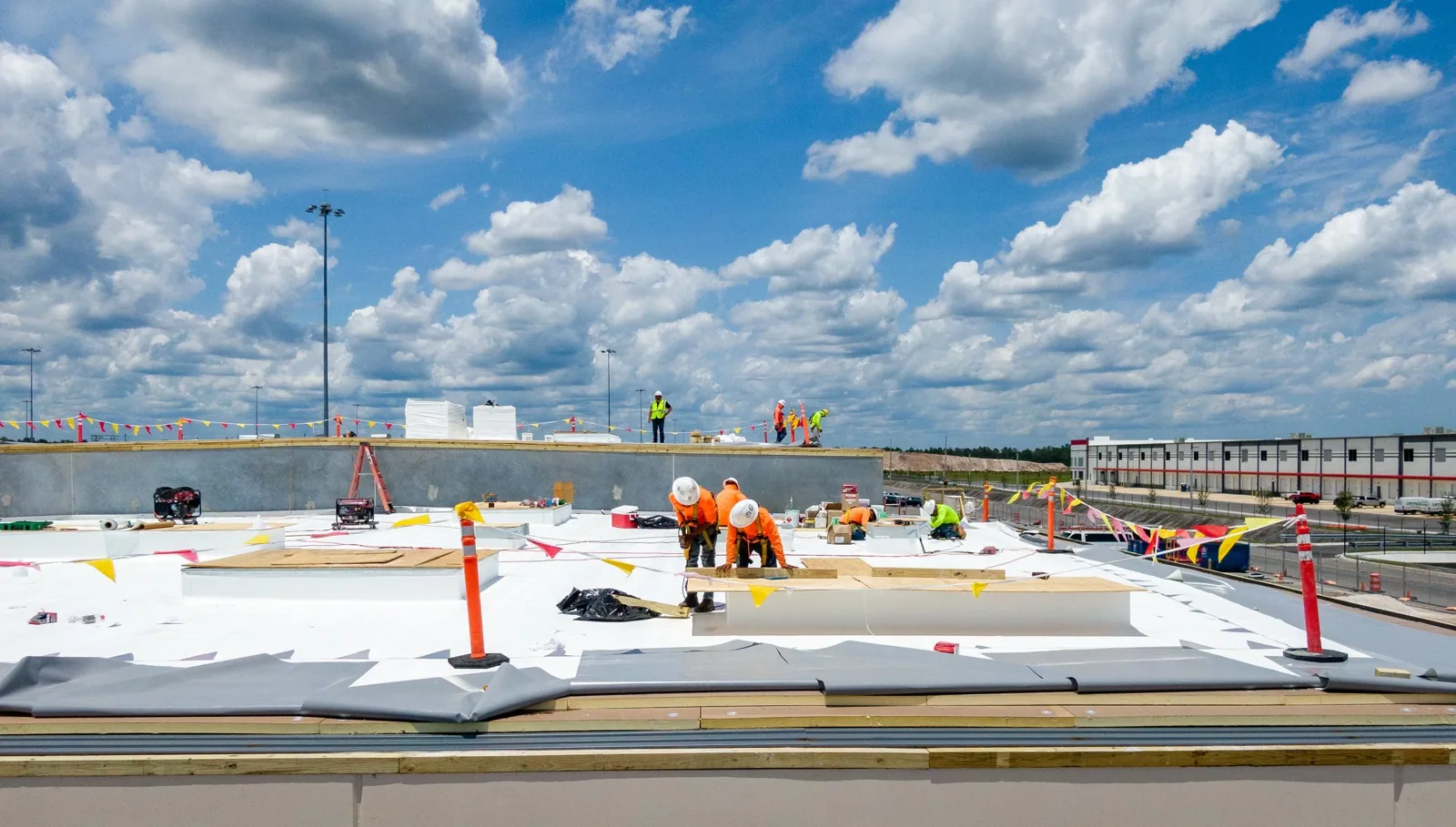
Roof Recover and Overlay Systems in Sherman, TX
Recover a sound commercial roof in Sherman, TX with a new membrane over dry insulation, after core samples and a moisture scan show the old roof can stay.
A recover keeps the old roof and puts a new waterproofing layer on top of it. That sounds simple. The physics are not. The old assembly has to be dry, flat and fastened to a sound deck, or the new membrane inherits every flaw underneath it. Trapped moisture turns to vapor in a Sherman, TX summer and pushes against the new sheet. Soft insulation compresses under foot traffic and leaves low spots that hold water. We use a recover when the cores say the building can carry it and when the savings are real. We do not use it to avoid a tear-off the roof has already earned.
Testing Whether the Old Roof Can Carry a New One
Three readings decide it. First, a moisture scan across the whole surface, which maps wet insulation as cool or warm patterns. Second, core samples at the wet and dry spots, which show how many layers sit on the deck and what each one holds. Third, a deck check, because a roof that has leaked for years often has rusted flutes or soft panels. If any reading fails, a recover turns into a repair that the new membrane will hide until it fails again. A roof with a clean scan and a single layer in place passes. A roof with two layers already stacked does not, since most codes limit how many may stay. For a building with active leaks, a planned repair may come first.
Managing Heat and Vapor Under a New Sheet
Sherman has recorded a high of 113 F, and a dark roof surface can run far hotter than the air. Under a new membrane, any moisture left in the old insulation expands into vapor and pushes outward. The result is blisters, then open seams. Prevention takes three steps. We cut and vent wet areas before the cover goes down. We lay a cover board or a separator sheet to protect the new membrane from rough edges beneath. We choose a reflective white sheet such as PVC or TPO to lower the surface temperature and shrink the daily swing. A cooler membrane moves less, and a membrane that moves less holds its welds longer.
Weighing the Added Load Against Winter Snow
A recover adds weight, and the deck sees that weight alongside snow and rooftop equipment. Snow measured nine to eleven inches at isolated spots in Grayson and Cooke counties on January 9 and 10, 2025, and ice accumulation in the Sherman and Denison area reached four to five inches after the December 2013 sleet. Those events tell us the roof has to carry real winter load on top of whatever we add. We confirm the deck capacity with the building drawings or a structural check where the owner has them. Where the numbers are tight, we favor a lightweight single ply or a coating over a heavier build-up. We also check that drains stay at the low point, because added thickness can lift the surface above the drain body and leave water trapped around it.
Raising Flashings and Edges to Match
Every added layer raises the roof surface. Curbs, wall flashings, parapets and drains must rise with it, or the new membrane ends up too close to the top of the old counterflashing. We extend base flashing to the required height, replace pitch pans, and reset edge metal so the new perimeter is fastened to the structure and not just to the old layers. Edges matter most. Spring thunderstorms bring wind with the hail, and North and Central Texas see their most tornadoes in April and May. A perimeter detail that rides on loose insulation lets wind find the edge and peel the sheet back. We fasten to the deck and note the pattern in the records.
Pricing the Recover Against What Stays
The price of a recover moves with what we find, not with the square footage alone. Wet insulation that must be cut out adds labor and material. A rough surface needs a cover board or a fleece-backed sheet. Many penetrations raise the flashing count, and flashing is the slow part of any roof job. On the other side of the ledger, a recover skips the tear-off, the haul-away and the dump fees, and it shortens the time the building spends under construction. We list each of those items on the proposal as a separate line, so an owner can see where the savings come from and what the roof still needs underneath. If the line items show a recover costing nearly what a replacement would, we say so and recommend the replacement.
Placing the Recover on the Right Buildings
A recover is a good fit where an operation cannot tolerate a full tear-off. Where a plant in Progress Park or a distribution building along US 75 cannot stop to open its roof, a recover leaves the interior closed in and the dust out of the production floor. It also suits an owner who wants to defer full replacement for several years with a defined plan. When the roof carries a lot of mechanical gear, we confirm the equipment curbs are sound before we cover them. For owners comparing paths, a full replacement costs more now and may last longer, and we set both options side by side with the findings.
Running the Work Day by Day
On the first day we clear the surface, sweep it and mark the wet areas found in the scan. We repair or remove what is bad, then fasten the cover board to the deck, not just to the old layers. The membrane follows in rolls, and seams are welded or adhered as the system requires, with probe checks along every weld. Flashings go in last so crews can step along finished field without damaging it. We close each day with a temporary tie-in at the open edge, because a rain shower that finds a loose end of membrane can lift it quickly. A final walk with the owner covers drains, curbs and all terminations before we sign off.
Commercial Roofing Questions
Which roofs fail the recover test?
Roofs with wet insulation spread across the plan, roofs with two layers already in place, and roofs on rusted or soft decks. Any one of those finishes the idea. Each of these shows up in the scan, the cores or the deck check, so the answer is on paper before a crew mobilizes.
Does a recover void the old roof's warranty?
An existing warranty can end or change when a new layer goes on. The manufacturer's terms decide, so we read them before we price and tell the owner what will carry over. Some manufacturers offer a fresh warranty on the recover itself when the base passes their review, and we pass along their requirements in writing.
How much longer does a recovered roof last?
The new membrane carries its own service life. What limits it is the condition of the old layers beneath, so a dry, flat base matters more than the sheet on top. We note the base condition on the proposal so the owner knows which layers are still carrying the roof and which are only along for the ride.
Will a recover show up in energy bills?
A reflective sheet lowers surface temperature, which reduces heat gain through the roof. Added insulation, where the details allow it, improves that effect further. The numbers on a utility bill depend on the building, but the direction of the change is clear.
What if the scan finds wet areas after we start?
We cut them out and replace the insulation before the cover goes on. That section becomes a small tear-off, priced by the area, so the rest of the recover stays on track.
Bring the Roof Plan and Any Past Reports
Send the address, the age of the roof and any earlier survey. We will scan it, pull a few cores and say plainly whether a recover will hold.
Related Roofing Work
Commercial Roof Repair
Planned repair of commercial membranes, flashings and seams in Sherman, TX, matched to the cause of the failure so the fix lasts through heat, hail and freeze.
PVC Roofing
PVC single-ply roofing in Sherman, TX: how the welded membrane resists fats and chemicals, where it fails, and how we test, repair and replace it.
TPO Roofing
TPO single-ply roofing in Sherman, TX: how the welded membrane moves, where it fails, how we test seams, and how repairs and replacements are built.
Edge Metal, Coping and Gutters
Edge metal, coping, gutter and downspout repair for commercial roofs in Sherman, TX: cleat fastening, joint sealing, thermal movement and wind uplift.