
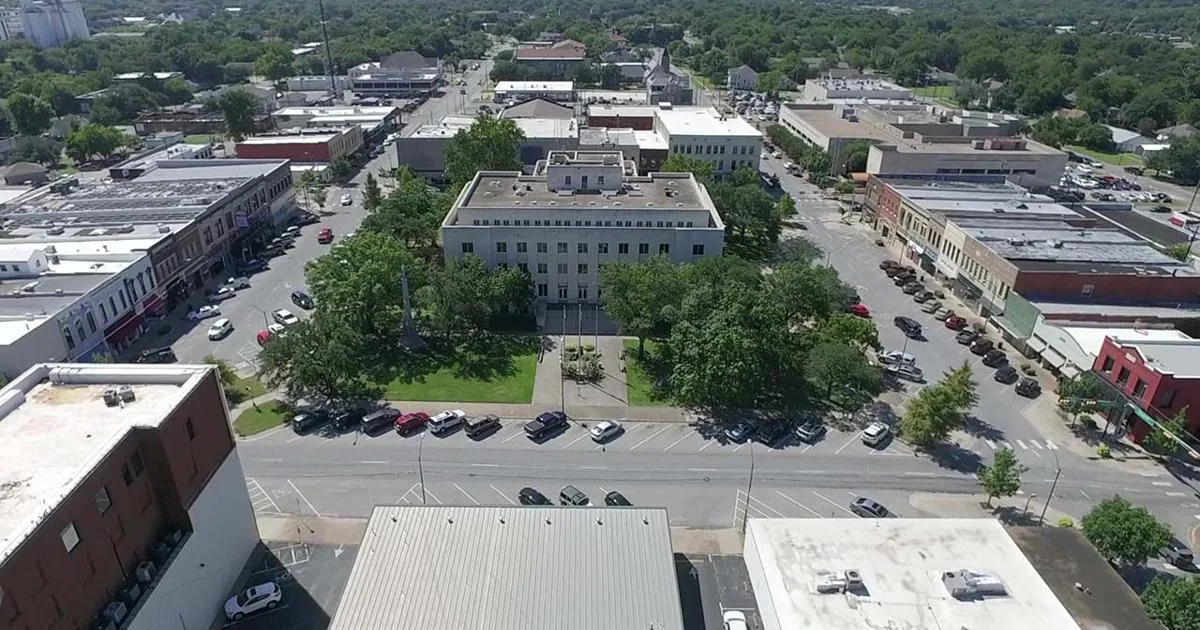
About Commercial Roofing Sherman
Commercial roof repair, replacement, inspection and maintenance in Sherman, TX
Commercial Roofing Built Around the Building
Most of what goes wrong on a commercial roof happens where nobody is looking. Heat lifts a lap by a hair. Night pulls it back. After enough cycles, water finds the gap and the insulation starts to hold it. Commercial Roofing Sherman works on that problem in Sherman, TX. The thermometer here has touched 113 F and -3 F. We repair, replace, recover, coat, inspect and maintain low-slope and metal commercial roofs. The emergency line is answered around the clock, holidays included.
The method is plain. We read what the material is doing. We test it. Then we tell the owner what the readings mean and what the next decision is. Nothing gets priced until the roof has been read. What the reading shows goes to the owner in plain words, with photographs attached.

Know What the Company Does
We install and repair TPO, PVC, EPDM, KEE, modified bitumen, built-up, standing seam and retrofit metal, spray foam, and silicone and acrylic coatings. Around those systems sit the services: hands-on inspection, moisture scans, core samples, drone and infrared surveys, written condition reports with photographs, preventive maintenance and insurance claim documentation.
The list stays the same from roof to roof, and the order of work changes. A plant wants a ranking tied to production. A school wants a plan that fits the summer break. A hotel wants quiet around guests. Each plan is built on those limits and written down.
Details get the most attention. Curbs under mechanical units, pipe boots, edge metal, drain sumps and skylight flashing are where water usually enters. They also absorb the most movement. The field of a membrane is often sound while the detail around it is not. Every walk begins at the details, and each one is probed by hand.
See Why North Texas Is Hard on Roofs
Heat cycling is the steady stress. A dark roof runs far hotter than the air on a summer afternoon and cools fast after dark. The sheet grows and shrinks, and seams, flashings and fasteners take the load.
Spring brings the storms. Tornado counts across North Texas crest in April and May. Sherman's tornado of May 15, 1896 killed 73 people. In June 2025 an EF1 came down southwest of the city, and a report near Denison measured half-dollar hail. Winter adds its own loads. Sleet coated Sherman and Denison with ice in December 2013, and isolated January 2025 snow reached nine to eleven inches in Grayson and Cooke counties.
Moisture follows heat. Warm interior air carries vapor upward. It drops that vapor as liquid at the dew point, and insulation can hold the water for years. A blister is often a pocket of trapped vapor, and a soft spot underfoot is often wet board. That is why a scan comes before a patch.
Name the Buildings and Owners We Serve
The city brands itself the Tech Hub of North Texas. Its first Texas Instruments wafer fab came online in December 2025, beside an industrial base that runs from food processing to laser and valve plants. Three hospitals and Austin College add institutional roofs, and Denison brings Foundation Business Park and a mix of employers.
Owners range from manufacturers and logistics operators to health systems, school districts, property managers and general contractors. Each reads a roof differently, so the report is written for the reader who has to act on it.
The address shapes the day. A crew plans routes, lifts and laydown areas around the highway, the gate and the dock. State Highway 91 ties Sherman to Denison, about eleven miles away. North Texas Logistics Park sits on the Oklahoma border to the north.
Follow the Process in Order
First comes a walk. Seams, flashings, drains and penetrations are mapped and photographed before anything is touched. Second comes evidence: a moisture scan locates wet insulation and cores confirm it. Third comes a written scope that separates repair now, repair next and watch, with open questions marked.
Then the work begins. The work is phased by roof section. The interior is protected and entries stay clear. Reroofing an occupied building is as much a schedule problem as a roof problem. Crews start early in summer heat and stop when the surface is unsafe. The building department is asked what it requires before a replacement is priced.
Closeout matters as much as installation. The roof is walked with the owner or the superintendent. A punch list is built together and closed item by item. Photographs of concealed work go into the file before the next layer covers them. Warranty papers are filed with the record.
Respond When Water Is Inside
A call about water inside gets one goal on the first visit, which is to stop it. The crew traces where it entered, fastens a temporary cover against wind and protects the space under it. A tarp is not a repair, and we say how long it can serve. A return visit in daylight measures the damage and tests for wet insulation. Then the owner chooses between a repair, a section replacement or something larger.
Records begin at the first visit. Dated photographs, location marks and a log of materials used support an insurance claim and the permanent scope at once. If the building stays in use, the facility contact is told which rooms to keep clear until the roof is dry. The crew checks the cover again after the next rain or high wind.
Keep the Record
Every owner receives a file. It holds the roof type, the layers from core samples, the drain locations, the moisture findings and dated photographs tied to a diagram. When a storm comes, that file is the baseline an adjuster compares against. When a building changes hands, it is what a buyer reads. An owner with many buildings can run one format across all of them through a multi-site roof program.
The roof, the readings and the record are what an owner decides from. Each finding carries a photograph and a location, and each open question sits beside the next decision.
Owners also get a calendar. Drains are cleared in fall. Inspections run in spring, ahead of the tornado peak. Replacements are scheduled for summer, when the surface is dry and crews can work early.
Questions from Sherman Building Owners
Do you work on occupied buildings?
Yes. We phase by section, protect the interior and agree on hours with the building contact.
Do you answer emergency calls at night?
Yes. The first visit stops the water and records the damage, and the permanent repair follows.
Can you document a claim?
We record damage with dated photographs, scans and cores, and write a scope an adjuster can compare with its own estimate.
What area do you cover?
Sherman, Denison and the towns of Grayson County, plus nearby Collin, Fannin and Bryan County towns, with permit rules confirmed town by town.
How do I start?
Send the building address and any leak history. We will walk the roof and explain what the readings show.
Ready for a Roof Assessment?
Send the building address and any leak history, and we will walk the roof with you.