
Commercial Roofing in Denison, TX
Commercial roofing in Denison, TX: parapet and flashing repair on older brick flat roofs, plus moisture scans and recovers for plants, clinics and schools.
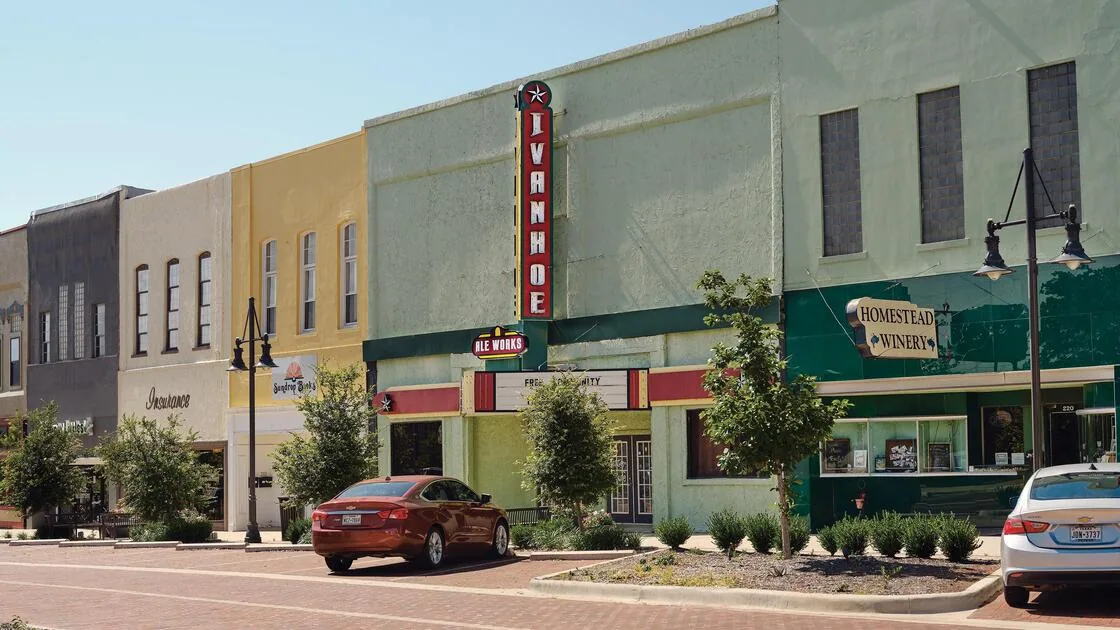
Brick walls hold water. A flat roof behind a brick parapet sheds water toward the wall, and the wall decides where it goes. Denison, TX grew up in 1872 around a railroad depot, and brick storefronts with flat roofs still fill its downtown and rail-side blocks. For that kind of building, the roof is only half the story. The other half is the wall that frames it.
We work on both. We walk the field of the roof, then the parapet, then the counterflashing where the two meet. That joint tells us more than any other single detail.
Inspect Brick Parapets and Flat Decks
A parapet is a wall that stands above the roof line. Its top is capped with coping, and its base is sealed with flashing. Between the two sits brick, mortar and, in older walls, a bare face of porous masonry. Water enters through any of them.
Mortar joints crack with freeze and thaw. Coping stones shift and open a gap. Sealant at the reglet dries out. Each flaw lets water run behind the flashing and down inside the wall. The ceiling stain may appear ten feet from the entry.
We probe the wall from the roof side. We check coping joints, counterflashing, mortar and weep paths. Where a wall holds water, repair starts at the masonry, not at the membrane.
Drainage along a parapet needs the same care. Scuppers cut through the wall let water out. If a scupper sits above the roof surface, water ponds behind it. A pond that stays two days on a flat roof wears the membrane faster and loads the deck. We check the height of every scupper against the low point of the roof.
Test Old Layers Before Adding New Ones
Older flat roofs often carry more than one membrane. A past owner may have added a layer over the last one. Each layer traps water in its own way, and the total weight rides on the deck.
Cores settle the question. We cut small samples at the edges of wet zones and at one sound spot. They show how many layers there are, what kind of insulation sits under them and how wet each is. A moisture scan before the cores narrows where to cut.
If the insulation is dry and the deck is sound, a recover may work. If water has soaked the board, it must come out. The decision depends on the readings, and we show them to the owner before anyone chooses.
Older roofs sometimes hide blisters. Trapped moisture turns to vapor in the afternoon heat and lifts the membrane. A blister may sit quiet for years, then split at the first hard freeze. We press on suspect spots and log each one on the roof plan, so the owner can watch them over time.
Handle Rail-Side and Industrial Roofs
Denison employers include Ruiz Foods, Caterpillar and Spectrum Brands. Plant roofs carry exhaust stacks, makeup air units and process vents. Steam and damp air from inside push moisture upward into the insulation.
We check the membrane around each fan and stack first. Those spots see the most chemical and thermal wear. Then we check curbs, pipe boots and seams. If the building is near active rail, vibration can loosen fasteners over time, so we also check deck attachment at roof edges.
Industrial owners care about downtime. We stage the work in sections, seal each one by day's end and agree on hold points with plant management. The same sequence suits any manufacturing plant roof.
Serve Schools, Clinics and Offices
Denison also has Denison ISD, Grayson College, Texoma Medical Center, Cigna and Anthem among its employers. These owners have different calendars. Schools want summer windows. Clinics want quiet hours and clean air. Offices want a plan that keeps phones ringing.
For a clinic or a hospital, we map every fresh-air intake and keep staging away from it. For a school, we look at the long runs of low-slope roof that join old and new wings. For an office, we check rooftop unit curbs and interior drains. A school roof and an office roof each fail in their own way, and we prepare for both.
Campus and school buildings that grow in stages add one more detail: roof sections joined by expansion joints. A joint is a planned gap that lets two roof sections move apart in heat and together in cold. Its cover wears out before the field does. We look at every joint cover for splits and lifted edges, and we log each one by location.
Read the Hail and Ice Record
A hail report from northwest of Denison on June 8, 2025 measured half-dollar stones. Hail bruises insulation under the membrane without always splitting the surface. A roof can look fine from the ground and still hold crushed board underneath.
After a hail event we scan first, then core. The scan finds wet patches. The cores confirm the bruise. That record supports a hail damage repair and any insurance claim.
Ice is the other load. The sleet and freezing rain of December 2013 laid ice 4 to 5 inches thick over Denison and Sherman. Ice sits in drains and scuppers, then melts and refreezes at the edges. We clear drains before winter and check edge metal after it.
Wind adds its own checks. Spring storms push on the edge of a flat roof first. Loose coping on a brick parapet is a hazard to the street below, so we secure it ahead of the season, not after.
Weigh Repair Against Replacement
A repair fits a roof with dry insulation and a few isolated openings. A recover fits a roof with a sound deck and a tired membrane. A replacement fits wet board or a failed deck. Brick buildings add a fourth case: wall repair first, roof second.
Cost follows four things: how much insulation is wet, how many penetrations the roof carries, how much masonry needs work, and how much of the building stays in use. We price each of these separately so the owner sees where the money goes. We confirm the city's permit requirements before pricing a replacement.
Reach Denison From Sherman
Denison sits about 11 miles north of Sherman on US 75 and US 69, and it reaches the Red River. Its 2020 population was 24,479. We reach it from Sherman along US 75 and cover its industrial edge near Foundation Business Park, as well as in the older blocks nearer the rail line.
Commercial Roofing Questions
Why does a brick building leak when the roof looks fine?
The wall may be the entry. Cracked mortar, open coping joints and dry sealant at the reglet let water run behind the flashing. We probe the wall from the roof side.
Can an older flat roof take another layer?
Only if the insulation is dry and the deck is sound. Cores decide. A second recover on top of two old layers adds weight and hides problems.
Do plant roofs near rail lines need special checks?
Yes, at the deck edge. Vibration can loosen fasteners over time. We check attachment at the perimeter and around heavy curbs.
What should a school do before summer break?
Scan the roof in spring. Findings drive the repair list, and the summer window then handles the large work. Small repairs can run during the term.
How do I know if hail hurt my roof?
Scan within days of the storm. Bruises do not leak at once. The scan and a few cores show the damage while the evidence is fresh.
Send the Address and the Wall History
Send the building address and any leak or masonry history. We will walk the roof and the parapet with you and explain what the readings show.
Related Roofing Work
Manufacturing Plant Roofing
Manufacturing plant roofing in Sherman, TX: how process heat, exhaust and equipment load roofs, where plant roofs leak, and how we inspect and repair them.
School Roofing
School roofing in Sherman, TX: moisture scans, seam repair and phased replacement planned around classes, with storm and freeze damage found early.
Office Building Roofing
Office building roofing in Sherman, TX: curb and drain repair, tenant-friendly scheduling and moisture scans that separate roof leaks from HVAC condensate.
Hail Damage Roof Repair
Hail damage roof repair in Sherman, TX: find bruises, fractured membranes and dented metal with moisture scans and core samples, then repair and document.