
Roof Insurance Claim Assistance in Sherman, TX
Documentation and coordination for commercial roof insurance claims in Sherman, TX: dated photos, moisture maps, test squares, scope lines and adjuster visits.
A claim is an argument about cause and date. Did the storm do this? Was it there before? The roof cannot speak. Evidence speaks for it. A bruise looks the same whether hail made it or a ladder did. A lifted seam looks the same whether wind pulled it or age loosened it. So the work is to turn the roof into a record that answers those questions.
In Sherman, TX we build that record. We do not decide coverage. The insurer does. Our job is to give the owner and the adjuster the same set of facts, dated and located.
Build the Baseline Before the Storm
The best evidence is a record from before the event. Dated photos of seams, edges and drains show what the roof looked like. A moisture scan from last year shows where insulation was dry. A maintenance file shows what was repaired and when.
Without a baseline, the argument gets harder. The insurer may point to age or wear. With one, the new damage stands out. Owners who keep yearly records through preventive roof maintenance start every claim with an advantage.
If no baseline exists, we build the closest substitute. We use past inspection reports, permit files, satellite imagery and tenant complaints. Each one narrows the window. Tenants are a source too. A log of leak calls with dates and weather shows when water first entered. A cluster of calls after one storm points to that storm. Calls spread over years point to a slower failure.
Document the Damage Without Disturbing It
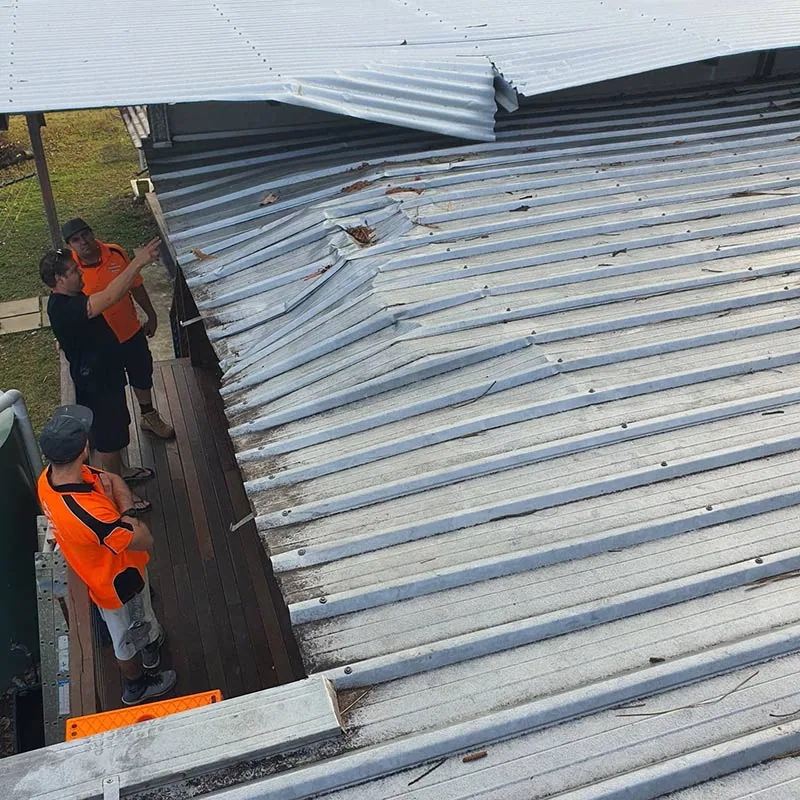
We photograph first and touch second. Each shot gets a number, a location on the roof plan and a timestamp. We take wide views for context and close views for detail. A scale marker goes in each close view.
For hail, we mark test squares and count hits in each. For wind, we map lifted edges and torn flashing. For water entry, we scan for moisture and confirm with cores. Cores are patched the same day.
A drone roof inspection adds overhead imagery that matches the plan. It covers areas that are unsafe to walk. It also gives a timestamped record that is hard to dispute. Samples are kept. A cut of bruised insulation or a piece of cracked membrane goes into a labeled bag. The adjuster can see the material itself. Cores are photographed in the hole and on the table, and each is tied to a plan number.
Tie Each Finding to a Cause and a Date
Cause is where claims turn. Hail leaves round marks with a pattern that follows the storm direction. Age wears evenly. Foot traffic follows service routes. Poor installation shows in lines along fasteners.
We check weather records for the date. Hail on April 3, 2014 was dime-size north of Sadler and penny-size near Luella. June 2025 produced a half-dollar report near Denison. An EF2 tornado struck Sherwood Shores on March 21, 2022. Records like these help place a storm in time.
A weather record gives a window, and the roof evidence fills in what happened inside it. A moisture reading shows water now, not when the water arrived, so where a gap exists we say so in the file and name the test that would narrow it. That protects the owner's credibility with the insurer.
Write the Scope in Lines an Adjuster Can Check
A scope is a list of work items with quantities. Each line names the finding, the location, the repair method and the area. The line should match a photo. The adjuster can walk the roof and tick off each one.
We separate storm items from maintenance items. A bruised section is a storm item. A worn flashing that predates the storm is maintenance. Mixed claims stall. Clear lines move.
We also state code needs. If a repair triggers a code item, the scope lists it with its source, and the permit office confirms the requirement. Quantities come from measured areas, not estimates. We use the roof plan and the test squares. A bruised area is written at its measured size, with the sketch that shows it. Unit prices are listed separately, so line items can be compared with the adjuster's own. Code items sit on their own lines, so the adjuster can see which cost comes from a requirement and which comes from storm damage. If the permit office changes a requirement after the scope goes out, we revise the affected lines and send the change with its reason.
Walk the Roof With the Adjuster
The adjuster visit is where the record meets the roof. We bring the file. We point out each finding and show the photo. We show the moisture map and the cores.
We answer questions about methods. We do not argue coverage. If the adjuster sees things differently, we note the difference and ask what evidence would settle it. Often a second reading or a test square resolves it. Our commercial roof inspection reports are written so a third party can repeat the measurements.
Safety is part of the visit. We provide access, fall protection and a clear route. The visit runs better when the adjuster can focus on the roof. Afterward we send a short note that lists what was seen, what was agreed and what is open. The note goes to the owner and the adjuster. A written record of the visit avoids later confusion about what was said on the roof.
Repair in the Order the Claim Allows
Emergency steps do not wait. We tarp, secure and dry in at once, and we keep the receipts. Permanent repair waits for the record. Once the adjuster has seen the roof, repairs can begin. The storm damage roof repair follows the scope line by line.
Supplements happen. Hidden damage appears when sections open. A wet deck or a rusted fastener line may show. We photograph each and send it with a note. Quick, documented supplements keep the job moving. Material orders and crew dates depend on approval. We tell the owner the lead time for membrane and insulation so the claim timeline and the repair timeline can be planned together. Delay in either one leaves the building exposed.
Close Out With a File the Owner Can Keep
At the end, the owner gets the full file. It holds the baseline, the damage record, the scope, the correspondence and the final photos. It shows before and after.
The file helps later. A buyer or lender may ask about the roof's history. The next claim starts from this record. Owners with many buildings can fold it into a roof condition report program. Property managers and the insurance restoration trade use the same format. We also advise on maintenance after repair. A new section should get a first-year check, because early failures show in the first season. That visit is photographed and added to the file.
Commercial Roofing Questions
Do you decide what insurance pays?
No. The insurer decides coverage. We supply facts and a scope.
How long do I have to file a claim?
The policy sets the deadline. Read it soon after a storm and ask the insurer.
Should I repair before the adjuster visits?
Make the building safe and stop water. Keep removed material and take photos. Permanent repair waits for the visit.
What if hidden damage appears during repair?
We stop, photograph it and send a supplement. Documented additions are common.
Can an older roof still have a covered loss?
Possibly. Policy terms on age and wear vary. The record separates storm damage from wear.
Send the Address and the Storm Date
Send the building address, the storm date and any policy deadlines. We will walk the roof, document the damage and prepare a scope for the adjuster.
Related Roofing Work
Preventive Roof Maintenance
Scheduled commercial roof maintenance in Sherman, TX: drain clearing, seam and flashing checks, moisture scans and dated records that catch failures early.
Drone Roof Inspection
Drone roof inspections for large and hard-to-reach commercial buildings in Sherman, TX, with high-resolution imagery, thermal capture and a mapped report.
Sherwood Shores
Commercial roofing in Sherwood Shores, TX near the Red River: tornado damage assessment, deck checks, insurance records and repair or replacement scopes.
Commercial Roof Inspection
Hands-on commercial roof inspections in Sherman, TX, with photographed findings, moisture checks and a ranked list of repairs and budget timing for owners.