
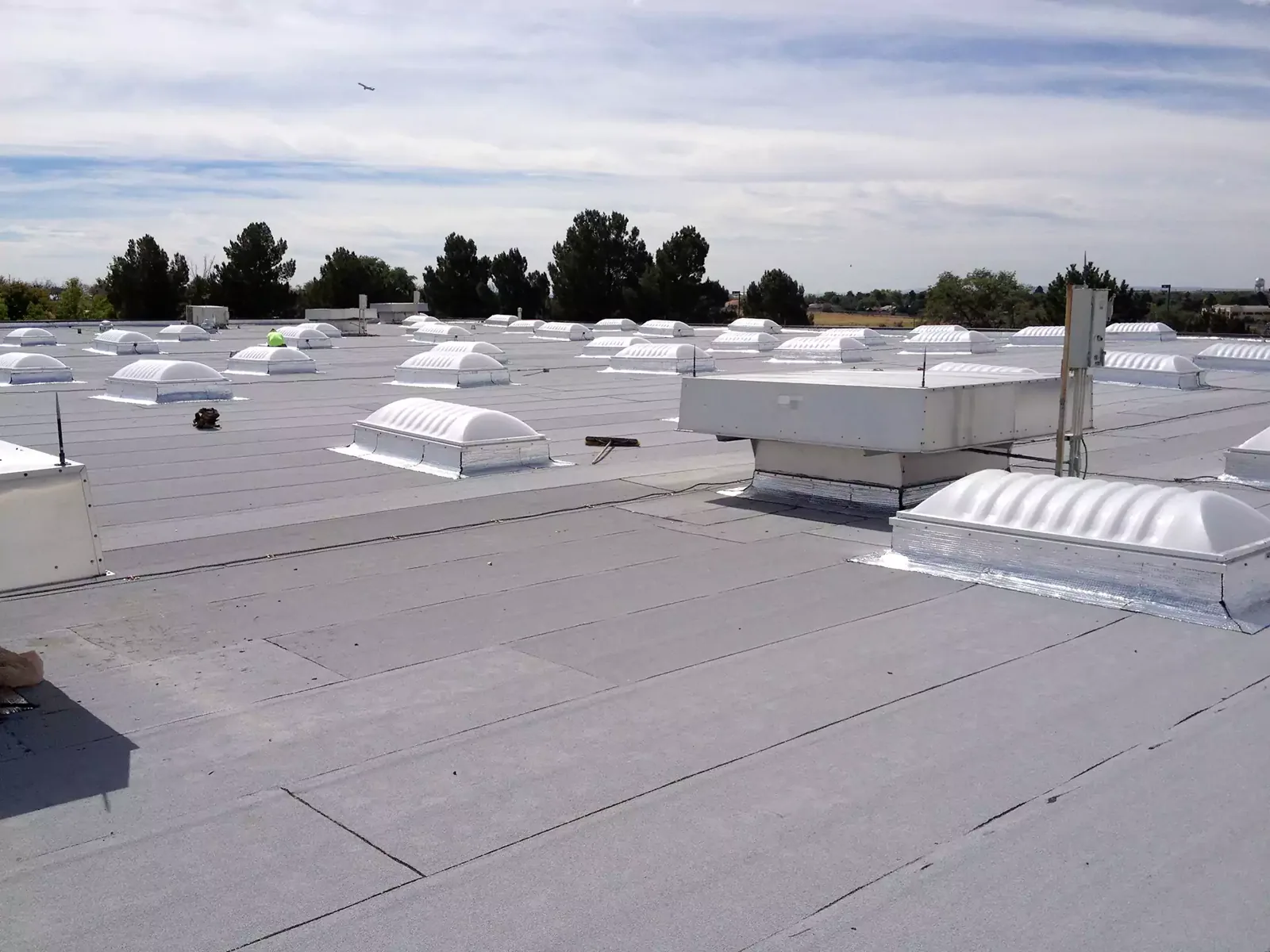
Commercial Roof Replacement in Sherman, TX
Full tear-off and replacement of low-slope and metal commercial roofs in Sherman, TX, planned around moisture findings, heat cycling and North Texas hail.
A commercial roof wears out from movement long before it wears out from age. In Sherman, TX the climate has recorded 113 F and also -3 F, and a membrane stretches and relaxes across that whole range. Each cycle pulls on seams, flashings and fasteners. After enough cycles the material hardens, the laps open and the insulation underneath starts to take on water. Replacement is the step that resets the assembly. We remove the failed layers, fix the deck, and install a new system built for the stress this corner of North Texas puts on it. The decision to replace rarely rests on a single leak. It rests on what we find when we open the roof and test what is under it.
Reading the Failure Before Tearing Off
We start with a moisture scan and a handful of core samples. The scan shows where water has moved into the insulation. The cores show how many layers are on the deck, how wet each one is, and whether the deck itself is sound. Wet insulation does not dry in place under a sealed membrane. It stays heavy, loses its insulating value and feeds corrosion into steel deck fasteners. If the wet area is small, a section repair may be the better spend. If the wet area is spread across the plan, tear-off is the right call. The cores also tell us if an earlier recover over the old roof is already on the building, because a second overlay is usually the point where code and weight limits end the discussion.
We write down what we find, with photos, so the scope is plain before any material is ordered. The deck gets its own look as well. Rusted steel, soft wood or cracked concrete planks change the price, and it is cheaper to find them on paper than with a crew standing by.
Counting What the Spring Storms Left Behind
April and May are the peak tornado months across North and Central Texas, and the same fronts throw hail. On June 8, 2025 a hail report of half-dollar size arrived from northwest of Denison, and an EF1 tornado touched down southwest of Sherman that day. Hail rarely punches a clean hole in a good membrane. It bruises the surface and cracks the reinforcing scrim beneath, and the leak shows up months later at the first hard freeze. When hail history is part of the story, we check the field for impact marks before we price. The same walk covers the edges, where uplift starts, and the fastener rows that tie the system to the deck. A building with confirmed hail damage may also have a claim, so we document the roof in a form an adjuster can read.
Choosing the System for the Building
The new roof should match the building, not the last roof. A single-ply white membrane such as TPO reflects summer heat and welds at the seams, which suits a large flat roof with few penetrations. A heavier option such as modified bitumen takes foot traffic and rooftop equipment service better, which matters on a plant with a lot of mechanical gear. A standing seam metal roof earns its place where slope allows and the owner wants a long service interval. We also look at insulation thickness and cover board. A rigid cover board over the insulation spreads point loads and gives hail one more layer to dissipate into before it reaches the membrane. Rooftop units are lifted or raised on their curbs so the new flashing can run beneath them, and the mechanical contractor handles the disconnect and reconnect on a schedule we set so cooling stays on as long as the building allows.
Staging the Tear-Off Around the Operation
The order of work matters more than the speed. We open only as much roof as can be dried in the same day, so a stray storm cell never finds a bare deck. Loose debris is protected from dropping onto loading areas and walkways. On a food plant, a hospital wing or a school, we set routes and noise windows with the facility staff before the first crew arrives. Progress Park in Sherman counts Tyson Foods and Sunny Delight among its tenants, and an industrial roof on a site like that is best replaced in sections so the interior stays closed in, with drains and vents protected until each section is done. Once the deck is clean, we replace any damaged panels and re-fasten loose steel before the first layer of insulation goes down.
Planning for Ice, Snow and the Cold Snap
North Texas winters are short, but they are not mild. A freezing rain event in December 2013 left 4 to 5 inches of ice in the Sherman and Denison area, and January 2025 brought 9 to 11 inches of snow to isolated spots in Grayson and Cooke counties. Ice blocks drains. Standing meltwater then freezes at laps and in low spots, and a thin place in the membrane splits open. We slope tapered insulation toward the drains so water leaves the roof instead of waiting for the next thaw. We also size scuppers and roof drains with overflow in mind. When replacement is timed for fall, the new system has a full season to settle before the first hard freeze tests it.
Closing Out With Records the Owner Can Use
At the end of the job we walk the roof with the owner or the facility manager. We photograph terminations, curbs and penetrations, and we hand over the as-built details. Those records help the next person who maintains the roof. They are also useful when a building changes hands. Owners can then set up preventive maintenance so small seam and flashing problems are caught early. If you are weighing replacement against repair on a building in Sherman or Denison, send us the address and any leak history, and we will walk the roof and explain what the readings show.
Commercial Roofing Questions
How do I know replacement beats a repair on my roof?
The moisture scan decides it. If water has spread through the insulation across much of the roof, repair only chases leaks. If the wet area is local and the membrane is otherwise sound, a repair is the better use of money.
Can the new roof go over the old one?
Sometimes. A recover works when the old assembly is dry, the deck is sound and the added weight is acceptable. Cores tell us which. A roof with wet insulation or a second layer already in place needs tear-off.
What does hail history change about the scope?
It adds an impact survey. We look for bruises, cracked scrim and dented metal, then record them with photos. That record supports an insurance claim and shapes how much of the old system can stay.
How long will the building be exposed?
Only as long as one section takes to dry in. We tear off in areas small enough to close the same day, so weather in the afternoon never meets open deck.
Does the schedule change in winter?
Yes. Cold slows adhesives and welds, so we choose materials rated for the temperature or move the work to a warmer window. Planning replacement before the first hard freeze avoids that trade.
Which records should I keep afterward?
Keep the core findings, the material data sheets, the termination photos and the final walk notes. A maintenance crew or a future buyer can use them to see what sits on the deck.
Send the Address and the Leak History
Tell us where the building is and what the roof has done. We will walk it, take the readings and explain what they mean for the replacement scope.
Related Roofing Work
Roof Recover and Overlay Systems
Recover a sound commercial roof in Sherman, TX with a new membrane over dry insulation, after core samples and a moisture scan show the old roof can stay.
Hail Damage Roof Repair
Hail damage roof repair in Sherman, TX: find bruises, fractured membranes and dented metal with moisture scans and core samples, then repair and document.
TPO Roofing
TPO single-ply roofing in Sherman, TX: how the welded membrane moves, where it fails, how we test seams, and how repairs and replacements are built.
Modified Bitumen Roofing
SBS and APP modified bitumen roofing in Sherman, TX: how layered asphalt sheets move, where laps and flashings fail, and how we test, repair and replace them.