
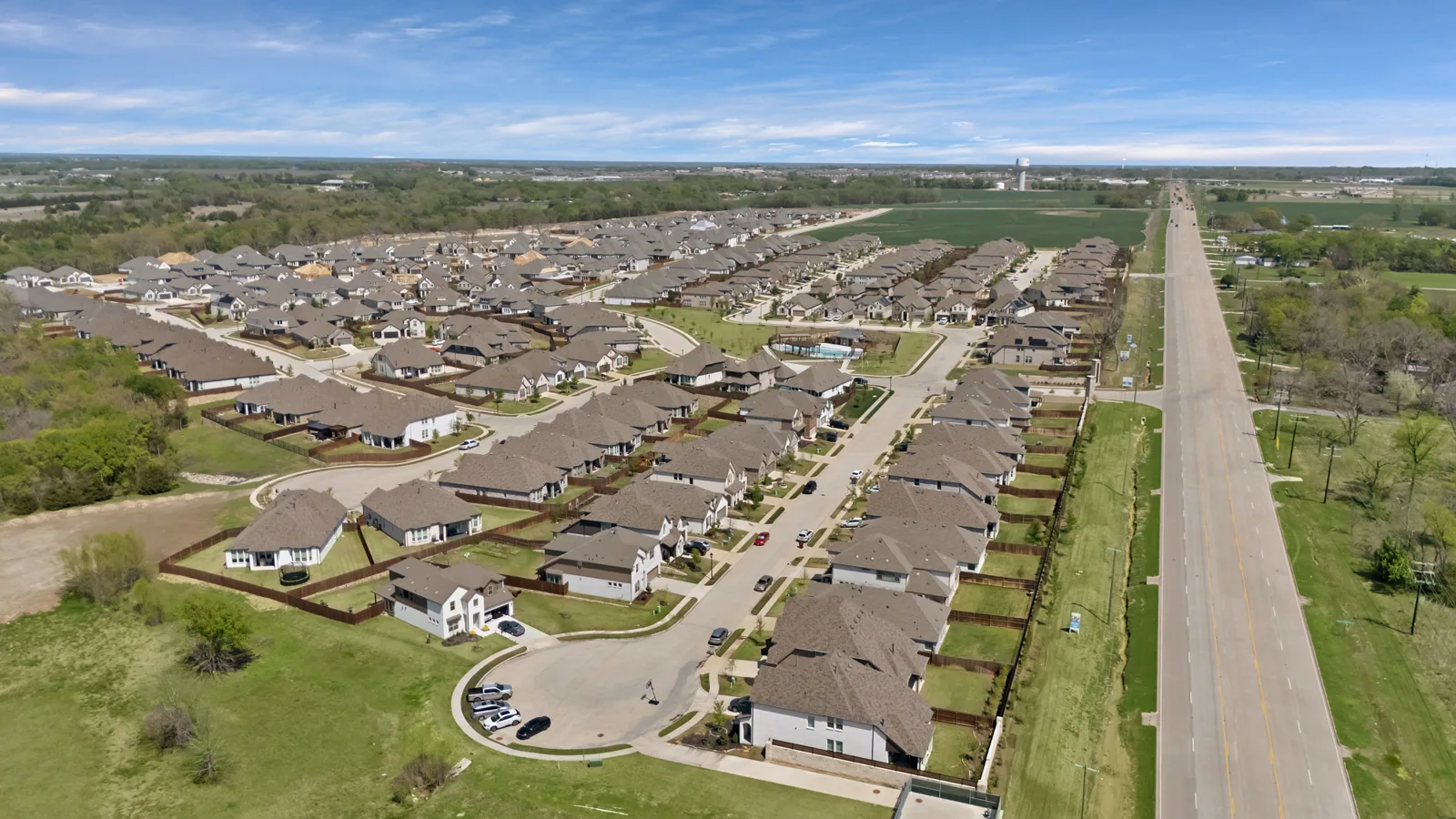
Commercial Roofing in Van Alstyne, TX
Commercial roofing in Van Alstyne, TX: baseline scans for new buildings, seam and flashing repair for retail strips and older stock, and storm upkeep.
Crews walk a new roof for months, and every boot, dropped tool and rushed flashing leaves a mark. A town that grows from 3,046 residents in 2010 to 4,369 in 2020, as Van Alstyne did, is a town where new construction roofs matter. We read a Van Alstyne, TX roof for the faults that show up on a young building and on an older railroad-town one alike.
Both kinds respond to the same method. We scan for moisture, cut a few cores, photograph the details and match the repair to what the readings show.
Inspect New Construction Early
Most early roof faults start in the first year. Punctures from trades. Unsealed laps at the edge of a work day. Flashings cut short around a pipe. Debris left in a drain. None of these leaks on day one, and each one gets worse with every heat cycle.
A baseline scan in the first year finds them. It records moisture, seams and details while the roof is clean. Repairs at that stage are small. The same fault left alone for five summers can wet a whole bay of insulation.
We walk the roof with a seam probe and a camera, then scan. We mark each finding on a plan with a number and a photo. The owner gets a short list of repairs, ordered by risk, and a file to keep with the building record.
Documentation matters at this stage. Photos of the roof at turnover, with dates, show what was installed and what condition it was in. If a dispute arises later with a contractor or manufacturer, those photos settle questions that memory cannot.
Check Retail and Service Strips Along the Highways
US 75 runs along the western side of Van Alstyne, with Exits 50 and 51, and Highway 5 passes through town. Commercial roofs along such routes can share one membrane across several tenant bays. We look for what that design does: one leak can run across several suites, and each tenant adds its own rooftop unit.
Tenant units are the common cause. Each one has a curb, a line set and a power run. When a tenant leaves and a new one arrives, the unit often changes, and the old curb gets patched around the new base. We check each of those patches.
Shared roofs need a clear record of who owns which curb. A written roof map settles questions when a leak crosses a lease line. Our shopping center roofing approach treats the strip as one system.
Drainage on a long strip roof needs a close look. Water flows toward interior drains or scuppers along the back wall. If a scupper is set too high or a drain bowl clogs, water collects and sits. We measure low spots with a level and log each one.
Support the College Branch and Nearby Schools
Grayson College operates a branch campus in Van Alstyne. Education buildings follow a calendar, and roof work follows the calendar. Large jobs fit in summer and in term breaks. Small repairs fit in the day, if staging stays clear of entrances and walkways.
We check the details that school roofs share: expansion joints between sections, drains at low points, and mechanical curbs on the roof. A joint cover that has split lets water run into the wall below. A clogged drain holds water on a flat roof for days.
For a branch campus, one question is how the roof was added to over time. Each wing may have a different age and a different membrane. We map each wing and treat the joints between them as their own item. Campus owners with several buildings can run them as one list, the way college and university roofing programs do.
Read Railroad-Era Buildings Carefully
Van Alstyne grew up on the Houston and Texas Central Railway in 1873. Older commercial buildings from a railroad town can carry parapets, shallow slopes and roofs patched many times. We check each one for those traits.
On an older building, we start with the walls. Water enters at cracked mortar, loose coping and dry sealant. A leak that seems to come from the roof may come from the wall. After the walls, we check the field for blisters, ridges and ponds.
If layers are stacked, cores tell us how many. Wet insulation must come out. Dry insulation can often stay. The scan decides where the line falls.
Weigh Storms and Winter
Van Alstyne sits in southeastern Grayson County, south of Sherman, and shares the county's storm calendar, with North Texas tornadoes cresting in April and May. Sherman has logged 113 F and -3 F, and a roof in Van Alstyne meets similar regional swings.
After wind or hail we check edge metal, seams and curbs. Hail bruises insulation without always splitting the surface, so we scan afterward. The record supports a hail damage repair and any insurance claim.
Winter adds ice and snow. A March 2008 band dropped up to 6 inches over Grayson County, and drains and scuppers must be clear before the cold arrives.
Wind is a quiet hazard on a young building. New edge metal sits on fresh fasteners, and a single loose section can spread under a gust. We tug test coping and drip edge at the baseline visit and again after each major storm.
Pick the Smallest Repair That Works
A small flaw deserves a small repair. A seam re-welded or re-taped. A flashing rebuilt. A wet section of insulation cut out and replaced. Larger work follows only when the scan shows wide moisture or a failed deck.
Price follows the amount of wet insulation, the penetration count and how much of the building must stay in service. We confirm local permit requirements before pricing a replacement, and we write the assumptions beside each line so the owner can see what a change in scope would do to the number.
Timing follows the weather. Welds and adhesives need dry surfaces and moderate air. Midsummer afternoons run hot, and January can run cold, so we set work in the windows where materials behave. A temporary seal holds an open repair only as long as the forecast stays clear.
Reach Van Alstyne From the County Seat
Commercial Roofing Questions
Should a building less than a year old be inspected?
Yes. A baseline scan finds construction punctures and loose details early. Small repairs then cost little.
Who owns a leak that crosses two tenant bays?
The lease decides, but a roof map helps. It shows which curb or seam let water in. We mark each unit on the map.
Does a small campus building need a special plan?
It needs a calendar. Large work waits for breaks, and small repairs keep walkways clear. Each wing gets its own review.
How do I find a leak in an older brick building?
Start at the wall. Mortar, coping and sealant are the usual entries. A probe from the roof side finds the path.
What should be done before the first freeze?
Clear drains and scuppers, and check flashings. Ice in a blocked drain holds water on the roof and adds weight to the deck.
Send the Address and the Roof Age
Send the building address, the year it was built or last roofed, and any leak history. We will walk the roof with you and explain what the readings show.
Related Roofing Work
Shopping Center Roofing
Shopping center and strip retail roofing in Sherman, TX: shared-roof leak tracing, rooftop unit curbs and phased reroofing that keeps every tenant open.
College and University Roofing
College and university roofing in Sherman, TX: roof records for mixed-age campus buildings, summer reroofing windows and storm checks before fall term.
Hail Damage Roof Repair
Hail damage roof repair in Sherman, TX: find bruises, fractured membranes and dented metal with moisture scans and core samples, then repair and document.
Sherman
Commercial roofing in Sherman, TX for fabs, food plants, hospitals and the college: moisture scans, seam repair, recovers and storm checks on flat roofs.