
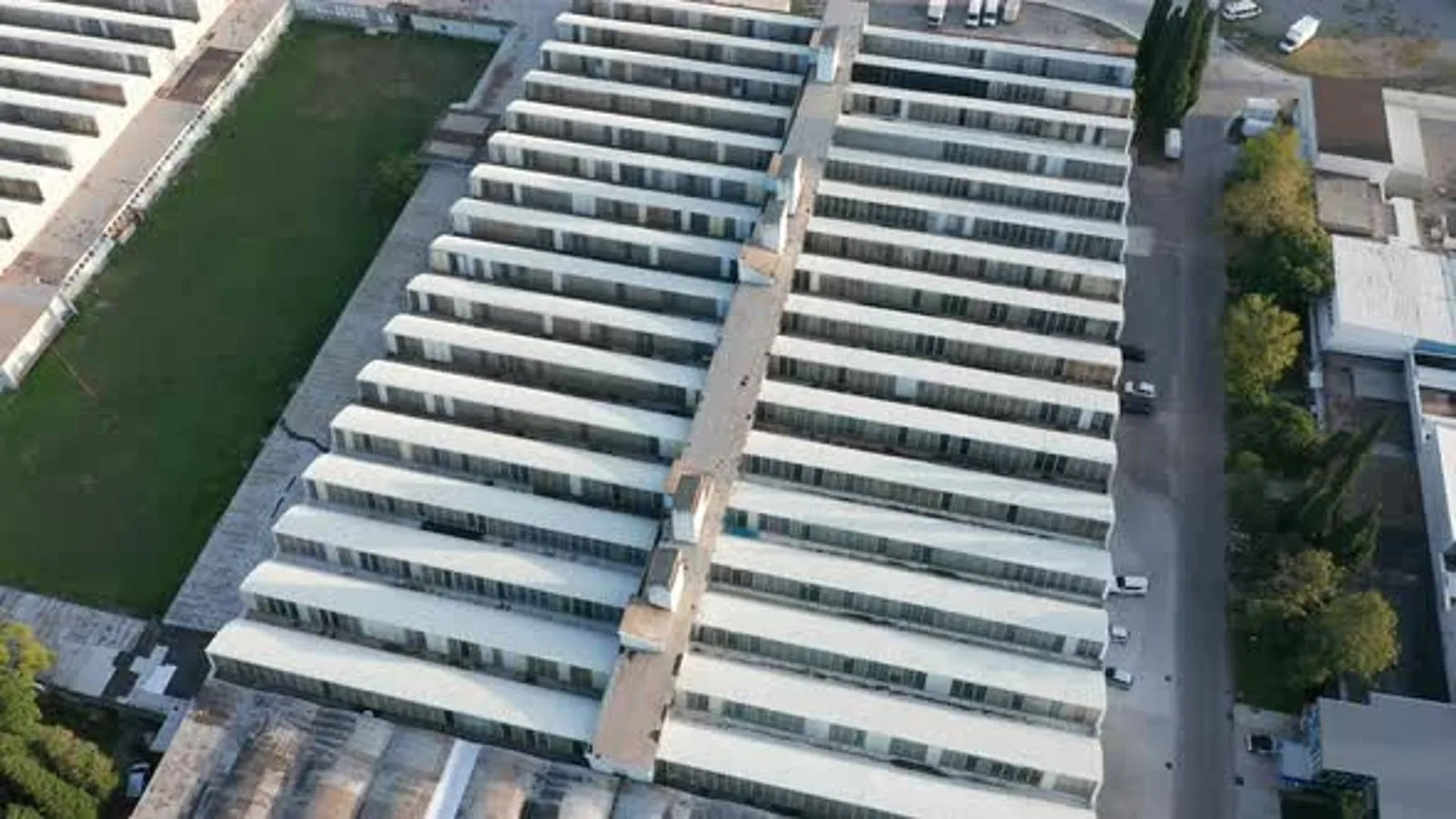
Manufacturing Plant Roofing in Sherman, TX
Manufacturing plant roofing in Sherman, TX: how process heat, exhaust and equipment load roofs, where plant roofs leak, and how we inspect and repair them.
A plant roof is not just a cover. It is part of the process. Heat rises from the line and warms the underside of the deck. Exhaust leaves through stacks and settles on the surface. Vibration passes through curbs and supports. Moisture from washdown or steam condenses on cold surfaces. The outside pushes in with 113 F summers and -3 F winters, the extremes Sherman has recorded. A roof under that double load moves more than a roof over an empty building. We begin with the process, then the roof.
Sherman's plants span food processing, semiconductor, laser, valve and metal enclosure work. Each plant has its own exhaust, its own shutdown calendar and its own rules for who may be on the roof. We ask for those first.
Plants differ in what they make and in what the roof must resist. A food plant has grease and wash water. A metal plant has dust and heat. A chemical area has fumes. A cleanroom has strict rules about particles and vibration. A laser or electronics plant may have vibration limits. None of these changes how water behaves, but each changes how we work and which materials we propose.
Know What a Plant Roof Carries
Plant roofs carry equipment. Exhaust fans. Makeup air units. Dust collectors. Cooling towers. Process piping. Conduit and cable trays. Each sits on a curb or a support, and each curb is a place where the membrane has to be flashed. Penetrations are numerous. Skylights bring daylight and leaks. Smoke vents and roof hatches add more.
Underneath the membrane is insulation and a deck rated for the roof loads. Equipment adds weight. Over the years units get added, moved and removed. Abandoned penetrations remain. The roof carries the history of the plant. We map it.
The map matters because a roof can hold many years of changes. A fan removed ten years ago may have left a capped hole. A pipe run added last year may rest directly on the sheet. A curb reset after a unit swap may no longer match its flashing. The map shows each, with a number and a photograph. A facilities lead who holds the map can answer questions about any spot on the roof.
Watch for How Plant Roofs Fail
Curbs fail first. Vibration loosens them. Flashing cracks. Supports rub through the sheet. Exhaust films soften some membranes. Chemicals attack others. Heat from below dries sealants and shrinks flashing. Ponding forms around equipment pads that block flow. Foot traffic wears the paths technicians use.
Failure cost is high. A leak onto a production line stops production. A leak onto electrical gear is dangerous. A leak onto a clean area contaminates it, and a leak into a space with controlled humidity can upset the process. For these reasons, a plant roof earns a closer look and a tighter schedule than a warehouse roof, and a hospital or a data center earns the same.
Test With Plant Rules in Mind
We begin with a meeting. Who allows access? What permits are needed? Which areas are off limits? Where is hot work allowed? Then we walk the roof. We photograph every penetration and every support. We probe seams. We check coatings and flashings. We scan for moisture. We take cores where the scan says. Anything over a process area gets extra care.
Drains get a special check. A plant drain may carry steam condensate, cooling water or washdown. A blocked drain can overflow onto equipment. We trace each drain to its outlet where we can, flush it and note any discharge that lands on the roof. Condensate lines that drip onto the sheet leave stains and wear spots, and we flag them for the owner's maintenance team.
The report is written for the plant manager and the facilities lead. It sorts items by risk to production. A leak over a line ranks above a leak over a storage bay. The plant sees what to fix at the next shutdown and what can wait. Where a repair cannot wait for a shutdown, the report proposes a holding step that keeps water out and a date by which the permanent step should be done, so a delay does not become a habit.
Count Hail, Wind and Winter Into the Plan
Hail bruises sheets and damages rooftop fans and coils, and penny-size stones fell around Luella on April 3, 2014. Wind matters as well: Sherwood Shores took an EF2 on March 21, 2022, and the regional tornado counts crest in April and May. After a severe event we check units, curbs, edges and loose items. Winter brings ice and snow. A March 2008 band of up to 6 inches of snow sat over Grayson County, so drains and structure get checked after each winter event.
Build the Repair Step by Step
Agree the access plan. Isolate equipment if required. Clean and repair the flashing. Reset the curb. Replace the support pad. Patch the membrane. Cut out wet insulation. Probe and photograph. Where the plant has a shutdown, bigger work is done then. Where it does not, work proceeds in sections. A mechanical contractor disconnects units when a curb must be reset. Electrical contractors lock out power. The schedule shows who does each step and when. A roofer who arrives before the lockout is done waits. A mechanical crew that reconnects before the flashing is dry can ruin a day's work. Hold points prevent both.
Hot work needs a permit and a fire watch. Torches are avoided when the plant can use welded or adhered systems. Chemical areas get a hazard review. Material is staged where forklifts can reach it. Price follows area, penetrations, equipment coordination, access and the length of the dry-in window. The scope lists coordination as its own line, because disconnects, lockouts and permits take time even when the roofing itself does not.
Match Plant Roofs to Sherman Parks
Progress Park is a master-planned industrial park of about 3,300 acres, and the development corporation still held land there to sell, so plants of different ages sit side by side. Foundation Business Park in Denison fronts State Highway 91 and lists Kwikset and Florestone Products as tenants. In Sherman, the Texas Instruments wafer fab that began production in December 2025 sits in the same city as older food and metal plants, and GlobalWafers USA is investing in wafer manufacturing. A roof at any of them is read from its own cores, not from its neighbor. The shutdown calendar, the lockout rules and the exhaust list belong to each plant alone, so the plan for one never carries over to the next without a fresh walk.
Ask What the Record Shows
The owner gets the file. A penetration map. Photographs. Moisture maps. The shutdown plan. Core results. The next visit dates. Systems used on plants include PVC for grease exposure and KEE for chemical exposure. A neighboring building type is the warehouse roof.
Commercial Roofing Questions
Do plant roofs need special access rules?
Often. We meet with the plant first and follow permits, lockout and area limits.
Can work continue during production?
Usually, in sections, with protection below and a daily dry-in.
What sheets handle exhaust?
PVC and KEE resist many fats and oils. The exhaust list decides.
Who disconnects equipment?
The plant's own staff or a mechanical contractor. We coordinate the dates.
What is the first step after a leak over a line?
Protect the line, then find the entry, then dry in. The record names each step.
Send the Address and the Leak History
Send the building address and any leak history. We will walk the roof with you and explain what the readings show about the curbs, the seams and the insulation.
Related Roofing Work
Warehouse Roofing
Warehouse roofing in Sherman, TX: how long flat roofs drain and move, where they leak, and how we inspect, repair, coat and replace them in use.
Data Center Roofing
Data center roofing in Sherman, TX: moisture scans, welded seams and flame-free repairs for roofs crowded with cooling plant, planned around change windows.
Progress Park
Commercial roofing in Progress Park, Sherman, TX: scans, seam repair and recovers for food, beverage and metals plants, with baseline surveys for new buildings.
Sherman
Commercial roofing in Sherman, TX for fabs, food plants, hospitals and the college: moisture scans, seam repair, recovers and storm checks on flat roofs.