
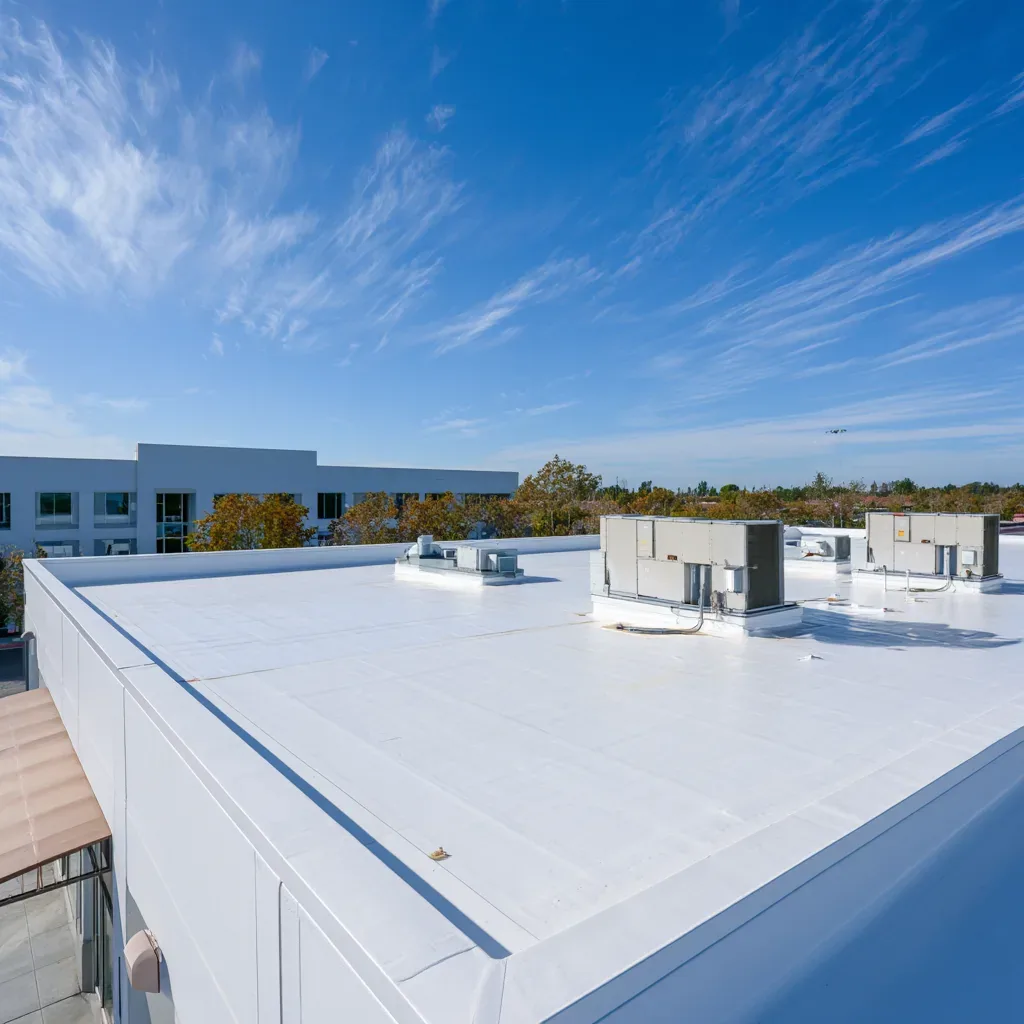
Cool Roof Installation in Sherman, TX
Reflective cool roof systems for Sherman, TX commercial buildings: solar reflectance, emittance, surface temperature, dirt loss and how a cool roof cuts heat.
Sunlight hits a roof as energy. A dark surface absorbs most of it and turns it into heat. A light surface reflects much of it back to the sky. That difference can be many degrees on a hot afternoon. A roof that runs cooler passes less heat into the building and ages more slowly.
Sherman, TX has recorded a summer high of 113 F. On a day like that, a dark roof surface can run far above the air temperature. A cool roof is built to stay nearer to it. Two numbers describe it. Solar reflectance says how much sunlight bounces off. Thermal emittance says how well the surface sheds the heat it keeps. Cooler roofs also change maintenance. A roof that stays cooler holds sealants longer. It softens less under foot traffic. The effect builds over years.
Understand What Makes a Roof Cool
Reflectance is measured from zero to one. A white membrane may start above 0.7. A dark one may sit near 0.05. Emittance is also zero to one. Most nonmetal surfaces score high. Bare metal scores low, so a coated metal roof gains from the coating.
Dirt lowers reflectance. A new white roof loses some reflectance in its first year as dust and grime settle. Rain restores part of it. Aged values, not new values, set the real performance. We quote both and plan washdowns.
A cool roof is not only white membrane. It can be a coating, a light-colored metal panel, a reflective single-ply sheet or a granule cap sheet with reflective granules. Each has its place. Product ratings come from third-party tests. Ratings list initial and three-year aged values. We use the aged value when comparing options, because the three-year number is closer to what the roof will do for most of its life.
Measure the Gains Against the Building
A cool roof reduces heat entering through the roof. The gain depends on the building. A single-story warehouse with little insulation gains more than a tower with a thick roof. A building with large cooling equipment on the roof gains from lower intake air temperature.
We look at insulation level, deck type, roof area compared with wall area and the cooling system. We estimate the effect qualitatively and discuss the range with the owner's energy staff. We do not promise a saving figure. The real result follows from use patterns we do not control.
The winter side matters. A cool roof can lose a little winter heating benefit. In North Texas the cooling season is long, and the balance usually favors reflection. Owners with heated production spaces should discuss it with their engineer. Interior conditions play a part. A building with large internal heat loads, such as an electronics plant, may see little change in cooling demand from a cool roof. A building where heat comes mainly through the roof sees more. The engineer's load model tells which case applies. A before and after surface-temperature record gives the owner a measured result. We take the readings on a clear afternoon at the same spots.
Choose the System That Fits the Roof
On a roof that needs replacement, a white TPO roof or PVC sheet is a standard choice. The sheet is white from the factory. Seams are heat-welded. On a roof that is sound, a reflective acrylic coating or silicone coating can add reflectance. A roof coating restoration job can do both at once.
Metal roofs can take factory-cool finishes or field-applied coatings. Built-up roofs can take reflective cap sheets or coatings over gravel. Each combination needs a compatibility check. A coating that peels in a season wastes the money.
Surface temperature measurements back the choice. We use an infrared thermometer or camera to record the roof's current surface temperature on a hot afternoon. After installation we repeat it. Seams in white membrane are checked with a probe, as with any heat-welded sheet. A white sheet shows dirt at laps and punctures, which makes inspection easier. Walkway pads in a contrasting color mark service routes and protect the sheet.
Cut Thermal Shock and Surface Wear
Heat does damage beyond energy. A dark membrane swings from freezing nights to scorching afternoons. Each swing stretches seams and flashings. A cooler surface swings less. It also slows plasticizer loss and UV breakdown.
Sherman's record range runs from -3 F to 113 F. A cool surface narrows the swing the membrane sees on a sunny day. It does not stop winter cold, but it reduces summer extremes. Seams, sealants and flashings last longer.
A heat and UV roof damage repair often shows the other side of this: chalking, cracking and brittle flashings on an old dark roof. A cool surface is one way to slow that. Thermal movement is easy to picture. A ten-foot strip of membrane or metal changes length slightly across the day. Over thousands of days the repeated change works on every fastener and weld. Lower peak temperature means smaller movement and fewer cycles at the extreme.
Install Over a Dry, Sound Base
A cool surface does not fix a failing roof. The base must be dry and firm. Moisture scans and cores come first. Wet insulation comes out. Loose seams are repaired.
On new membrane work, the sequence is deck prep, insulation and cover board, white membrane, welded seams and flashings. On coatings, the sequence is wash, repair, prime and coat in two passes. Thickness is measured after cure.
Weather decides the pace. Coatings need dry surfaces and mild temperatures. Membrane needs dry decks. We schedule around Sherman's spring storms and set aside spare days. Edge details keep the cool surface intact. Reflective membrane needs clean terminations, sealed seams and firm edge metal. A loose edge lets wind lift the sheet and ends the benefit. Wind uplift checks apply to cool roofs as to any other. Roof access is planned with the occupants, and the crew keeps dust and fumes away from air intakes during the work.
Keep the Surface Reflective
A cool roof needs upkeep. Dirt, algae and scuffs reduce reflectance. A yearly wash with mild detergent restores much of it. Standing water breeds growth, so drainage matters. Walkway pads protect the surface along service routes.
The file records the product, the initial reflectance and the dates of washdowns. A later visit can compare. An owner with a distribution building near the North Texas Logistics Park or a plant in Progress Park can set a washdown with the yearly roof check. Reflective roofs and solar-ready roofing share space on a building, and the plan lays out both at once. Washing is simple. Low-pressure water and a soft brush or mild detergent remove dust and film. High pressure can damage seams and coatings, so the crew keeps the wand away from laps. Algae needs a cleaner made for roofs. The washdown date goes on the calendar with the yearly roof visit, so cleaning and inspection happen on the same trip.
Commercial Roofing Questions
How much will a cool roof save?
It depends on insulation, equipment and use. We discuss ranges, not promises.
Does a white roof stay white?
It dirties. Reflectance drops in the first year. Washing restores part of it.
Can any roof be made cool?
Most can, by membrane or coating. The base must be dry and sound.
Does a cool roof leak less?
Not directly. It ages more slowly because it runs cooler.
Do cool roofs cost more?
Often little more than a standard membrane. Coatings add a layer cost.
Send the Address and the Cooling Bills
Send the building address, the roof age and a summer cooling bill if you have one. We will walk the roof, record its surface temperature and explain the options.
Related Roofing Work
TPO Roofing
TPO single-ply roofing in Sherman, TX: how the welded membrane moves, where it fails, how we test seams, and how repairs and replacements are built.
Acrylic Roof Coatings
Acrylic roof coatings in Sherman, TX: how water-based reflective films cure, where they fail, and how we test, clean and apply them on well-drained roofs.
Roof Coating Restoration
Commercial roof coating restoration in Sherman, TX: moisture scans, adhesion tests, seam prep and thickness checks that extend the life of a sound roof.
Heat and UV Roof Damage Repair
Repair of heat and UV degradation on commercial roofs in Sherman, TX: chalking, crazing, shrinkage, seam creep and coating restoration with dated records.