
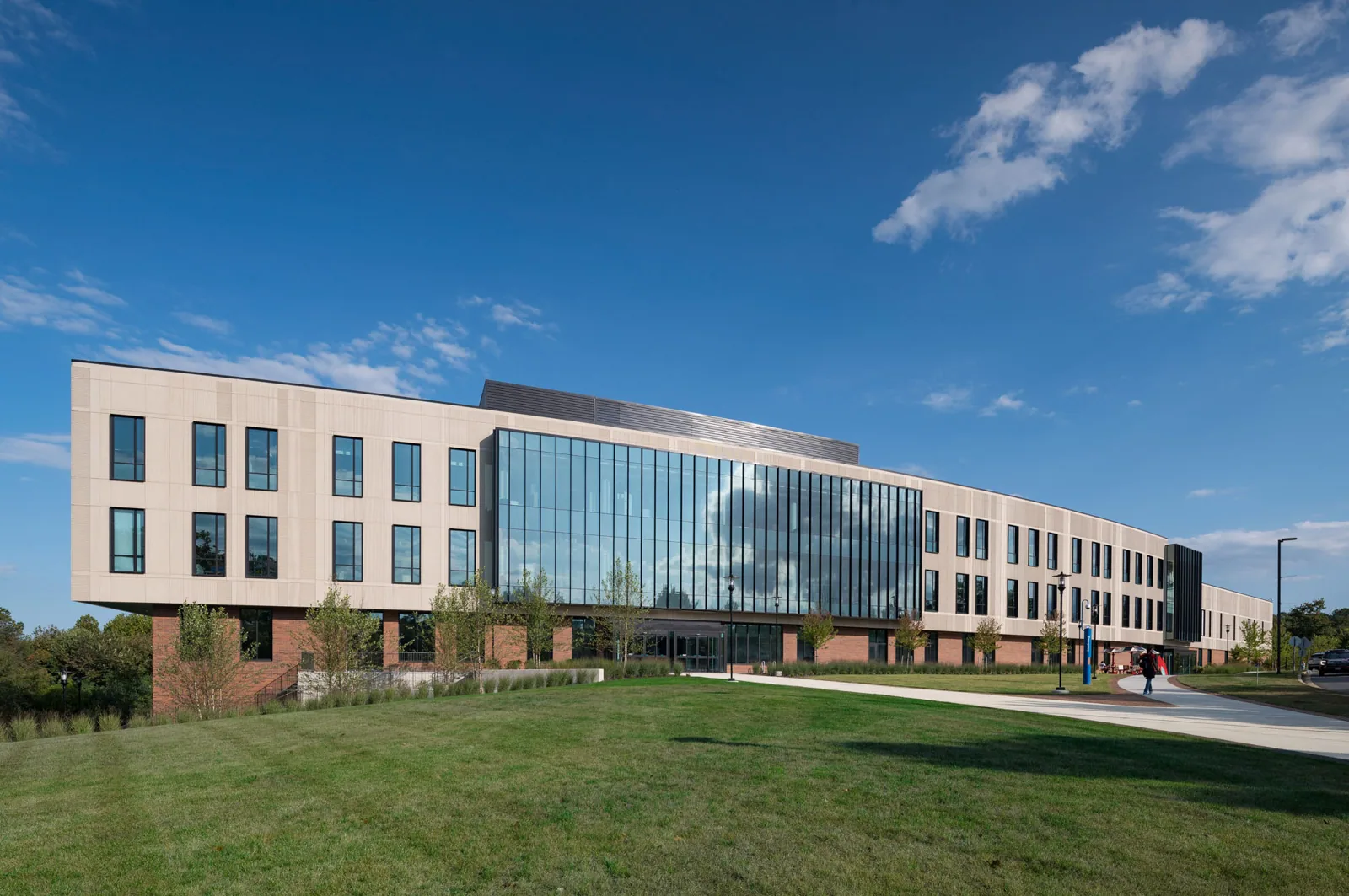
College and University Roofing in Sherman, TX
College and university roofing in Sherman, TX: roof records for mixed-age campus buildings, summer reroofing windows and storm checks before fall term.
Campus roofs are a collection, not a single system. A hall from one century, a lab from another and a student center from a third each carry a different roof. Each roof expands and contracts at its own rate. In Sherman, TX the range between a record 113 F and a record -3 F gives every one of them a hard annual workout. Thermal movement opens laps, tears flashings and loosens deck fasteners.
That is why we treat a campus as an inventory. We scan each roof for moisture, pull cores where the scan shows wet insulation, and photograph every flashing. The result is a ranked list. The facilities office sees which roofs are sound, which need repair this year and which need replacement soon. Money goes where the evidence points.
Sort Campus Roofs by Age and Assembly
Austin College was founded in 1849 and has been in Sherman since 1876. A campus with a history that long is likely to join newer roofs to older walls, parapets and drain lines, and we look at those junctions first.
Those junctions are where leaks start. A flashing that joins a new membrane to a historic masonry wall must absorb movement from both sides. Mortar joints crack. Sealant ages. We inspect every wall junction by hand and record its condition.
Assembly matters as much as age. A roof with tapered insulation drains well. A roof with flat insulation ponds. We measure ponding after rain and again after a dry spell, so the record shows where water sits and for how long.
Roof access gets recorded too. Many campus roofs have a single ladder or hatch, and some require a lift. We note who holds the key and what notice the building manager needs. That detail saves a wasted trip later. It also keeps a contractor from improvising a route over a finished lawn or a courtyard.
The same discipline applies to K-12 school roofs, which share many of these mixed-age problems at a smaller scale.
Cover More Than One Campus
Higher education in this region spreads across several towns. Grayson College is among Denison's employers, and it also operates a branch campus in Van Alstyne. Collin College opened its Celina campus in fall 2021, so roofs there are likely still young.
A young roof still needs attention. Early defects show up in the first few years. A missed seam weld, a gap at a penetration or a poorly sealed edge can open under the first few heat cycles. An early scan catches those while the installer's workmanship terms may still apply.
Multi-campus systems need a common record, and the facilities budget needs one list. We use one format for every site so a facilities director can compare a Van Alstyne building against one in Denison without translating notes.
Check Roofs Before and After Storm Season
April and May bring the most tornadoes to North Texas. The storm of June 8, 2025 brought an EF1 southwest of Sherman and half-dollar hail northwest of Denison. A college does not close for such storms, and residence halls need dry rooms the next morning.
We recommend a baseline survey before April. It records edge metal, seams, drains and rooftop equipment. After a storm, a second pass repeats the same photos. Any change is visible at once. That comparison also supports an insurance claim, because it separates new damage from age.
Hail bruises are the quiet threat. They crush insulation without splitting the membrane. A moisture scan finds them. Leaving them alone lets water sit under a surface that looks intact.
Winter belongs in the plan as well. The December 2013 sleet put 4 to 5 inches of ice on roofs from Sherman to Denison. Ice blocks drains and loads decks. When it melts, water runs to the lowest point and tests every seam on the way. A campus that checks drains before the first freeze and again after the last one avoids most winter leaks.
Roof drains on a campus collect leaves from mature trees. A clogged drain turns a flat roof into a shallow pond within one heavy rain. We clear and log each drain so the record shows who cleaned what and when.
Work Inside the Academic Calendar
Summer is the natural window. Students are gone, and a full tear-off can proceed without the noise problem. But a summer window is also the hottest part of the year. Hot membranes soften, and adhesives cure fast. Crews start early and stop in the afternoon heat.
Research and teaching spaces add limits. A lab with sensitive instruments cannot take vibration or dust. A library cannot take water. We map those rooms before work starts and set protection under the deck where needed.
Residence halls need notice. We give housing offices the dates for noisy work and the safe routes for residents. Reroofing an occupied building goes smoothly when every office knows the plan.
Public buildings follow their own rules. A state-supported college may need to document procurement and scope in a way a private owner does not. We write scope lines that a purchasing office can attach to a bid package. A government building roof follows a similar path, and the paperwork carries across.
Closeout matters too. At the end of each project we deliver photographs, a list of materials, and a maintenance schedule. The facilities office then holds a complete record of what went on each roof.
Match the System to the Building
Low-slope buildings suit single-ply membranes. A TPO roof reflects heat and has welded seams. A modified bitumen roof adds a tough layered surface for roofs with heavy foot traffic from maintenance staff. Metal roofs suit sloped historic-style buildings and shed water quickly.
Cost drivers are plain. They are roof area, tear-off depth, insulation thickness, access by crane or hoist, and the number of penetrations. We list each one in the scope so a purchasing office can compare bids on equal terms.
Good records speed procurement. Public institutions often need documented scopes. Our condition reports give them that file.
Not every campus roof is flat. Some older halls have steep sections where a standing seam metal roof is the sensible choice. Metal expands more than most membranes, so clips must float and panels need room to slide. We check clip movement during inspection and look for sealant failure at laps and penetrations.
Commercial Roofing Questions
Can a campus roof program span several years?
Yes. We rank roofs by condition and risk, then assign each to a year. The plan updates after every inspection cycle. Funding can follow the list.
How do you protect labs under a roof?
We map sensitive rooms before work begins. Protection goes under the deck, and noisy steps happen when the room is empty. Some instruments need a shutdown notice.
Is a young roof safe from problems?
No. Seam and flashing defects often surface within the first few years. An early scan costs little and records the roof's starting condition. The first inspection also fixes the baseline that every later visit is compared with.
Do you work with facilities staff?
We do, and we prefer it. Staff know which roofs have leaked and where. That history shortens our scan and sharpens the first findings.
Will new work match old historic walls?
The membrane does not need to match the wall. The flashing must seal to it. We detail each junction by hand so water cannot get behind the wall surface.
Send the Campus Address and Leak History
Share the building list, the dates of any past leaks and your academic calendar. We will walk the roofs with your facilities team and explain what the readings show.
Related Roofing Work
School Roofing
School roofing in Sherman, TX: moisture scans, seam repair and phased replacement planned around classes, with storm and freeze damage found early.
Van Alstyne
Commercial roofing in Van Alstyne, TX: baseline scans for new buildings, seam and flashing repair for retail strips and older stock, and storm upkeep.
Denison
Commercial roofing in Denison, TX: parapet and flashing repair on older brick flat roofs, plus moisture scans and recovers for plants, clinics and schools.
Occupied Building Reroofing
Reroofing Sherman, TX hospitals, schools, plants and offices while they stay open, with sectioned tear-off, dust and noise control and daily closure.