Standing Seam Metal Roofing in Sherman, TX
Standing seam metal roofing in Sherman, TX: how clips and seams let panels float, where they fail in wind and hail, and how we inspect and repair them.
A standing seam panel is built to move. It sits on clips, not on screws through the face. Heat makes it grow. Cold makes it shrink. The clips let it slide a fraction of an inch. A steel panel can change length by half an inch or more over a long run between -3 F and 113 F, the extremes Sherman has recorded. If the panel could not slide, it would buckle or tear at its fasteners. The clip is the heart of the system. We start there.
Different panels use different clips. Some are fixed, which holds the panel in place at one point. Some are floating, which lets the panel slide. A well-designed roof uses both: fixed at one end so the panel does not creep, floating elsewhere so it can grow. If every clip is fixed, the panel binds. If every clip floats, the panel can walk down the slope. The layout matters, and we check it against the plans where we have them.
Then we test the seams. Then we plan the repair.
Owners choose metal for its long life and its fast water shedding. Both are true when the details are right. Neither is true when a clip has slipped, a seam has opened or a penetration has been cut without a proper curb. The details decide the outcome, and the details are small.
Know What a Standing Seam Roof Is Made Of
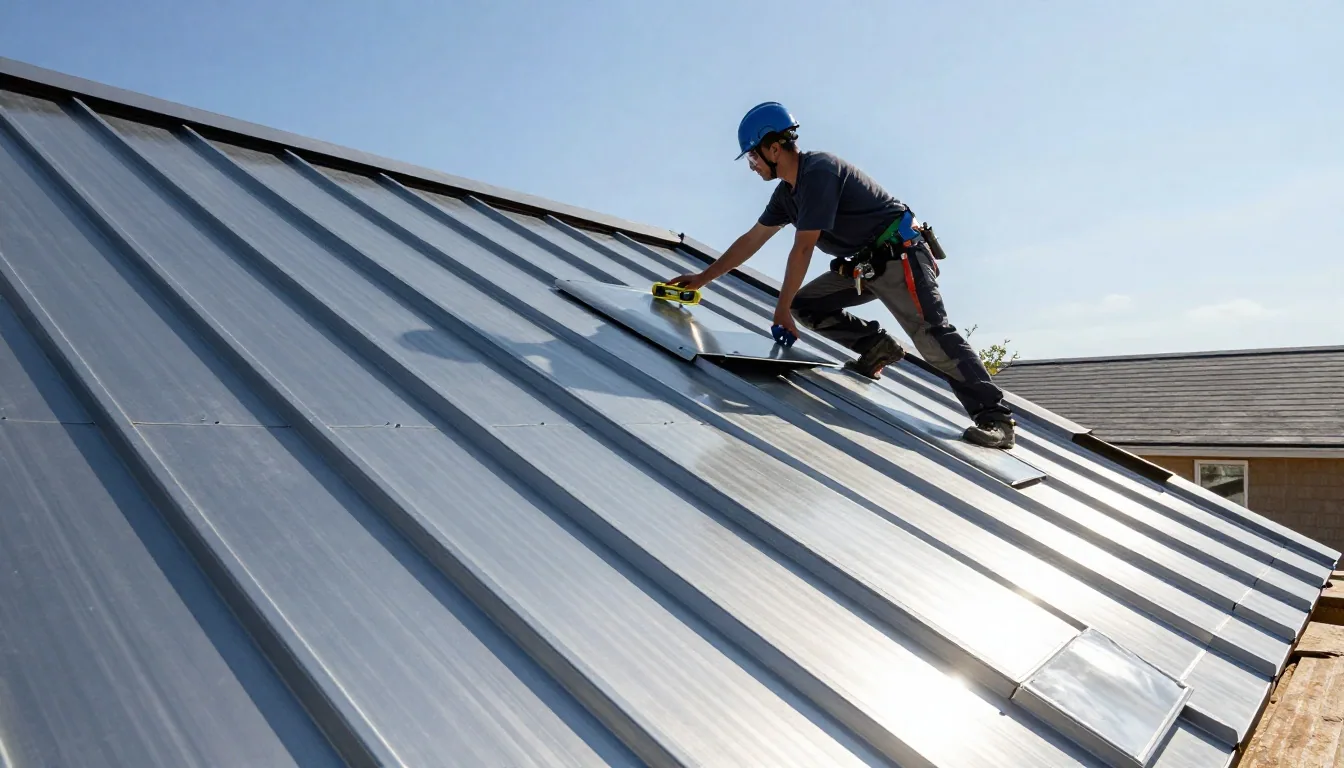
The panel is steel or aluminum with a coated finish. Its edges fold upward into ribs. Two ribs meet and are seamed together, by snapping or by a mechanical machine. The seam stands above the flat of the panel, away from water. That is why it sheds water well. No fastener passes through the flat. Clips hold the panel to the deck at the rib. The clips are fastened to the structure. A sealant strip may sit in the seam.
Panels run from eave to ridge in single pieces. That removes horizontal joints where water could enter. Ridge caps, eave trim and gable trim close the ends. Each trim piece has its own fasteners and sealant, and those are the details that age.
Underneath the panels sits an underlayment, and below that the deck or purlins. In a commercial building the structure may be open framing with insulation blankets below. Condensation can form on the underside of cold metal. It drips like a leak but is not one. We check the dew point conditions before we call a drip a roof failure. The difference changes the repair.
Watch for How Standing Seam Fails
Clips slip or break. A panel that cannot slide binds. It oil-cans, which means it shows waves in the flat. Seams open if they were not closed fully. Sealant dries. Fasteners at trim back out. Penetrations leak where a boot has cracked. Coating wears at cut edges and scratches, and rust starts.
Wind loads the roof from the edges. Corner and edge zones carry the highest uplift. A clip pattern that suits the field may be too light at the corner. Hail dents panels. A dent is cosmetic unless it cracks the coating or kinks a seam. We look for both.
Thermal movement works on penetrations. A pipe or curb that is fixed to the structure does not move with the panel. The flashing between them stretches every day. Over years it tears. A good detail allows for movement with a flexible boot or a floating curb. We note which details allow movement and which do not.
Test Clips, Seams and Fasteners
We walk the panels on the seams, or beside them, to avoid denting the flat. We look at the rib lines for gaps. We press a few seams to see if they spring. We check trim fasteners with a tool. At selected spots we lift a panel end to see the clips. We look at penetrations, curbs and skylights. A moisture scan helps on roofs over insulation or flat sections. A leak in a metal roof can travel far along a rib before it drips.
We also check what hangs on the roof. Snow guards, solar mounts, antenna masts, sign brackets and conduit supports often clamp to the seam or pierce the flat. Each is a possible leak path and a possible restraint on movement. A clamp that grips the seam too hard can distort it. A fastener through the flat needs a gasket that is still soft. We list each and note its condition.
The report lists clip condition, seam condition, trim condition and coating condition. It gives a likely cause and a price for each fix.
Count Hail, Wind and Ice Into the Plan
Hail has been reported across Grayson County: a measurement of 1.25 inches northwest of Denison on June 8, 2025, and dime-size stones north of Sadler in April 2014. Large hail dents panels and can crack coatings. After a hail event we look at color change, cracked paint and dents along the ribs. Wind is the other force. The EF2 that struck Sherwood Shores on March 21, 2022 and the EF1 that hit Howe in April 2016 mark the wind events on record nearby. Edge and corner clips get a pull test after any severe wind.
Ice and snow slide on metal. Metal sheds ice badly, and the December 2013 sleet left about 4 to 5 inches of accumulation across Sherman and Denison. Snow can slide off in a mass and tear gutters, vents and snow guards. We check them after winter events.
Build the Repair Step by Step
Replace broken clips. Re-seam open ribs. Replace corroded fasteners with larger ones and new washers. Reseal trim with compatible sealant. Rebuild penetration boots. Touch up coating at scratches. For a panel that has buckled, replace the panel. For a dented panel with sound coating, leave it and record it. Each fix is photographed and numbered. The record shows the clip, the seam or the trim piece before and after, so a later inspection can compare.
Where a roof has widespread coating failure, repainting can extend life. Where seams have opened across a large area, a section replacement may be better. A metal roof retrofit is another path for old exposed-fastener roofs. Price follows area, panel type, access and the cost of trim.
Match Standing Seam to Sherman Buildings
Metal roofs are common on industrial buildings, warehouses and many institutional buildings. Foundation Business Park serves manufacturing and distribution users, and pre-engineered metal buildings with low-slope roofs should be common there, so panel roofs are a natural fit. The same holds for distribution buildings in North Texas Logistics Park. Access for a lift matters, because eaves on industrial buildings run high, and the retrofit of an older metal roof raises the same questions. We plan fall protection and lift access before the crew arrives. Slippery coatings and steep slopes make metal roofs dangerous after rain, and crews wait for dry conditions when they can. The schedule shows the weather buffer and the plan for an early stop.
Ask What the Record Shows
The owner gets the file. Clip counts. Seam checks. Trim photographs. Coating notes. The next visit dates. Owners comparing metal with membranes can weigh TPO roofing against it on a warehouse roof built either way.
Commercial Roofing Questions
Why do clips matter?
Clips hold the panel and let it slide. A broken clip lets the panel move in ways the seam cannot take.
Is oil-canning a defect?
Waviness in the flat is called oil-canning. It is often cosmetic, but it can show binding at clips.
Can hail dents be ignored?
Often, if the coating is intact and seams are sound. Cracked coating needs repair.
How is a leak found on metal?
Trace the rib upslope, then check trim and penetrations. A scan helps.
Is painting worth it?
A repaint can extend life when the substrate is sound and the coating has failed.
Send the Address and the Leak History
Send the building address and any leak history. We will walk the roof with you and explain what the readings show about the clips, the seams and the coating.
Related Roofing Work
Metal Roof Retrofit
Retrofitting and restoring exposed-fastener metal roofs in Sherman, TX: why screws back out, how panels leak, and how we re-fasten, reseal, coat or cover them.
Foundation Business Park, Denison
Commercial roofing in Foundation Business Park, Denison, TX: tilt-wall parapet repair, metal roof restoration and membrane scans for plants and warehouses.
Commercial Roofing at North Texas Logistics Park near Sherman, TX
Commercial roofing at North Texas Logistics Park near Sherman, TX: ponding control, wide-span roof scans, dock-friendly repairs and storm checks for flat roofs.
Metal Roof Retrofit
Retrofitting and restoring exposed-fastener metal roofs in Sherman, TX: why screws back out, how panels leak, and how we re-fasten, reseal, coat or cover them.