
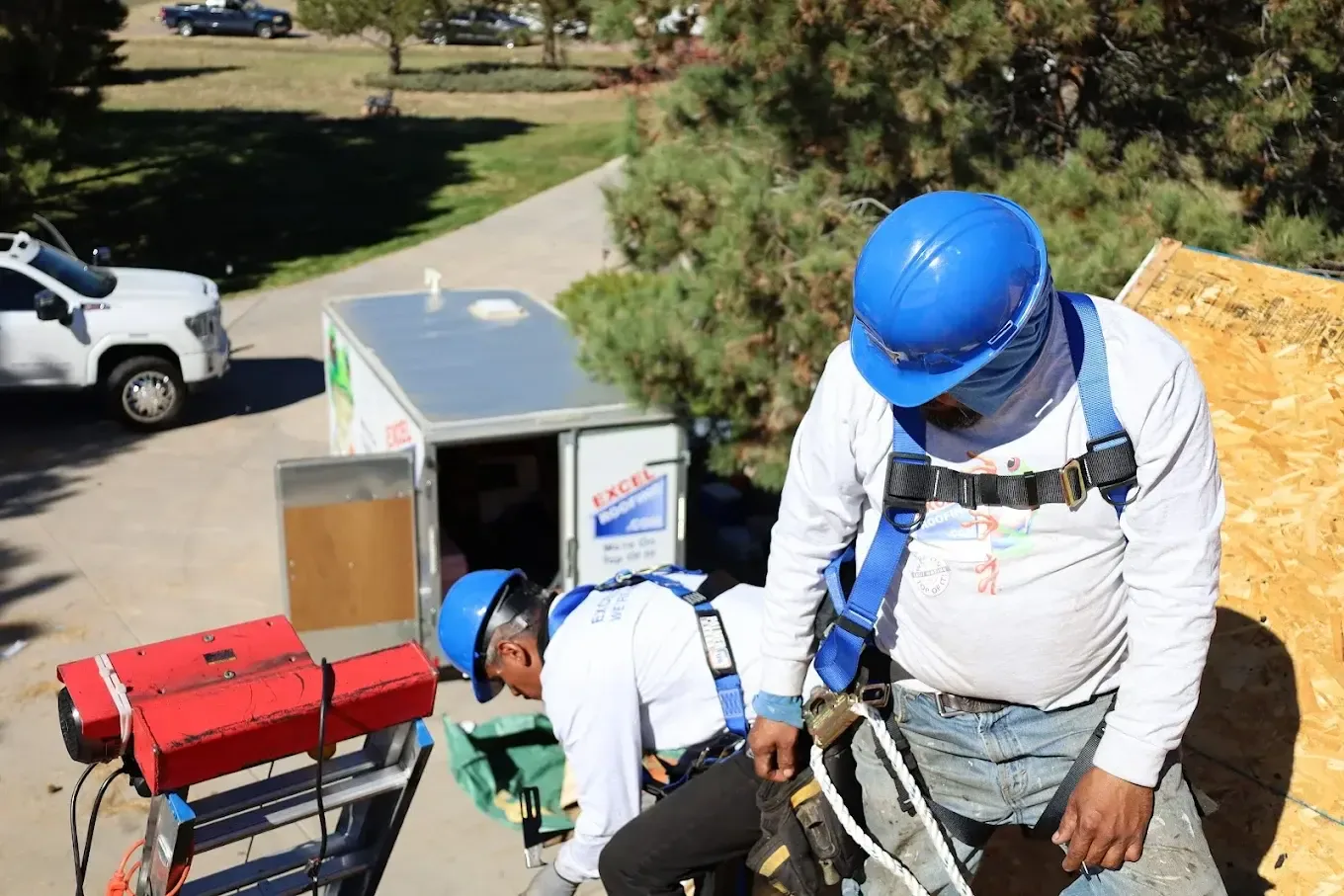
Occupied Building Reroofing in Sherman, TX
Reroofing Sherman, TX hospitals, schools, plants and offices while they stay open, with sectioned tear-off, dust and noise control and daily closure.
A roof is a lid on a working room. Lift it and the room is exposed to rain, dust, noise and fumes. Tear-off shakes the deck. Old insulation sheds grit. Hot work throws odor. Adhesives off-gas. All of it moves toward the people below unless something stops it.
Reroofing an occupied building in Sherman, TX is mostly the work of stopping it. The roof comes off in small pieces. Each piece is closed the same day. Barriers, schedules and checks keep the occupants safe and the operation running. The plan runs on one rule: nothing is left open that cannot be closed by dark.
Write the Occupancy Plan Before the Work Plan
The first document lists who is under the roof and what they do. Which rooms are sensitive? Which hours are quiet? Which doors are used by the public? Which equipment cannot stop? Which air intakes are near the work?
Sherman has varied occupants. It has three hospitals, a college and a school district with more than a thousand employees. Food plants and a new semiconductor fab operate here as well. Each has a different list of limits. A hospital protects patients. A school protects classes. A food plant protects product. A fab protects clean air.
We meet the facility team and walk the building. We mark intakes, exits, sensitive rooms and fire systems on the roof plan. The occupancy plan comes from that walk. It sets the sequence, hours and controls. The plan names a single contact on each side. One person speaks for the facility. One speaks for the crew. Questions go through them, and decisions are logged with a time and a name.
Open the Roof in Small Sections
The roof is divided into sections. A section is sized so the crew can tear off, repair the deck, install insulation and membrane and finish flashing in one day. At day's end the section is sealed. No area is left open overnight.
Sections are ordered by risk. Sections over sensitive rooms may be done on weekends or breaks. Sections over storage can go on weekdays. Sections near intakes are timed when intakes can be shut.
Weather shapes the order. A forecast with rain moves work to dry days. Spare days are built in. Sherman's spring storms and summer heat can disrupt a schedule, and a plan without slack fails. Deck repair is part of each section. When the old roof comes off, the deck is exposed. Rusted panels and loose fasteners are fixed at once. A bad spot found at 2 p.m. cannot wait until tomorrow if the section must be sealed tonight. We carry deck panels, fasteners and sealant for that reason.
Contain Dust, Noise and Odor at the Source
Dust control starts on the roof. Old gravel and insulation are removed with enclosed chutes and vacuums. Debris goes straight to a container. Cutting uses saws with vacuum attachments where possible.
Noise is scheduled. Loud tasks, such as tear-off and deck fastening, go in agreed windows. A school avoids testing periods. A hospital avoids procedures. An office avoids calls and meetings.
Odor is handled by material choice and air control. Cold-applied and heat-welded systems have less smell than hot asphalt. Intakes are covered or shut. Fans can pull fresh air away from work. When fumes are unavoidable, the crew warns the facility team first.
Vibration matters in labs and cleanrooms. We check with the owner on limits. The cutting method is chosen to keep vibration low. Air quality checks can be added. Some owners want particle counts or gas readings during work. We coordinate with their staff or consultant, and we stop work if a limit is crossed. The limit and the response are written in the plan.
Protect the Space Below the Deck
Ceilings, equipment and stock need cover. Plastic and plywood go over sensitive items. Water-detection sensors can alert staff. Drains inside are plugged during work to keep debris out of pipes.
Where the deck is exposed, we put temporary protection under any opening. If the deck has gaps, we close them. Fire watch is set up for any hot work. Fire alarms and sprinklers are never disabled without the owner's written approval.
Each day ends with a walk. The foreman checks the roof edge, the temporary seals and the interior below. The facility contact signs off. The next morning starts with another walk. Roof drains inside the building are protected with plugs and screens. A drain full of grit backs up the first time it rains. After the work, each drain is flushed and tested, and the results go in the file. Photographs of the ceiling below are taken before the first day, so any later stain can be traced to its date and cause.
Keep People and Vehicles Out of the Work Zone
Fall protection protects the crew. Fencing and signs protect everyone else. Hoists and cranes are set outside traffic lanes. Dumpsters sit where trucks can reach them without crossing walkways.
On a campus, deliveries and crane picks are scheduled when students are in class. At a plant, trucks avoid shipping docks. At a hospital, ambulance routes stay clear. Each site has its own rule and the plan lists them.
Where a building shares a lot with a neighbor, we tell the neighbor when we will be on site and keep staging inside the property line. At the Progress Park plants and Foundation Business Park in Denison, the plan follows whatever gate rules the property sets. Crew parking is kept off customer and patient lots. Break areas and toilets are set up on site so crew members do not move through the building. Badges and escorts are used where the owner requires them.
Pick Systems That Suit Occupied Work
Some systems are easier on occupants. A roof recover leaves the old roof in place and cuts dust. A mechanically attached single-ply cuts odor. A fully adhered system may smell more. Hot asphalt systems need extra air control.
Where the old roof is wet, a recover is not allowed. Sections must be torn off. The plan then relies on small sections and dust control. The choice follows the moisture scan and cores.
For clean or sensitive sites, the membrane maker's low-odor options are weighed. The scope lists them with their cost and cure time, beside the full commercial roof replacement option. Mechanical fastening makes noise at the deck. Adhesive makes smell. Heat-welding makes neither, though it needs power and a hot-work permit. The right mix depends on the building. We discuss it before the proposal. The proposal also states cure and dry times, since a coating or adhesive that needs a day to cure sets the next day's start.
Adjust the Method to Each Kind of Occupant
A hospital roof follows infection control rules. A school roof follows the calendar. A manufacturing plant roof follows shift patterns and safety rules. Each gets a checklist and a named contact. Colleges, offices and churches follow their own calendars, and the same method adapts. A summer break, a holiday week or a weekend may be the best window. The foreman reviews the calendar with the facility contact every week.
Commercial Roofing Questions
Can a hospital stay open during reroofing?
Yes. Small sections, barriers and infection control keep care running.
How is noise limited?
Loud work goes in agreed windows. Quieter methods are chosen where possible.
What if it rains mid-day?
The open section is sealed. Interior protection stays in place.
Will tenants smell fumes?
Low-odor systems and intake control reduce it. We warn staff before any odor-producing step.
Who signs off each day?
The facility contact. The foreman and contact walk the site together.
Send the Address and the Occupancy Calendar
Send the building address, the hours the building runs and any quiet periods. We will walk the roof and the interior, and explain a sequence that fits.
Related Roofing Work
Progress Park
Commercial roofing in Progress Park, Sherman, TX: scans, seam repair and recovers for food, beverage and metals plants, with baseline surveys for new buildings.
Foundation Business Park, Denison
Commercial roofing in Foundation Business Park, Denison, TX: tilt-wall parapet repair, metal roof restoration and membrane scans for plants and warehouses.
Denison
Commercial roofing in Denison, TX: parapet and flashing repair on older brick flat roofs, plus moisture scans and recovers for plants, clinics and schools.
Roof Recover and Overlay Systems
Recover a sound commercial roof in Sherman, TX with a new membrane over dry insulation, after core samples and a moisture scan show the old roof can stay.