
Roof Condition Reports in Sherman, TX
Written roof condition reports with photos for Sherman, TX buildings: probed seams, moisture readings, core samples and a ranked list of what to fix first.
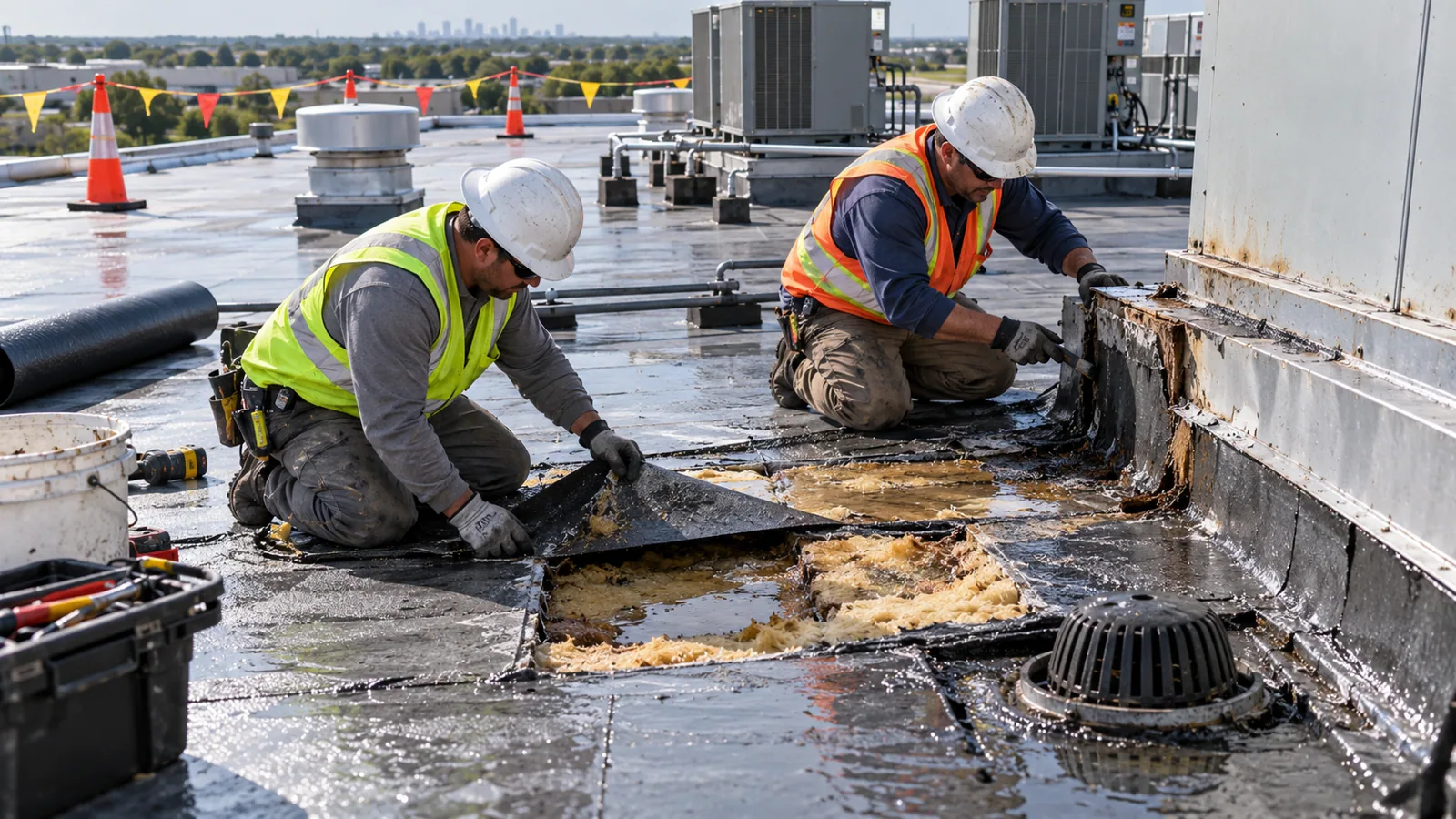
A photograph freezes a roof at one moment. A condition report does more. It joins the photo to a measurement, the measurement to a cause, and the cause to a decision. Without that chain, a picture of a wrinkle is just a picture. With it, the wrinkle becomes a note: insulation below is wet, the board has swelled, the membrane has lifted, and this is the area to cut out. Sherman, TX has recorded 113 F and -3 F, and that movement leaves marks that only close inspection reads. The report records those marks in order, so the owner, the lender or the next manager can see exactly what we saw.
Walk the Whole Roof
The report begins with a full walk. We do not sample a corner and extend the result. Every section is walked, every wall line followed, every curb and penetration examined. Where footing is unsafe, a drone pass records the surface, and we note what that method cannot check.
We start at the access point and move in a fixed pattern. That pattern means nothing is skipped and the photos can be matched to a place on the plan. The plan is drawn first, and each finding is dropped onto it with a number. A reader who was never on the roof can find item 14 on the drawing and match it to photo 14.
Large industrial roofs change the walk. A plant in Progress Park, or a fab complex like the one Texas Instruments runs in Sherman, can combine many roof sections with equipment, skylights and expansion joints between them. We break such buildings into numbered sections before we start, so the report stays readable and each section can be rated alone.
Probe Before You Photograph
A seam that looks closed may not be. We run a probe along laps and check how the edge responds. We press on flashings at walls and curbs. We tap at deck fasteners for back-out. We look at drains and note the depth and shape of standing water. Each of these takes only seconds and tells us more than a photograph taken from standing height.
Photos come after the probe so they show the result. A photo of an open seam with the probe tip in the gap makes the defect clear to anyone. Close-ups are paired with a wider shot that shows where on the roof the item sits. We label every image with the date, the section number and the item number, so the set holds together when it is separated from the report.
Heat cycling leaves a pattern we look for specifically: seams pulled at their ends, flashing sealant cracked at corners, and fasteners that have lifted a few thousandths and pushed a faint bump up through the sheet. Each of these gets a probe, a measurement where one applies, and a photo with the probe in frame. The pattern across the roof matters more than any single point, so we mark where the defects cluster.
Sample What the Eye Misses
Insulation hides water. A roof can feel firm and look flat and still hold wet board below the membrane. An infrared moisture survey maps where heat is retained, which marks wet insulation. We confirm the map with core samples, which show the layers, their thickness and their condition.
Cores are small and are patched on the spot, and each patch is photographed with its core number so a later reader can find the repair without guessing which hole it was. They answer questions no surface check can: how many layers are on the deck, whether the old roof was removed or covered, whether the insulation is wet, and whether the deck shows rust or rot. The report states how many cores were taken, where, and what each showed, along with the moisture reading at every core and the thickness of each layer. Where no sample was taken, the report says so, so no one assumes more was checked than was.
Rate and Rank Each Finding
A long list of defects is hard to use. We sort each finding into three tiers: act now, act this season and monitor. Act-now items let water in or threaten the deck. Act-this-season items are developing defects, like a seam beginning to peel. Monitor items are small and stable.
Each section also receives an overall condition rating. The rating uses the same scale from one report to the next, which is what lets an owner compare years. The report lists repair costs by tier and gives a range for the next large expense. Our capital planning work picks up from there, turning the ranking into dates and budget lines.
The ranking includes the reason for each placement. An item is not simply labeled urgent. The report says what the defect lets in, what it will do if left alone through the next wet season, and what repair addresses it. That reasoning lets a reader challenge or confirm the order.
Write for the Reader Who Was Not There
Most reports are read by someone who never saw the roof. A board member, a lender, an insurer or a buyer opens the file. The language has to carry the picture. We write plainly, define terms the first time, and avoid shorthand.
The reader of a hospital file asks different questions than the reader of a warehouse file. Sherman has three hospitals and Austin College, and work on hospital roofs or college buildings brings access rules and interior protection. The report notes access conditions, equipment on the roof and any restrictions that affect repair work, so the next contractor starts informed.
Deliver the Report With the Photos
The delivered report has a fixed order. It opens with a summary of condition and the top actions. Next come the plan, the section ratings and the findings. The photos follow, grouped by section. Core sample records and moisture maps come last. A reader can stop after the summary or go deep into any section.
We walk the owner through the file and explain what the readings show. If something is unclear, we revise. The report becomes part of the building file and feeds the asset record for the roof. Later reports build on it, so the history stays whole. For roofs in Sherman that history is the basis for warranty claims, insurance claims and sale disclosures.
Commercial Roofing Questions
How long does a condition report take?
The walk takes hours to days depending on roof area. The written report follows once readings and cores are in.
Are core samples necessary?
Not on every roof. A core goes in where the scan or the surface points to wet insulation, and where nobody knows how many layers sit on the deck.
Can the report be used for an insurance claim?
Yes. Dated photos, section plans and damage notes are what a claim file needs. The report separates storm damage from wear.
What if the roof cannot be walked safely?
We use a drone for the surface and say in the report what that method could not check. A hail event such as the half-dollar stones reported northwest of Denison in June 2025 is a typical reason to fly a roof before anyone climbs it.
Does the report include prices?
It includes repair cost ranges by tier and a range for the next large expense. A firm bid comes with a separate scope.
Send the Address and the Roof History
Send the building address and any leak history. We will walk the roof with you and explain what the readings show.
Related Roofing Work
Drone Roof Inspection
Drone roof inspections for large and hard-to-reach commercial buildings in Sherman, TX, with high-resolution imagery, thermal capture and a mapped report.
Infrared Moisture Survey
Infrared and core-cut moisture surveys for commercial roofs in Sherman, TX, mapping wet insulation so repair and replacement dollars go where water sits.
Roof Capital Planning
Roof capital planning in Sherman, TX: replacement timing, repair-versus-replace math, phasing and code checks that turn roof condition into a budget line.
Hospital Roofing
Hospital and healthcare campus roofing in Sherman, TX: infection-control planning, layered moisture scans and phased repairs that keep patient areas dry.