
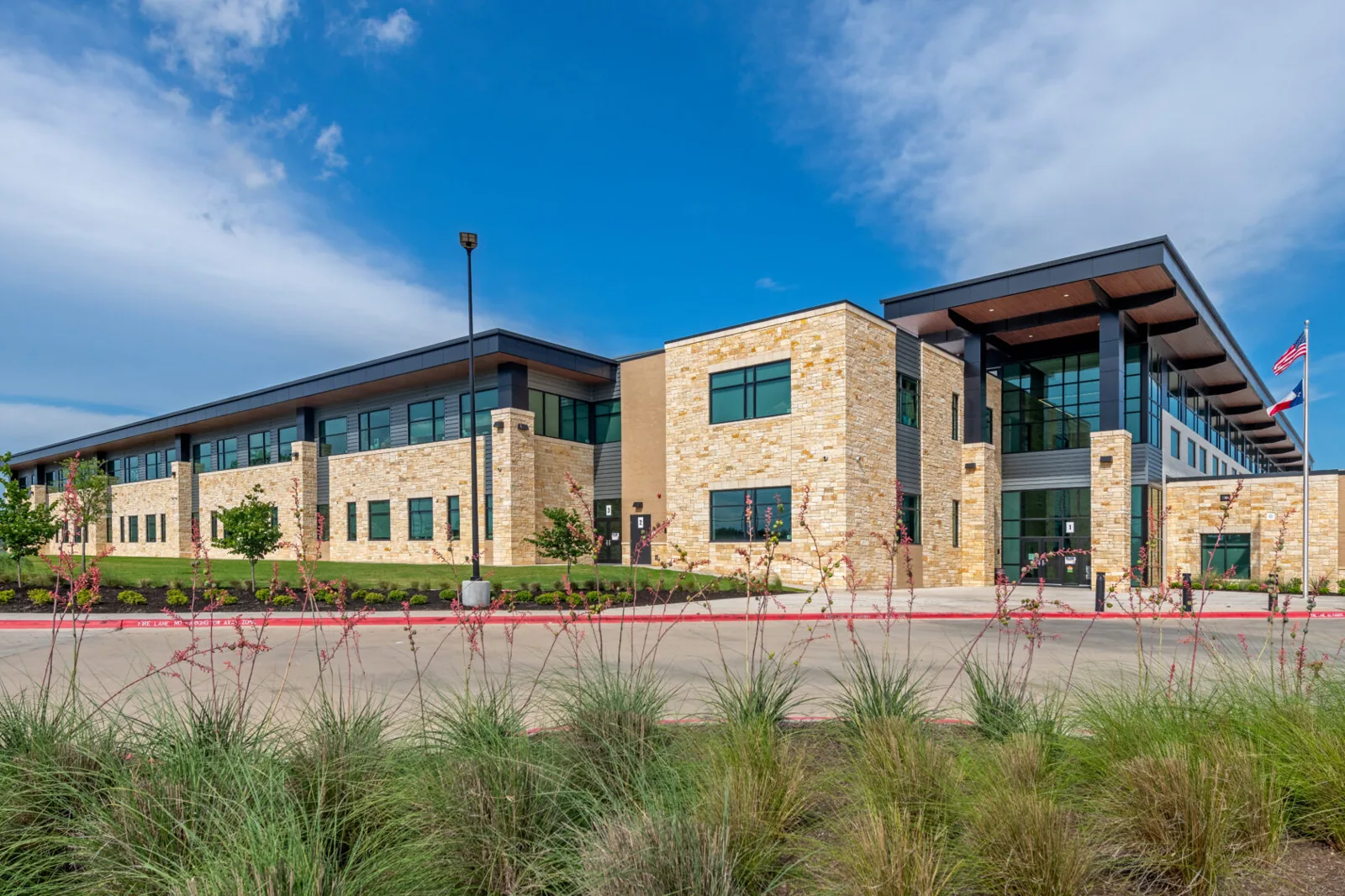
School Roofing in Sherman, TX
School roofing in Sherman, TX: moisture scans, seam repair and phased replacement planned around classes, with storm and freeze damage found early.
A school roof is a large, flat, lightly sloped surface that nobody sees. Heat expands it by day. Cold shrinks it by night. In Sherman, TX the thermometer has touched both 113 F and -3 F. Every cycle pulls on membrane seams, flashings and deck fasteners. Over years that pull opens small gaps at the edges.
A classroom ceiling stain is usually the last sign, not the first. Water has often traveled through insulation for weeks before it drips. So the first visit is a moisture scan plus a few cores. They show where the roof is wet and where it is still sound. Then the owner can choose between a repair, a section replacement and a full reroof with real information in hand.
Understand How School Roofs Age
Most school buildings add wings over time. Each wing brings its own roof, its own age and its own membrane. One campus can hold three systems. That is normal, and it matters.
Each system fails in its own way. An older built-up roof cracks at the surface and blisters over trapped moisture. A single-ply membrane opens at its seams. A metal roof loses sealant at the fasteners. We log each system separately. A district then sees a map of the whole campus, not one average grade.
Ponding is the other quiet problem. Two days of standing water on a flat school roof wears the membrane and loads the deck. Low spots near drains deserve a close look, and so do clogged scuppers.
Plan for Sherman's Spring Storms
Tornadoes in North Texas bunch up in April and May. The tornado of May 15, 1896 took 73 lives in Sherman. A campus roof is also tested by smaller events, like the EF1 that touched down southwest of town on June 8, 2025.
Hail leaves impact bruises. A bruise crushes the insulation under the membrane without always splitting the surface. From the ground the roof looks fine. A moisture scan finds the damage and a core sample confirms it.
Wind works at the edges. Lift at a coping or a perimeter flashing can pull the membrane after it. After a storm we check edge metal first, then seams, then drains. We photograph each finding before anything is covered.
Winter adds its own load. Ice and snow load a deck and block drains. When the thaw comes, water finds every weak seam. A post-winter scan belongs on the school calendar next to the spring storm check.
Read the Districts Around Sherman
Schools across Grayson County face the same weather but have different building ages. Sherman ISD is one of the area's largest employers at about 1,137 people. Denison ISD, Howe, Tioga, Collinsville and Whitesboro each run their own campuses.
Howe offers a clear example. An EF1 tornado in April 2016 damaged homes and the high school there. That event shows why districts keep a baseline record of every roof. A record from before the storm lets a district separate new damage from old wear when it talks to an insurer.
Collinsville High School was rebuilt in 1995, and its academy dates to 1904. A district with buildings from several eras needs a roof plan that covers each era of construction. The Howe service area and nearby towns show how wide that range can be. Newer wings often share a campus with older roofs, and the college and university roofs in the region show the same mix.
Schedule Around Classes
Noise, dust and fumes do not belong near a classroom. Neither does an open roof in a forecast storm. So the work plan follows the school calendar.
Summer is the main window for full replacement. A tear-off, new insulation and a new membrane can often finish before students return. Spring and fall suit repairs and small sections. We stage materials away from bus loops and play areas, and we set a clear path for deliveries.
Communication matters on an occupied campus. A short letter before the work begins tells families which entrances change, which hours are loud and who answers questions. We name one contact for each campus, so a question about dust or noise gets a fast answer.
Re-roofing over an occupied building needs extra care at the deck. Deck fastening is audible in the rooms below, so we set those hours with the principal. An occupied building reroofing plan puts each of those details in writing before the crew arrives.
Safety comes first at the perimeter. We fence the work zone and post a monitor at ground entrances. Deliveries arrive before the first bell or after the last one. The same discipline applies to a senior living community or any other occupied building where people move under the work all day.
Choose Between Repair, Recover and Replace
The scan and the cores decide the path. Dry insulation and a sound membrane may take a coating. That is the lowest-cost route. A roof with wet insulation in a few spots needs those spots cut out and replaced. A roof with wet insulation across a wide area needs replacement.
A recover over the existing roof avoids tear-off, but only when the old assembly is dry. Trapped moisture under a new membrane turns to vapor in summer heat. Vapor drive pushes up and forms blisters. We say so before a district commits to a recover, and we put the moisture readings in front of the board so the choice rests on measurements.
Price tracks the size of the roof, the depth of the tear-off, the insulation thickness, access and the count of penetrations, and the written scope gives each one a line.
Edge metal and drains get their own line. Failed edge metal is a common leak source on flat school roofs. New drains and scuppers cost little next to a ruined gym floor. We price them, list them and let the district decide.
Keep a Record the Board Can Read
School boards approve budgets in public. They need a plain document. Our report lists each roof section, its condition, a photograph and a recommended action. It also lists the year each action should happen.
That record supports a multi-year capital plan. It also helps with condition reports that a bond committee or an insurer may request. Add preventive maintenance and the plan stays current between big projects.
Commercial Roofing Questions
How soon after a hailstorm should a school roof be checked?
As soon as the roof is safe to walk. Hail bruises do not leak right away. A moisture scan within days finds them while the evidence is fresh and the claim window is open.
Can a school stay open during a reroof?
Usually yes. We phase the work by section and keep noisy steps away from testing and class hours. Some wings may need a short closure for deck work.
Do older schools need a different membrane?
Older buildings often have thicker insulation and different deck types. The membrane choice follows the substrate. A core sample tells us what is under the surface before we specify anything.
What does a roof inspection cost a district?
Cost follows roof area, access and whether moisture scanning is included. We quote each campus after a short review of drawings and a walk. Larger roofs take more time on site.
Is a coating enough for a leaking roof?
Only if the insulation is dry. Coating a wet roof traps the water. We scan first, then recommend repair, coating or replacement based on what the scan shows.
Send the Campus Address and Leak History
Tell us which buildings have had leaks, which wings were added when, and what your calendar looks like. We will walk the roof with you and explain what the readings show.
Related Roofing Work
Howe
Commercial roofing in Howe, TX: wind uplift checks, post-tornado inspections and moisture scans for school, light industrial and highway retail roofs.
College and University Roofing
College and university roofing in Sherman, TX: roof records for mixed-age campus buildings, summer reroofing windows and storm checks before fall term.
Occupied Building Reroofing
Reroofing Sherman, TX hospitals, schools, plants and offices while they stay open, with sectioned tear-off, dust and noise control and daily closure.
Senior Living Roofing
Senior living roofing in Sherman, TX: quiet phased repairs, moisture control to prevent mold and storm checks planned around residents and care staff.