
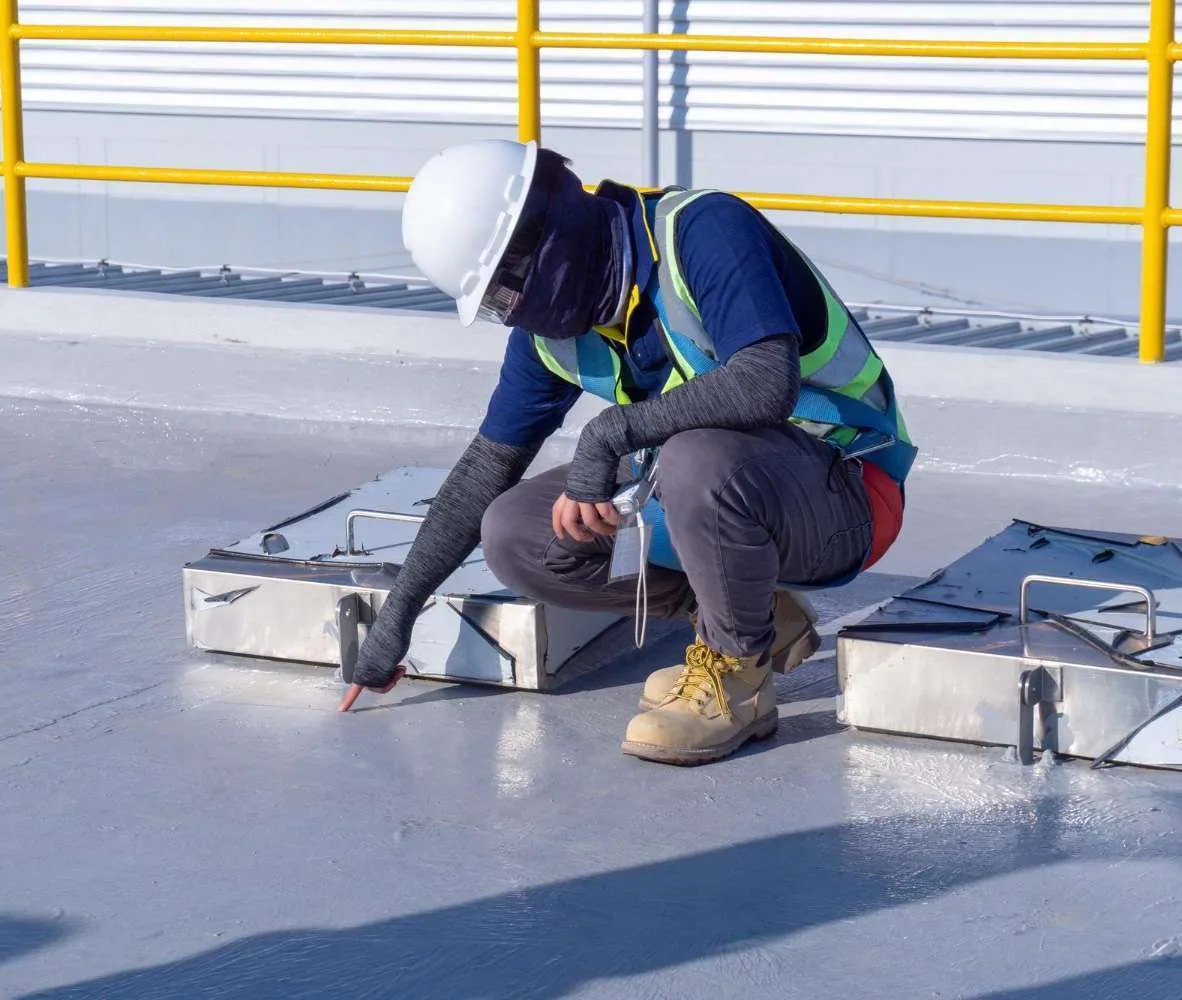
Preventive Roof Maintenance in Sherman, TX
Scheduled commercial roof maintenance in Sherman, TX: drain clearing, seam and flashing checks, moisture scans and dated records that catch failures early.
Roofs wear in small steps. Heat expands the membrane. Cold pulls it back. Each cycle moves a seam a fraction of an inch. Sherman, TX has recorded 113 F and -3 F, and a roof sees the whole range, plus about 44 inches of precipitation spread over roughly 79 days a year. A maintenance program watches those small steps. It finds the loose flashing in March, not the stained ceiling in July.
The program is a schedule, a checklist and a record. Each visit follows the same order. We clear, inspect, repair small items and log what we saw.
Set the Visits Around the Weather Calendar
Two visits a year is the base. One falls in late winter. The other falls in early autumn. The winter visit looks for damage from ice and freeze. The autumn visit looks for damage from heat and storms.
Tornado season peaks in April and May across North Texas. A visit in early March puts the roof in order before that season. Edge metal is tight. Drains are open. Loose items are secured.
Owners with large plants or several buildings may add a third visit after a major storm. That visit compares the roof with the last record. It separates new damage from old. A building with a moisture history may get an extra infrared moisture survey each year. Each visit has a time limit and a checklist. The crew leaves a one-page summary with the facility contact before it leaves the site. The summary lists what was found, what was fixed and what needs a decision. A single-ply roof such as TPO gets seam probes at every visit. A built-up roof gets gravel and flood coat checks instead.
Clear Drains and Debris First
Water leaves the roof through a few openings. If they clog, water ponds. Ponding adds weight and speeds membrane wear. So the first task on every visit is to clear.
We remove leaves, grit, gravel and trash from drains, scuppers and gutters. We check that each strainer is seated. We run water through slow outlets. We photograph each drain before and after.
A drain and scupper that backs up in a December ice event does real harm. A sleet storm in December 2013 left four to five inches of ice across Sherman and Denison. Clear outlets give meltwater a path. Blocked ones push it under the flashing. Gutters and downspouts get the same treatment. We check hangers, joints and end caps. We look for water marks on walls below. A downspout that dumps at a foundation can look like a roof leak, so we trace it before anyone blames the membrane.
Inspect Seams, Flashings and Fasteners in Order
The walk follows a fixed route. We start at the perimeter. Then we cover the field. Then we check every penetration, curb and wall junction.
At the perimeter we check edge metal, coping joints and sealant. At the field we look at seams, patches, blisters and surface wear. At penetrations we look for cracked boots and dry mastic. At walls we check termination bars and counterflashing.
Each finding gets a number, a photo and a plan location. We rank findings by risk. A split seam over a production floor ranks above a worn patch over storage. That ranking sets what gets fixed on the spot and what goes on the repair list. Thermal movement shows up at predictable places. Long runs of membrane pull at corners. Metal edges grow and shrink. Sealants harden and crack. We press on suspect spots and note any movement. A joint that moves under a thumb needs attention now.
Fix Small Items on the Same Visit
Many defects take minutes to fix. A loose termination bar needs a few fasteners. A cracked sealant joint needs fresh sealant. A pipe boot needs a clamp or a new collar. Fixing these on the visit stops water before it enters the insulation.
We carry the materials for common repairs. We use only products compatible with the roof. A patch on the wrong membrane fails fast. We log the product, the location and the date.
Larger items go to a written list with a price. Examples are a failed seam run, a wet section of insulation or a corroded curb. The list gives the owner a clear order of work. A flashing failure repair is often the first item. Every repair is photographed before and after. The crew also marks the repair on the plan with a number. The next visit checks each numbered repair again. A patch that holds for two visits is considered stable. One that fails goes back on the list with a note on why.
Keep a Dated Record for Every Roof
The record is the product. Each visit adds photos, readings and notes to a file. After a few visits, trends appear. A seam that opens a little more each spring becomes visible. A drain that clogs every autumn gets a guard.
The file supports three decisions. First, when to repair. Second, when to replace. Third, how to answer a warranty or insurance question. A manufacturer asks for proof of upkeep. An insurer asks what the roof looked like before a storm. Dated photos answer both.
Owners with several buildings use the files for roof asset management. The files rank roofs by condition and set a replacement calendar. The record also lists roof traffic. Technicians who service rooftop units walk the same route again and again. The membrane along that route wears fast. We add walkway pads where the record shows wear.
Match the Program to the Building
A food plant in Progress Park has grease and washdown exposure, and a manufacturing plant roof adds exhaust zones. A hospital has strict rules on noise and dust. A school has summer access. A distribution building has dock traffic and long roof runs. The checklist adapts to each.
For plants, we add exhaust zones and wear patterns near equipment. For hospitals, we schedule work around infection control. For schools, we visit in summer and again before winter. Each program lists who gives access, who receives the report and who approves repairs.
Price the Program Against Replacement
A program has a fixed fee per visit and a price list for small repairs. The cost is small beside replacement. A roof kept dry and sealed can reach the end of its service life without surprises. A neglected roof ages faster and often fails early.
The program also changes how a replacement is planned. The record shows when the roof is near the end. The owner can budget a year ahead, order materials early and choose the schedule. Emergencies cost more than planned work, and the record helps avoid them. Fees depend on roof area, access and the number of penetrations. A roof with many units takes longer than a clear field. A roof reached by a fixed ladder takes less time than one that needs a lift. We state the fee before the first visit.
Commercial Roofing Questions
How many visits a year does a roof need?
Two is the base: late winter and early autumn. Add a visit after any major storm.
Does maintenance extend a roof's life?
Yes, when it finds small defects early. It cannot restore a roof that has reached the end of its service life.
What does a visit cost compared with a repair?
A visit is a fixed fee. A repair after a leak costs more, and it often includes interior damage.
Will a maintenance record help a warranty claim?
Often. Many manufacturers require proof of upkeep. Dated photos and notes show it.
Can we start on an older roof?
Yes. We begin with a full inspection and a moisture scan. That sets the baseline for later visits.
Send the Address and the Leak History
Send the building address and any past leak history. We will walk the roof, explain what the readings show and set a visit schedule.
Related Roofing Work
Infrared Moisture Survey
Infrared and core-cut moisture surveys for commercial roofs in Sherman, TX, mapping wet insulation so repair and replacement dollars go where water sits.
TPO Roofing
TPO single-ply roofing in Sherman, TX: how the welded membrane moves, where it fails, how we test seams, and how repairs and replacements are built.
Roof Drains and Scuppers
Drain, scupper and ponding correction for commercial roofs in Sherman, TX: sump repair, overflow sizing, crickets and tapered insulation that clear water.
Flashing Failure Repair
Flashing failure repair in Sherman, TX: find open terminations, cracked sealant and torn base flashing at walls, curbs and penetrations, then rebuild them.