
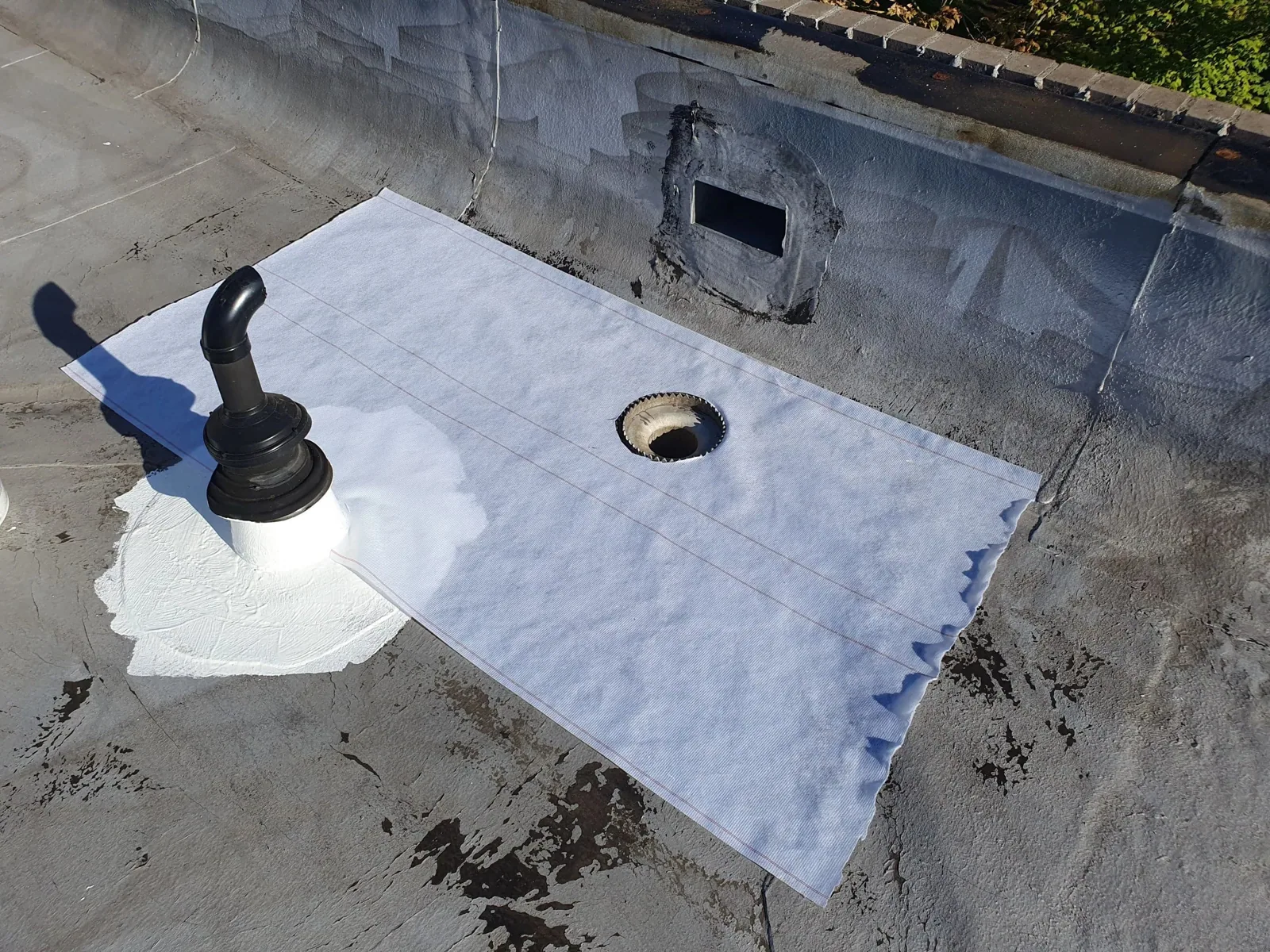
Roof Drains and Scuppers in Sherman, TX
Drain, scupper and ponding correction for commercial roofs in Sherman, TX: sump repair, overflow sizing, crickets and tapered insulation that clear water.
One inch of standing water weighs about 5.2 pounds per square foot. Over ten thousand square feet that is 26 tons. The deck bends under it. The bend makes the puddle deeper. Deeper water bends the deck more. This loop is how ponding grows. It ends when the water finds a drain, a scupper or a leak.
So a drain is a structural part, not a detail. On Sherman, TX roofs, which see about 79 days of precipitation a year, drains carry the load of every storm. Inspection, repair and added outlets all follow the same order.
Read the Roof's Drainage Map
We start with the plan, drawn from a full commercial roof inspection. Where are the drains? Where are the scuppers? Where do slopes lead? A roof drains well when every area slopes to an outlet. A flat roof with a few outlets relies on exact slope. Small errors leave low spots.
On the roof, we measure. A level and a ruler show depth. We check after rain when possible, because water marks reveal ponding. Stains, dirt rings and algae trace where water sat. We mark each on the plan.
We also check the outlets. A drain may be in the wrong place. It may sit higher than the surrounding membrane. A sump that is not recessed leaves water standing around it. Photos of every outlet go into the file. The file then shows how the roof drained before the work and how it drains after. A roof that drains well after a rain, with no puddles beyond a day, has passed the test.
Clean and Test Every Outlet
Most drain trouble is blockage. Leaves, gravel and trash collect at strainers. A blocked strainer behaves like no drain at all. We remove debris by hand and flush the line with water. We confirm flow. Slow flow means a clog downstream.
Interior drains connect to pipes inside the building. A pipe can crack, clog or sag. We test with a hose and watch for leaks at joints. If the line is blocked, the plumber clears it. We coordinate with the facility team so the roof and the pipe get fixed together.
Scuppers are simpler. They pass through parapets. We check the opening size, the lining and the sealant around the frame. A scupper with a lip higher than the roof surface holds water. The result is a drain log. It lists each outlet by number, its size, its condition and the date cleaned. The log shows which drains clog fastest. Those get guards or a shorter visit cycle.
Provide Overflow Where the Main Drain Fails
A drain will clog someday. The roof needs a second path. An overflow scupper sits higher than the main drain and passes water when the main is blocked. Without one, water rises until it spills over a parapet or enters a wall.
Overflow height matters. If it is too low, it drains water that should stay for normal flow. If it is too high, the roof carries too much water first. Codes and the structure set the limit, and we confirm the requirement with the permit office before any height is chosen.
Where no overflow exists, we propose one. The cost is modest. The risk it removes is large. Sizing follows the roof area and the rain rate the code assumes. A larger roof needs more outlet area. If a building has been re-roofed with added insulation, the old overflow may now sit too low or too high, and the check resets it.
Plan for Ice and Snow Melt
Winter tests drains differently. Ice blocks outlets. Meltwater has nowhere to go. Freezing rain in December 2013 built four to five inches of ice in the Sherman and Denison area. A March 2008 band dropped up to six inches of snow on the county, and January 2025 brought nine to eleven inches to isolated spots.
Melt ponds at drains and refreezes at night. The ice dams the outlet and the water backs up under flashing. We check drain heights, strainer openings and edge details with that in mind. Heated drain bodies or cable may help on critical roofs. Ordinary roofs benefit from clear strainers before winter. Snow load matters here too. Melt adds water to the roof while drains are still frozen. A roof near its design load can fail if drains stay blocked. We note any building where the margin looks thin and flag it for the owner's engineer.
Correct Ponding With Slope, Not Just Patches
When a low spot holds water, a patch does little. The membrane under standing water ages faster. The fix is to move the water. Options include tapered insulation, crickets behind curbs, added drains and re-set sumps.
A cricket is a small sloped saddle. It sheds water around a curb or a wall. Without one, water collects on the uphill side of equipment and attacks the flashing. Tapered insulation builds slope across a larger area. A cover board over it protects the membrane, and the insulation and cover board choice sets how much slope the roof gains. The added height means edges and flashings must rise to match, and edge metal and gutters are reset at the same time.
The deck may be the cause. A sagging deck needs structural review. Deck fasteners that have loosened let steel flex. Where the deck is the problem, the drainage fix starts there. A ponding water repair that skips the deck will not last. Slope is measured in a fraction of an inch per foot. A quarter inch per foot is common for tapered systems. Smaller slopes work only if the deck is flat and true. The survey checks both before a design is chosen.
Set New Drains and Sumps in Order
Adding a drain means cutting the deck. The sequence is fixed. Locate the plumbing path. Cut the opening. Set the drain body and sump. Connect the line. Flash the membrane to the body with the right clamp ring and flashing. Test with water before the crew leaves.
The flashing at a drain takes extra care. It sees the most water of any detail. We reinforce it and seal the clamp ring. A drain that leaks at its flange can fill the ceiling below. Each new drain gets a flood test and photos. Roofs with interior drains need winter checks on the pipes. A cracked pipe in a cold wall leaks into the building, and the symptom looks like a roof leak. The test and the log tell the two apart.
Match the Fix to the Building
Large flat roofs on warehouses and plants have the most drainage risk. A warehouse roof is a wide field served by few outlets, so each drain carries a large share, whether the building sits in the North Texas Logistics Park or along US 75. Schools and hospitals have parapets and tight outlets that clog.
For roofs of every type, preventive roof maintenance keeps strainers clear. The visit takes minutes. The effect lasts all season.
Commercial Roofing Questions
How deep can ponding be before it matters?
Water that stays more than 48 hours after rain is a problem. Depth adds weight.
Do I need an overflow scupper?
If there is a parapet, yes. It gives water a second exit when the drain clogs.
Can ponding be fixed without replacing the roof?
Often. Tapered insulation, crickets or new drains can correct it. Deck sag needs review first.
How often should drains be cleaned?
Twice a year at minimum, plus after storms and leaf fall.
Do heated drains help in winter?
On critical roofs they can keep outlets open. Ordinary roofs do well with clear strainers.
Send the Address and Any Ponding Photos
Send the building address and photos of any standing water. We will walk the roof, map the slopes and explain what the readings show.
Related Roofing Work
Commercial Roof Inspection
Hands-on commercial roof inspections in Sherman, TX, with photographed findings, moisture checks and a ranked list of repairs and budget timing for owners.
Roof Insulation and Cover Board
Insulation, tapered systems and cover board for Sherman, TX commercial roofs: thermal value, compressive strength, vapor control and hail protection.
Edge Metal, Coping and Gutters
Edge metal, coping, gutter and downspout repair for commercial roofs in Sherman, TX: cleat fastening, joint sealing, thermal movement and wind uplift.
Ponding Water Roof Repair
Ponding water roof repair in Sherman, TX: find why water stands, check deck and insulation, clear drains, add slope and restore membranes that held water.