
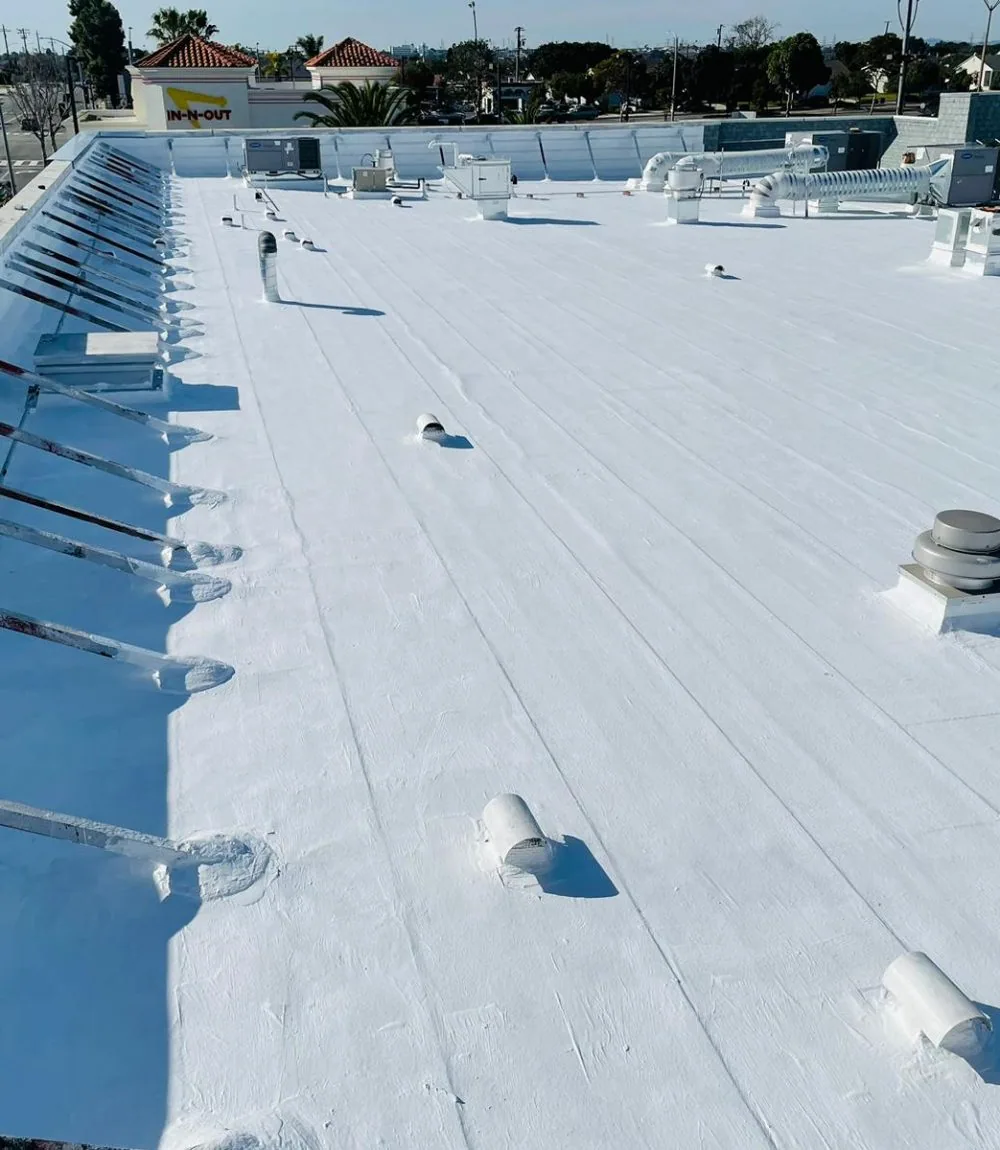
Acrylic Roof Coatings in Sherman, TX
Acrylic roof coatings in Sherman, TX: how water-based reflective films cure, where they fail, and how we test, clean and apply them on well-drained roofs.
Acrylic is a water-based coating. It is applied cold, with a roller or a sprayer. As the water leaves, the particles fuse into a film. The film is white or light. It reflects sunlight. A cooler roof moves less. That is the main benefit in a place that reaches 113 F. It also costs less than silicone. The limit is water. Acrylic does not like to sit under it. A pond can soften the film. That limit shapes where we use it.
We start with the surface. Then we test. Then we prepare. Then we coat.
Reflectivity is the point. A white surface returns most of the sunlight that hits it. A dark roof absorbs most. On a hot day the difference in surface temperature can be large. A cooler surface moves less, loads rooftop units less and may lower cooling costs. The effect depends on insulation and on the building. It is real, but it is not unlimited, and it fades as dirt builds up.
Acrylic is the right choice on a sound, well-drained roof, where reflectivity and low cost matter. If the roof ponds, silicone is often better. If the roof is wet inside, neither will help.
Know What Acrylic Coating Is Made Of
Acrylic coatings are made from acrylic polymer particles in water, with pigments and fillers. Titanium dioxide gives the white. The film cures by evaporation. It is breathable to a degree, which lets small amounts of moisture escape. It bonds well to many surfaces. It resists UV well but can chalk over time. It is easy to recoat. That is one of its quiet strengths. When the film wears thin in ten years or so, a wash and a new coat restore it. The cycle can repeat. Each recoat adds a few mils, and the roof can stay protected for decades if the substrate stays sound.
Thickness is measured in mils. Two or more coats are typical. Each coat must dry before the next, and the time between coats is set by temperature and humidity, not by the clock. Weather controls the schedule. Rain before cure can wash out a coat. We watch the forecast and stop when rain threatens. Dew can also spoil a coat applied late in the day, so crews finish early enough for the film to set before evening.
Watch for How Acrylic Fails
Ponding is the main enemy. Water that stays for days can soften and blister the film. The film then peels. Poor prep is the second. Dirt, chalk and old loose coating block adhesion. Thin application is the third. A thin film wears fast. Foot traffic scuffs it. Freeze-thaw cracks it. Dirt reduces reflectivity.
Hail leaves marks. Dime-size hail fell north of Sadler in April 2014, penny-size hail fell in the Luella area, and a June 2025 report northwest of Denison measured half-dollar size. Small hail can pit a film without breaking it. Larger hail can crack it. We walk the roof after hail, mark each hit and patch it before water finds it.
Acrylic also hides problems. Over open seams, it bridges them for a while. Over wet insulation, it traps water. Over blisters, it can crack. As with any coating, testing comes first.
Test Adhesion, Moisture and Drainage
We clean a test patch, apply coating and pull a tape strip after cure. We scan for moisture. We take cores. We probe seams. We look at every fastener and flashing. We measure ponds and note how long they last. A pond that stays for days points to silicone, to a drainage fix or to a tapered insulation package. We say so and price each.
Surface condition is recorded. Chalking. Cracks. Algae. Old coating. Each affects prep. A chalky surface needs more washing and sometimes a primer. An algae-stained roof needs a biocide wash. A roof with peeling old coating needs scraping.
Seams and flashings come next. Open seams are welded, taped or patched. Cracked flashings are rebuilt. Fastener heads on metal roofs are sealed. Rust is treated. Penetrations get fabric and a heavier coat. These repairs are done before the field coat, and each is photographed and numbered so the owner can see what lies beneath the white surface.
Count Heat, Hail and Cold Into the Plan
Heat helps application. Acrylic dries faster in warm weather. But very hot surfaces can skin over before the film is level. Crews work in the cooler hours. Cold slows cure and can stop it. Acrylic should not be applied near freezing. A December 2013 ice event left 4 to 5 inches in the Sherman and Denison area, and winter coating is limited. Hail is documented here. A 1.25 inch hail report came from northwest of Denison on June 8, 2025. Hail pits films, and we repair each hit.
Freeze-thaw is a slow stress. Water in small cracks freezes and widens them. A sealed film sheds that water. A cracked one lets it in. We check for cracks each spring.
Build the Coating Step by Step
Wash the roof. Repair seams, flashings and punctures. Replace wet insulation. Treat rust on metal. Prime where needed. Apply a base coat. Embed fabric at seams and penetrations. Apply a second coat to the target thickness. Check thickness with a gauge. Photograph each stage. Add walk pads where people walk.
Coating thickness gets checked twice: wet, with a gauge pressed into the fresh film, and dry, after cure, with a magnetic or ultrasonic tool where the substrate allows. The wet reading tells the crew to add material. The dry reading proves the result. Both go in the file, with the date and the temperature, because film thickness is the best predictor of how long the coat will last.
The owner gets a file with thickness readings, weather logs and product data. Price follows area, prep, repairs, penetrations and access. The result is compared with a coating restoration alternative and with a cool roof installation that uses a new reflective sheet.
Match Acrylic to Sherman Buildings
Acrylic suits well-drained low-slope roofs and many metal roofs. A warehouse along US 75 or a logistics building at North Texas Logistics Park can fit if the roof drains well. In Denison, where downtown and rail-side buildings run to older brick and flat-roof stock, a core and a scan decide whether a roof is a candidate, and Sherman roofs get the same test. A metal roof retrofit often uses acrylic to seal fasteners and to cool the roof. Sherman's range from -3 F to 113 F favors a film that stays flexible. Distribution buildings near Foundation Business Park get the same plan, fitted to the building's use, shutdown windows and budget.
Ask What the Record Shows
The owner gets the file. Adhesion test results. Moisture maps. Thickness readings. Weather logs. The next recoat date. For roofs with ponding, compare silicone roof coatings.
Commercial Roofing Questions
Why not use acrylic on a ponded roof?
Standing water softens the film. Silicone or a drainage fix suits those roofs better.
How many coats does acrylic need?
Usually two or more, to the target thickness. Each coat must dry first, and a gauge confirms the total before the crew leaves the roof.
Does acrylic cool the building?
It lowers surface temperature. The effect inside depends on insulation and use.
Can acrylic go over old coating?
If the old coating is sound and clean. A test patch proves it.
When is acrylic applied?
In warm, dry weather with no rain expected until cure, and not when the surface is damp from dew or when a freeze is forecast overnight.
Send the Address and the Leak History
Send the building address and any leak history. We will walk the roof with you and explain what the readings show about adhesion, moisture and drainage.
Related Roofing Work
Roof Coating Restoration
Commercial roof coating restoration in Sherman, TX: moisture scans, adhesion tests, seam prep and thickness checks that extend the life of a sound roof.
Cool Roof Installation
Reflective cool roof systems for Sherman, TX commercial buildings: solar reflectance, emittance, surface temperature, dirt loss and how a cool roof cuts heat.
Commercial Roofing at North Texas Logistics Park near Sherman, TX
Commercial roofing at North Texas Logistics Park near Sherman, TX: ponding control, wide-span roof scans, dock-friendly repairs and storm checks for flat roofs.
Denison
Commercial roofing in Denison, TX: parapet and flashing repair on older brick flat roofs, plus moisture scans and recovers for plants, clinics and schools.