
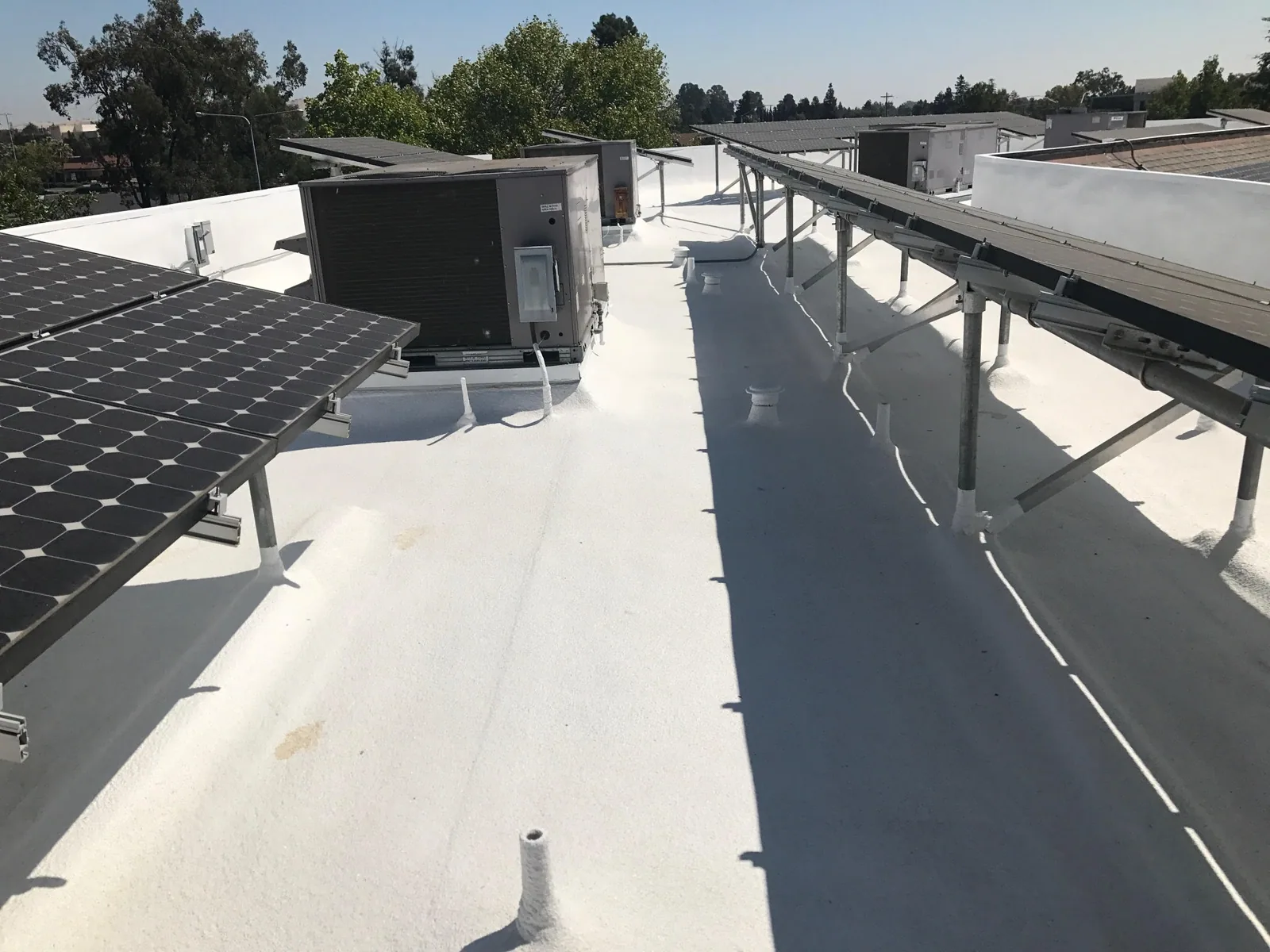
Solar-Ready Roofing in Sherman, TX
Preparing commercial roofs in Sherman, TX for solar arrays: structure and wind checks, membrane condition, rack attachments, sealing and service access.
A solar array outlives most roofs. Panels are rated for decades. A membrane may last fifteen to thirty years, depending on type and care. If the roof fails under a working array, the panels must come off, the roof must be redone and the panels must go back. That costs far more than doing the roof first.
So solar-ready work in Sherman, TX starts with the roof. Is it sound? Is it dry? Can it carry the load? Can it take the wind? The answers decide whether an array can go on now, after repairs or after a new roof. This is a roof job with a solar view.
Judge the Roof's Remaining Life First
Remaining life is the main number. A roof with ten years left and an array planned for twenty will need replacement under the panels. That is the costly path. A roof with twenty years left matches the array.
We test the roof. A moisture scan finds wet insulation. Core samples show layers and condition. A seam check finds loose laps. The result is a plain statement: sound for the array, sound after repairs or replace first.
If replacement is the answer, it is timed with the array. A new membrane is laid first. The racks go on after. Owners can choose a TPO roof or a standing seam metal roof because those pair well with arrays. Metal roofs can take clamp-on racks that need no penetrations. The report also lists work that is cheaper to do before the array. Examples are re-flashing aged curbs, replacing failed pipe boots and adding crickets where water ponds. Each item is priced on its own, so the owner can fund the array and the repairs in the right order.
Check the Structure for Dead Load and Wind
Panels and racks add weight. A typical array adds a few pounds per square foot. Ballasted racks add more. The deck and framing must carry it on top of snow, equipment and the roof itself. The engineer of record confirms the capacity.
Wind adds uplift. Arrays act as sails. At edges and corners the load is highest. Racks are set back from the perimeter to reduce it. Attachment or ballast is sized to the wind zone.
Sherman's weather is a reason for care. Tornado season in North and Central Texas peaks in April and May, and the June 8, 2025 storm put an EF1 on the ground southwest of Sherman. Wind like that drives the uplift design. We note where the structure shows weakness, such as corroded fasteners or deflected purlins, and flag it for the engineer. Roof slope matters. Low-slope roofs take ballasted racks well. Steeper roofs need attachments. Metal roofs with raised seams take clamps that grip the seam without piercing it. The rack choice follows the roof type, and the plan names the choice. Roof drawings, when available, speed the check. When they are missing, we measure framing spacing and deck type on site and report what we find.
Plan for Hail Over the Array and Under It
Panels face hail. Rated glass resists it, but impact can still crack cells. The roof below faces a different risk. Hail that passes between panels can bruise the membrane in the gaps. Debris and runoff concentrate there.
Half-dollar hail was reported northwest of Denison in June 2025, and smaller stones fell around Sadler and Luella in April 2014. A cover board under the membrane and a protective walkway layer in array zones reduce the harm. The insulation and cover board choice sets how well the roof takes those hits.
After a storm, both the array and the roof are inspected. The roof record before installation is the baseline for that comparison. Cleaning is part of care. Panels collect dust, and runoff carries it onto the membrane at the lowest edge. Streaks form. We note any staining and add a splash strip or a protective layer where the water lands.
Seal Every Attachment Like a Roof Penetration
Racks need a way to stay put. Ballast uses weight and friction. Mechanical racks fasten to the deck or structure through the membrane. Each fastener is a hole. Each hole needs a seal.
Pedestals, boots and sealant pockets flash the openings. The detail follows the roof type and the maker's rules. The flashing is installed before the rack is set. A leak under an array is hard to reach, so the seals are tested first.
This is the same discipline as rooftop equipment curb and support work. Cable penetrations get the same care. Conduit runs are routed on supports that lift them off the membrane. Where racks sit on ballast, the membrane below takes a constant load. Protection pads spread it. A pad of a compatible material goes under each ballast block. Without pads, the block can mark the membrane and shorten its life.
Leave Room to Work on the Roof Afterward
A full array blocks the roof. Technicians still need to reach drains, units and seams. Walkways and clear aisles are laid out in the plan. Setbacks along edges and around hatches meet fire and safety rules.
We also plan drainage. Ballasted racks can block flow. Tapered insulation and crickets are laid out so water passes. Drains stay clear of racks. The roof drains and scuppers map is part of the array layout.
Roof maintenance continues. A yearly visit checks the membrane under and between rows. Owners can fold it into a preventive roof maintenance program so the array and roof get checked together. Fire access rules set clear paths. Local rules and the insurer both matter. The solar installer and the roofer agree on layout before the first rack goes down, and the layout goes on the roof plan.
Protect the Warranty and the Paper Trail
Adding an array can affect a roof warranty. Many makers have rules for installing on their membranes. Some require their own approval or inspections. We read the terms before any plan is drawn and tell the owner what is needed. A roof warranty management file keeps the approvals together.
The solar installer and the roofer need one schedule. The roofer finishes. The installer sets racks. The roofer inspects. Each handoff is dated and photographed. That record settles any later question about who touched what. At handover, the owner receives the roof condition report, the array layout, the penetration list with seal details and the inspection photos. A buyer or lender can read them later and see that the roof and the array were coordinated.
Match the Plan to the Building
Large flat roofs on distribution buildings and plants suit arrays well. A distribution building or plant in Progress Park or Foundation Business Park can offer long, simple roof area. Schools and public buildings may use arrays as part of an energy plan. Small buildings with many penetrations may have limited space. Sites along US 75 and US 82 with open exposure may see higher wind, so the layout and attachment get a closer look. The structure check is the same on any site, but the setbacks differ.
Commercial Roofing Questions
Should the roof be replaced before solar goes on?
If its remaining life is shorter than the array's, yes. Replace first.
Can solar racks go on any roof?
Most roofs, after a structure and condition check. Some need strengthening.
Do racks void a roof warranty?
They can if installed without the maker's approval. Read the terms first.
Do panels protect the roof from hail?
They shade the roof, but hail can still strike the gaps and edges.
Who inspects the roof after the array is installed?
The roofer, ideally on the same schedule as the solar installer.
Send the Address and the Array Plan
Send the building address, the roof age and any array plan. We will walk the roof, test it and explain what the readings show about readiness.
Related Roofing Work
TPO Roofing
TPO single-ply roofing in Sherman, TX: how the welded membrane moves, where it fails, how we test seams, and how repairs and replacements are built.
Roof Insulation and Cover Board
Insulation, tapered systems and cover board for Sherman, TX commercial roofs: thermal value, compressive strength, vapor control and hail protection.
Rooftop Equipment Curbs and Supports
Rooftop unit curbs, equipment rails and pipe supports for Sherman, TX commercial roofs: load paths, curb flashing, vibration, walkway wear and timing.
Roof Drains and Scuppers
Drain, scupper and ponding correction for commercial roofs in Sherman, TX: sump repair, overflow sizing, crickets and tapered insulation that clear water.