
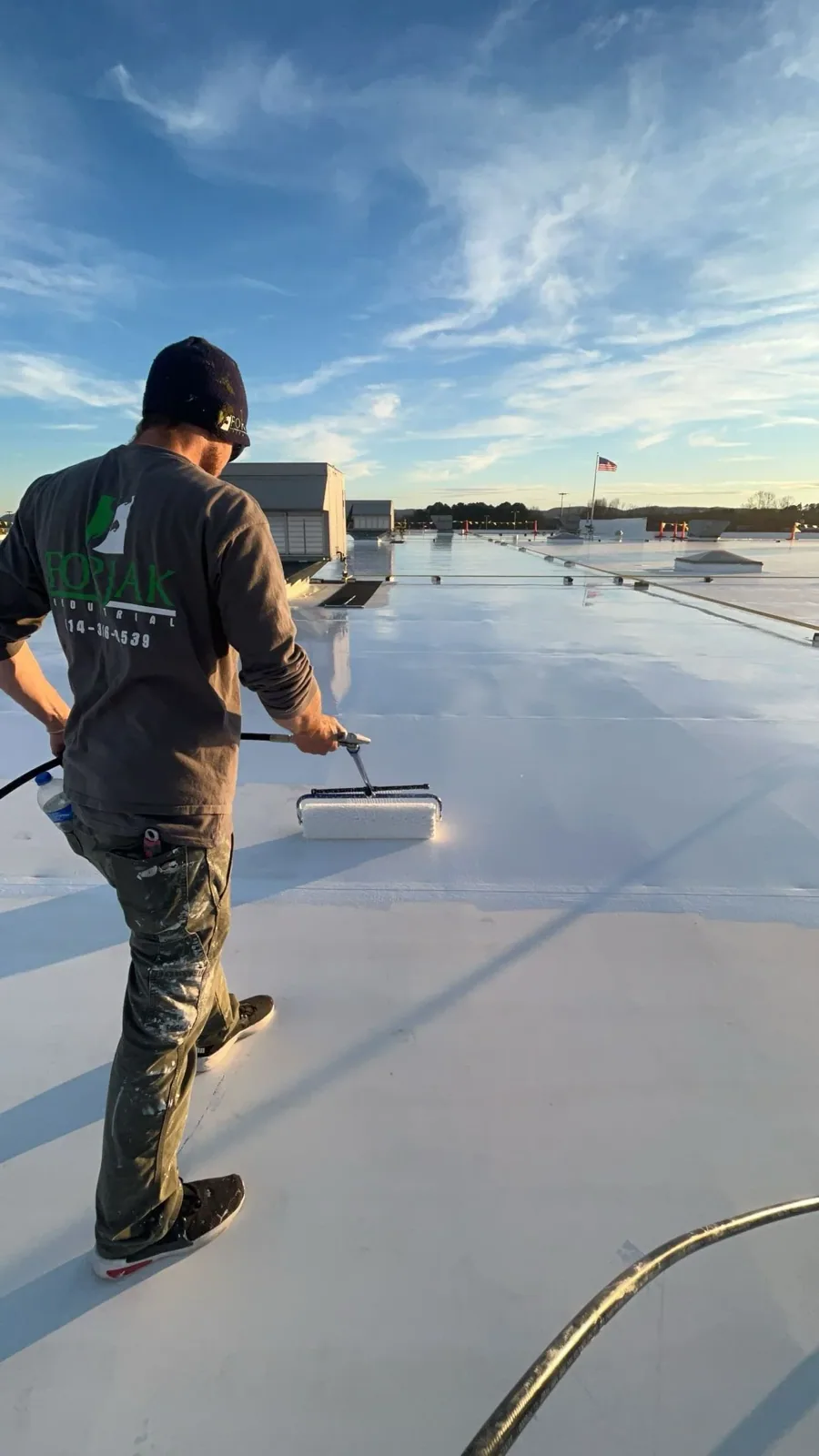
Roof Coating Restoration in Sherman, TX
Commercial roof coating restoration in Sherman, TX: moisture scans, adhesion tests, seam prep and thickness checks that extend the life of a sound roof.
A coating is a liquid that cures into a skin. The skin bonds to the old roof. It seals pinholes, covers worn seams and reflects sun. It works only when the roof beneath is dry, clean and sound. Put it over wet insulation and the water stays. Put it over dirt and it peels. So restoration begins with tests, not with spray.
In Sherman, TX the tests matter more than usual. The roof swings from a record 113 F to a record -3 F. A coating on a sound roof softens those swings. A coating on a failing roof only hides them.
Qualify the Roof Before Anything Is Priced
Three checks decide whether a coating is right. First, a moisture scan maps wet insulation. Second, core samples confirm the layers and test moisture. Third, an adhesion test shows whether the coating bonds to the surface.
A roof passes if the insulation is mostly dry. It passes if the seams are intact and the membrane is flexible. It fails if wetness is widespread, if the deck is rusted or if the membrane is brittle.
When a roof fails, we say so. A coating over a failed roof wastes the owner's money. The real options are repair, recover or replacement. The scan and cores make the choice clear. The adhesion test is simple. We clean a small patch, apply the coating and let it cure. Then we pull it. A coating that tears away in a sheet has failed the test. One that holds, or tears the old surface with it, has passed. We run the test at several points, because a roof with past patches often varies from one corner to another.
Prepare the Surface Like the Coating Depends on It
It does. Preparation decides how long the coating lasts. We pressure-wash the roof to remove dirt, chalk and growth. We let it dry fully. We cut out blisters and wet patches. We replace failed flashing and reseal every penetration.
Seams get extra care. We re-weld or re-tape open laps. We embed reinforcing fabric at joints that move. Fasteners that have backed out are reset or replaced. Rusted metal is brushed, treated and primed.
Each step is logged with photos. If a coating fails early, the log shows whether prep was the cause. A commercial roof repair often comes first, so the surface is sound before the film goes on. Drains get attention too. A coating that is meant to seal a roof should not sit in a clogged sump. We clear every outlet, check the slope near it and mark any low spot that will pond. If ponding is deep, we correct the low spot or choose a coating that tolerates standing water.
Choose the Chemistry for the Roof and the Weather
Coatings differ. A silicone coating sheds ponding water and resists sun. It is harder to recoat with other types. An acrylic coating is easy to apply and repair. It does not like standing water. Polyurethane coatings resist foot traffic. Each has a place.
The choice follows the roof. A flat roof with ponding favors silicone. A well-drained metal roof may take acrylic. A roof with heavy rooftop traffic may need a tougher top coat. We match the coating to the substrate, the slope and the budget, then explain why. Some roofs combine surfaces. A metal roof may have a membrane section at a dock. A coating that bonds to one may not bond to the other. We test each surface and use a primer where the maker requires it. Compatibility is checked against the existing material, since old coatings and new ones can fight.
Account for Hail Before Coating Over It
Hail bruises a membrane. It cracks the surface and crushes the insulation beneath. The bruise may not leak for years. Coating over a bruised area seals the surface but leaves the damage.
On April 3, 2014 NWS Fort Worth logged dime-size hail north of Sadler and penny-size hail in the Luella area. A half-dollar report came from northwest of Denison in June 2025. Those sizes are enough to mark many membranes. We inspect for bruises and test suspect spots. Bruised areas get cut out and patched before the coating goes on.
If hail damage is the reason for the call, an insurance-related storm repair may come first. The coating follows once the claim is settled. Hail can also dent metal. A dent is cosmetic until it breaks a coating or opens a seam. We probe dents on metal roofs and note any that crack the paint or the old film. Those spots get cleaned, patched and primed before the new film goes on.
Apply in Windows the Product Allows
Coatings need weather. The surface must be dry. Temperatures must be in range. Rain must stay away until cure. Dew point matters, because moisture on the surface ruins adhesion.
We check surface temperature, humidity and the forecast before each pass. We apply in two coats where the system calls for it. We watch for pinholes and thin spots. We measure film thickness at set points after cure and record the numbers.
Sherman's spring storms and summer heat shape the schedule. Work on a hot roof moves early in the day. Work near rain waits. We keep spare days in the plan. Safety shapes the day. Coatings can be slick when wet, so crews lay walkway pads and keep tools off edges. Overspray is controlled with shields and wind limits. Vehicles and air intakes are protected. The foreman checks all of it before the first pass.
Plan the Recoat Before the First Coat Cures
A coating is not permanent. It wears. UV, foot traffic and weather thin it over time. The file for the job states the film thickness, the product and the date. It also sets a recoat window.
A yearly visit checks for chalking, thin areas and damage. Small repairs keep the film whole. A recoat before the film is gone costs far less than repairing the roof beneath. Owners with many roofs use the dates to set a roof capital plan. Foot traffic is the common cause of early wear. Technicians who service rooftop units walk the same lines. The plan adds walkway pads on those lines. The pads protect the film and show where the next visit should look first.
Put Coatings on the Right Buildings
Coatings suit sound roofs that need more life. Examples are a metal roof with open fasteners, a membrane roof with worn surface or a built-up roof with aged cap sheet. A warehouse or plant in Progress Park or Foundation Business Park may fit. So may a school or church.
Coatings do not suit every roof. A saturated roof, a roof with deck damage or a roof near the end of its life needs more. We say which case applies. Plants with process exhaust need a second check. Some exhaust attacks coatings. We test a small patch near the source before committing the whole roof. A manufacturing plant roof may need a different product near stacks than in the open field.
Commercial Roofing Questions
How long does a roof coating last?
It depends on the product, thickness and exposure. The file sets a recoat window, and yearly checks confirm it.
Can any roof be coated?
No. The roof must be dry, sound and clean. Moisture scans and adhesion tests decide.
Does a coating fix leaks?
It seals small cracks and open laps. Large defects get repaired first.
Will a coating lower cooling costs?
A reflective coating lowers surface temperature. The saving depends on insulation, equipment and use.
What happens if wet insulation is found mid-job?
We cut it out and replace it before coating. That area becomes a small tear-off, priced by size.
Send the Address and the Roof History
Send the building address and any past leak history. We will walk the roof, run the scan and tell you whether a coating fits.
Related Roofing Work
Commercial Roof Repair
Planned repair of commercial membranes, flashings and seams in Sherman, TX, matched to the cause of the failure so the fix lasts through heat, hail and freeze.
Silicone Roof Coatings
Silicone roof coatings in Sherman, TX: how the liquid membrane cures, why it tolerates ponding, where it fails, and how we test, prepare and apply it.
Acrylic Roof Coatings
Acrylic roof coatings in Sherman, TX: how water-based reflective films cure, where they fail, and how we test, clean and apply them on well-drained roofs.
Storm Damage Roof Repair
Commercial storm damage assessment and repair in Sherman, TX: wind uplift, hail bruises and debris impact found, documented, dried out and rebuilt in order.