
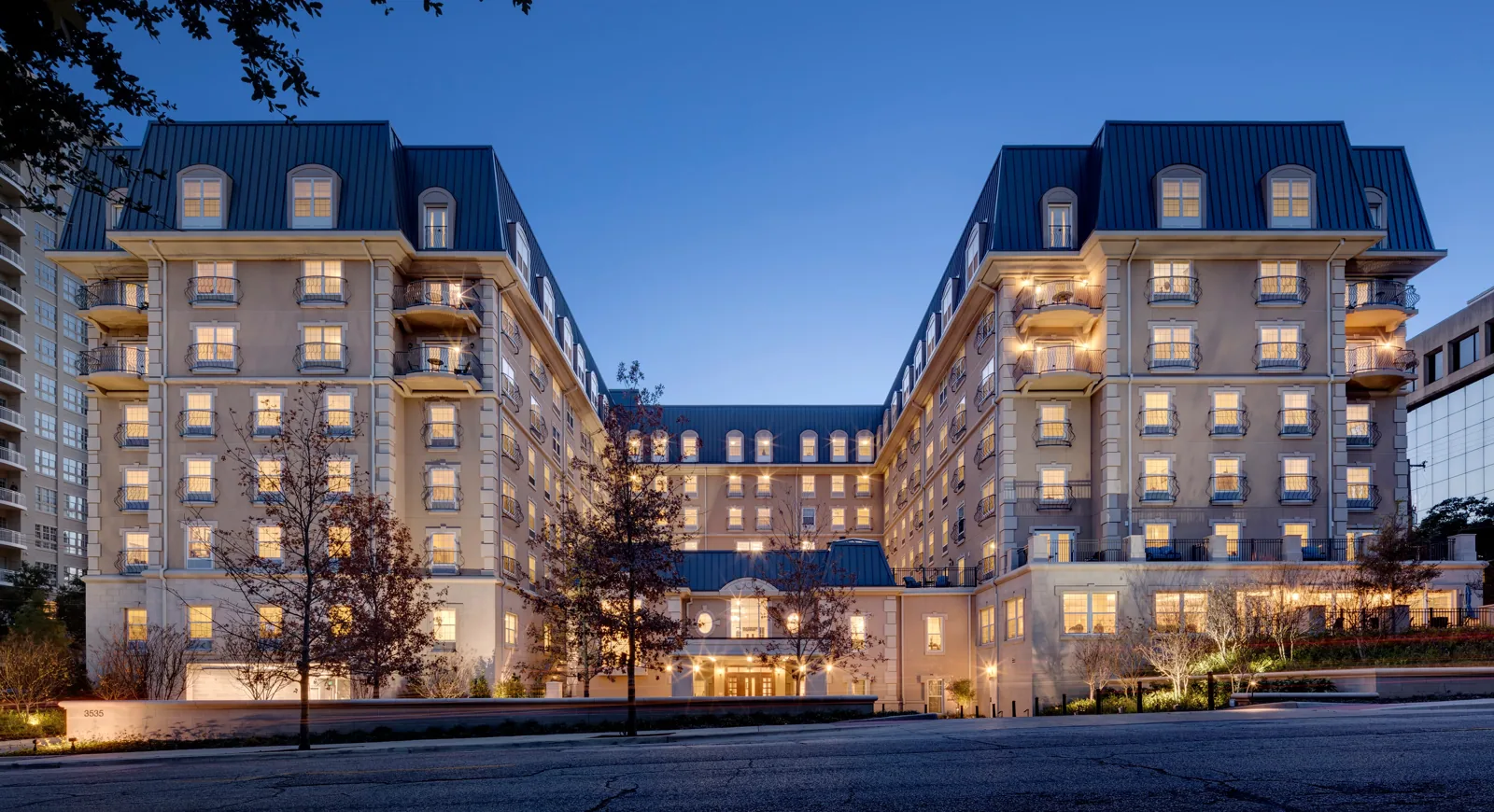
Senior Living Roofing in Sherman, TX
Senior living roofing in Sherman, TX: quiet phased repairs, moisture control to prevent mold and storm checks planned around residents and care staff.
Moisture is slow, and in a care building slow is dangerous. A small roof leak wets insulation. Wet insulation feeds mold in the ceiling cavity. The air in a resident's room then carries spores. The ceiling tile may never stain. The first sign can be a resident cough.
So a senior living roof gets a stricter standard. We scan for moisture every year, not only after a leak. We take core samples where the scan shows warm or wet spots. In Sherman, TX temperatures have gone from 113 F to -3 F on record, and each swing flexes seams and flashings, giving water a chance to enter. Early detection saves the most. A repair at the first sign costs little. A remediation after mold costs a great deal more, and it disrupts residents.
Control Moisture Before Mold Starts
Mold needs water and a few days. A roof leak above a ceiling gives it both. We look for the leak path before it reaches a finished surface.
A moisture scan paints a picture of the roof. Wet insulation reads differently from dry. We mark the wet zones, probe them and confirm with cores. The map goes to the building engineer, who can compare it with room complaints.
Condensation counts too. Warm, moist air from kitchens, laundries and bathrooms rises into the roof assembly. Where it meets a cold surface it condenses. A roof with weak vapor control can wet its own insulation from below. We check exhaust paths and vapor retarders. Where the fault is inside, no new membrane will fix it.
Fast response matters. A wet ceiling tile gets replaced the same day, and the roof source gets traced the same week. Records of that response help with licensing reviews and family questions. A dated photo and a repair note tell the story without argument.
Roof penetrations deserve special attention in a care building. Kitchen exhausts, medical gas vents and bathroom fans all pass through the roof, and each has a curb and a seal. We check the seal and record its state. Failed sealant at a vent is among the most common leak sources, and it is among the cheapest to fix.
Plan Work Around Care Routines
Residents follow routines. Meals, medication, naps and therapy all run on a clock. Roofing noise can disturb every one of them. We ask the administrator and the care director for the daily schedule.
Noisy work lands between meals and well away from rest hours. We announce each phase to staff and families. Fence lines and signs keep visitors away from the work zone. Material staging stays clear of ambulance lanes and entrances.
Some residents are sensitive to sound and vibration. Fasteners driven through a deck can be heard and felt in the room below. For those areas, we choose methods that reduce impact, such as adhered systems or low-noise fastening, where the deck allows. We also flag the rooms directly below the work so staff can plan moves if needed. An occupied building reroof plan puts each of these steps in writing.
Staff are partners in the work. The maintenance lead knows which ceilings have leaked before and which roof hatches stick. We ask for a walk with that person before we plan anything. Their notes often shorten our scan by half and sharpen the first findings. After the job, we hand over a short guide for reporting stains so the next leak is caught while it is still small.
Learn from the Healthcare Buildings Nearby
Three hospitals sit in Sherman, with Texoma Medical Center in Denison. Those campuses set the standard for how a care roof is watched, and a senior living owner can borrow that standard without borrowing the hospital's budget.
The questions a care facility must answer are the same on any roof: is the roof dry, is the air clean, and can the staff trust the building in a storm? A hospital roof faces a stricter version of the same rules, and a senior living campus can borrow its discipline.
For owners with several communities, a shared record helps. One format across buildings lets a regional manager compare roofs side by side, whether a building sits in Sherman or in Denison.
A senior living community along US 75 south of Sherman, through Howe and Van Alstyne, faces the same weather as one in town but not always the same roof age. Howe grew by 37.3 percent between 2010 and 2020, and Van Alstyne rose from 3,046 to 4,369 residents in the same decade. Growth brings new communities, and new buildings carry new-roof risks such as unwelded seams and loose flashings. An early inspection of a new roof is cheap. A missed defect becomes a ceiling stain in the first wet spring.
Prepare for Storms and Winter
Spring brings North Texas its worst tornado risk. Storms bring power loss and open roofs, and a care building cannot evacuate easily, which is why Howe's EF1 of April 2016, with damage to homes and the high school next door to Sherman, is a useful reminder.
So we plan ahead. We secure edge metal, copings and rooftop units each spring. We keep a baseline photo set for each roof. After a storm we repeat the photos and compare. Damage found early is repaired early. A repaired edge is also a safer edge for the next storm.
Winter is a risk too. Ice dams push water under flashing, and the Sherman and Denison area saw ice build to 4 to 5 inches in December 2013. Leaf-packed drains flood the roof edge, so drains are cleared in autumn and checked after any freeze.
Choose Systems for Quiet and Dryness
Low-slope roofs on care buildings often use single-ply membranes. A TPO system is reflective and welded at the seams. A EPDM membrane adds toughness in cold snaps. Both can be installed over cover board that protects the insulation from foot traffic and hail.
Insulation thickness matters for comfort and energy. A roof with thin insulation passes heat to the rooms below. We measure what is there and recommend an upgrade when a reroof gives the chance.
The scope lists what moves the price: the roof area, the depth of tear-off, the insulation thickness, access and the penetration count. The owner then sees how each choice changes the total. Comparing apartment roofs with senior living roofs shows that the work is similar but the standard is higher.
Commercial Roofing Questions
How often should a senior living roof be scanned?
A yearly scan is the floor, with another after hail, after ice and after any leak, because early detection keeps mold from starting.
Can residents stay in their rooms during roof work?
Often yes. We choose quiet methods and warn staff in advance. Rooms directly below the work may need a short move.
What should staff do when a ceiling stains?
Photograph it, mark the date and call us. We trace the entry point, which is usually not above the stain.
Does mold always follow a roof leak?
No, but wet insulation raises the risk. A moisture scan finds wet zones so they can be dried or replaced early.
Can the roof work be done in winter?
Some repairs can. Large reroof projects are better in warmer months, when membranes and adhesives cure properly. Winter patches use cold-weather materials, and we log them for a permanent fix in spring.
Send the Community Address and Leak History
Tell us where you have seen stains, how the building is laid out and how your daily schedule runs. We will walk the roof with you and explain what the readings show.
Related Roofing Work
Occupied Building Reroofing
Reroofing Sherman, TX hospitals, schools, plants and offices while they stay open, with sectioned tear-off, dust and noise control and daily closure.
Hospital Roofing
Hospital and healthcare campus roofing in Sherman, TX: infection-control planning, layered moisture scans and phased repairs that keep patient areas dry.
Sherman
Commercial roofing in Sherman, TX for fabs, food plants, hospitals and the college: moisture scans, seam repair, recovers and storm checks on flat roofs.
Denison
Commercial roofing in Denison, TX: parapet and flashing repair on older brick flat roofs, plus moisture scans and recovers for plants, clinics and schools.