
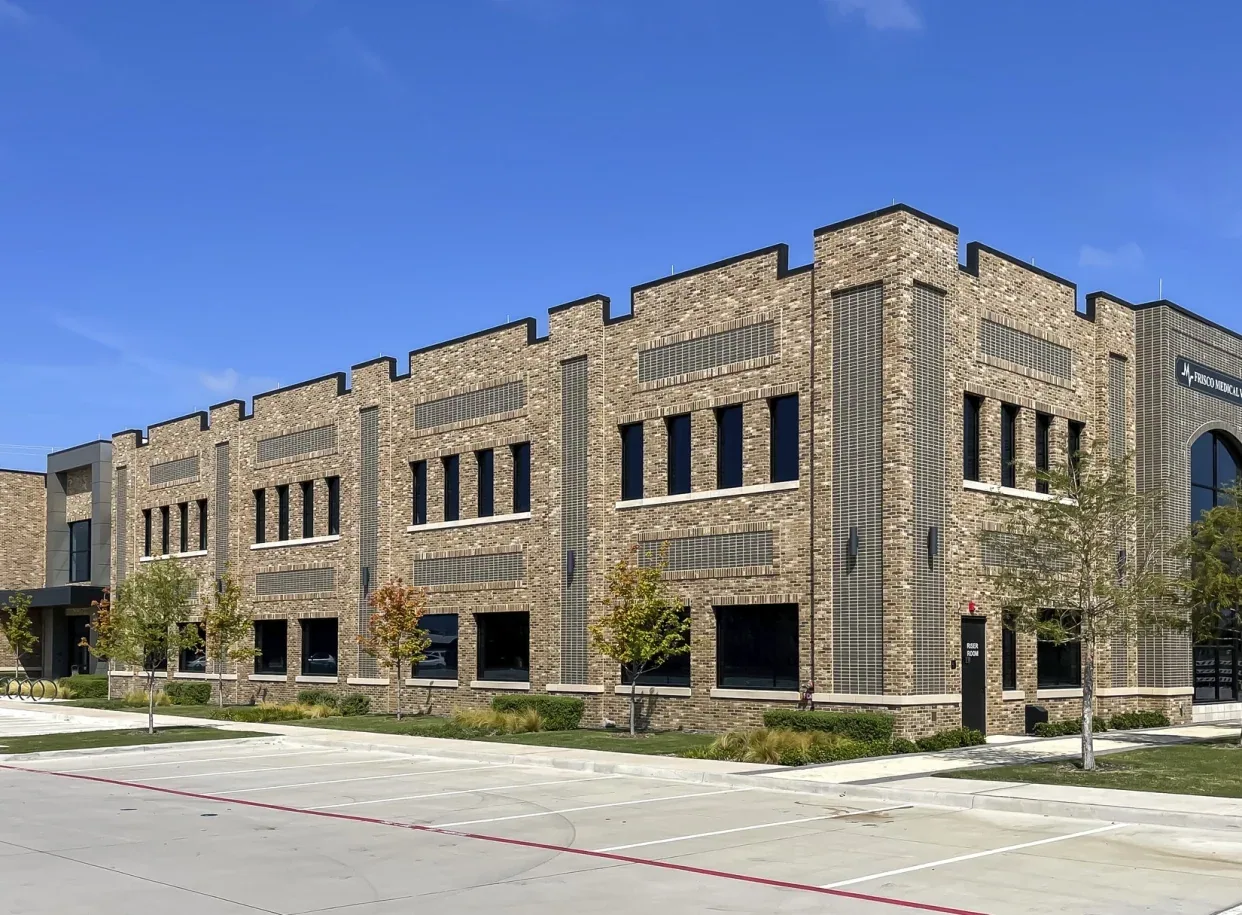
Medical Office Roofing in Sherman, TX
Medical office and clinic roofing in Sherman, TX: dust and noise control, moisture scans and phased repairs that keep exam rooms and imaging suites running.
Warm, humid air rises. In a clinic kept at a steady 72 degrees, that air pushes upward into the ceiling and meets the roof deck. On a cold January night the deck is cold enough to turn that vapor into water. The insulation soaks, and a stain shows up with no hole in the roof. Building scientists call this vapor drive, and it is a common reason medical offices report leaks in winter.
In Sherman, TX a spread of 113 F to -3 F on record makes the effect sharper. Our first job on any clinic roof is to learn whether the water came from above or from inside.
Separate Condensation From Leaks
A true leak follows rain. Condensation follows temperature. If a stain grows on a clear cold morning, the roof may be sound and the assembly may be wet from inside. If a stain appears one hour after a storm, the membrane likely opened.
We test both ideas. A moisture scan maps wet insulation. Core samples show whether the wet zone is under a seam, under a unit or spread broadly. Broad wetness points to vapor. Wetness under a seam points to water entry.
The fix differs. A vapor problem may call for a retarder or better ventilation at the ceiling. A seam problem calls for welding or replacement. Treating one as the other wastes money and leaves the stain in place.
Ventilation below the deck matters too. Many clinics run mechanical systems that hold interior humidity higher than the outdoors in winter. Where the ceiling plenum is tight, that moisture has nowhere to go. A vapor retarder under the insulation, or a change in how the plenum breathes, stops the cycle at its source.
Inspect the Equipment That Keeps Suites Running
Medical offices carry more rooftop equipment than most small buildings. Air handlers, exhaust fans, condensers for imaging rooms and vents for sterilizers all sit on the roof. Each unit has a curb, and each curb is a box cut through the membrane.
Exhaust fans cause a quiet problem. Their discharge can be warm and damp. It lands on the membrane and speeds up wear around the fan. We check the sheet near every exhaust point for chalking, blistering and thin spots.
Curbs get the usual tests. We look at corner folds, counterflashing, fasteners and sealant. We also check where conduit and refrigerant lines cross the membrane. A line support that shifts can tear a flashing within a season.
Plan Around Patients and Procedures
A clinic cannot close for a roof job. Appointments run all day. Procedure rooms need quiet. Dust must stay out of sterile areas. These rules shape the sequence before any material arrives.
We ask for the schedule of each suite. Then we plan the loudest tasks, such as tear-off and deck fastening, for hours when the rooms below are not in use. Early mornings and late afternoons often work. Weekend work is an option where the building allows it.
Dust and fumes get their own plan. We locate every fresh-air intake and set staging away from them. Adhesive-set and heat-welded seams keep flame off the roof. The practice manager signs off on the plan before the crew mobilizes. The same rules apply to any occupied building reroofing job.
Account for Heat Cycling and Spring Storms
Heat cycling is constant. Roof membranes expand by day and shrink by night. Over years this movement works seams, flashings and deck fasteners. Medical roofs have extra curbs and pipes, so they have more places to fail.
Spring storms are the main threat to a clinic roof. In April 2016 Howe, on Sherman's southern edge, had homes and its high school damaged by an EF1. After a storm like that we walk the roof for torn flashing, loose edge metal and hail bruises. Our hail damage repair process starts with a moisture scan.
Winter adds ice and snow. Snow of up to 6 inches fell in a March 2008 band over Grayson County. Clogged drains turn that load into standing water. We clear them first, then check the deck at any low spot where meltwater sat, because a clinic cannot afford a ceiling that stains the week after a thaw.
Build the Repair Step by Step
First, make the roof safe. A temporary seal stops active water. Second, scan and core to find the full wet area. Third, remove wet insulation. Wet board does not dry in place. Fourth, rebuild the layers and weld or tape the seams. Fifth, test the repair before leaving.
Welded PVC and TPO suit many clinic roofs because the seams fuse and flame is not needed. Where a roof is nearly new but leaking at details, targeted flashing repair is often enough. Where the system is at the end of its life, a recover or replacement is more sensible.
Each step gets photographed and logged, so the practice has a clean record for its landlord, lender or insurer. When the repair touches a curb or a pipe boot, the photograph shows the flashing before and after, and the log names the product used.
Match Clinic Roofs to Sherman and Denison
Sherman has three hospitals and Denison has Texoma Medical Center, so clinics and medical suites cluster near them. Clinics in either city get their own roof record, whether the suite sits in Sherman or a smaller town along US 75. Each building is its own case.
Owners of a single suite in a multi-tenant building should read the lease for roof responsibility. Owners of a medical office building should ask for the roof record. Both benefit from a baseline scan. Larger campuses carry the heavier rules of hospital roofing, while general suites follow the pattern of office building roofing.
Keep the Roof Record With the Building
A dated file of photos, scan maps and core results helps at every turn. It supports an insurance claim after hail. It helps a buyer in due diligence. It guides the next repair. We also confirm what the permit office requires before pricing any replacement.
The record should also list what was left alone. A coated section, a patched seam and an untouched wing each get a line with a date. Six months later, a new stain can be compared with that list in minutes. Practice managers who change landlords or lenders hand the file over, and the next roofer starts from facts instead of memory.
Commercial Roofing Questions
Can exam rooms stay in use during roof repairs?
Usually, yes. We seal each work zone daily and keep dust out of occupied rooms. Loud steps get scheduled for hours when the suites below are empty.
Why does my clinic have ceiling stains when the roof looks fine?
Condensation inside the roof assembly is one cause. Warm interior air reaches a cold deck and turns to water. A moisture scan finds it. A seam leak can look the same, so we test for both.
Do exhaust fans shorten the life of the membrane?
They can. Warm, damp discharge wears the sheet near the fan. We check those areas for blisters and thin spots, and add a protective pad where wear is visible.
Who handles the roof in a multi-tenant medical building?
The lease decides. Many leases give roof duty to the landlord. A tenant who adds a unit may owe the curb flashing. Read the lease before ordering work.
How soon after hail should a clinic roof be scanned?
Within days. Hail bruises do not leak at once, and a scan finds them while evidence is clear. Early records also support a claim.
Send the Suite Plan and Leak History
Send the building address, a floor plan with stain locations and any leak history. We will walk the roof with you and explain what the readings show.
Related Roofing Work
Occupied Building Reroofing
Reroofing Sherman, TX hospitals, schools, plants and offices while they stay open, with sectioned tear-off, dust and noise control and daily closure.
Hail Damage Roof Repair
Hail damage roof repair in Sherman, TX: find bruises, fractured membranes and dented metal with moisture scans and core samples, then repair and document.
PVC Roofing
PVC single-ply roofing in Sherman, TX: how the welded membrane resists fats and chemicals, where it fails, and how we test, repair and replace it.
TPO Roofing
TPO single-ply roofing in Sherman, TX: how the welded membrane moves, where it fails, how we test seams, and how repairs and replacements are built.