
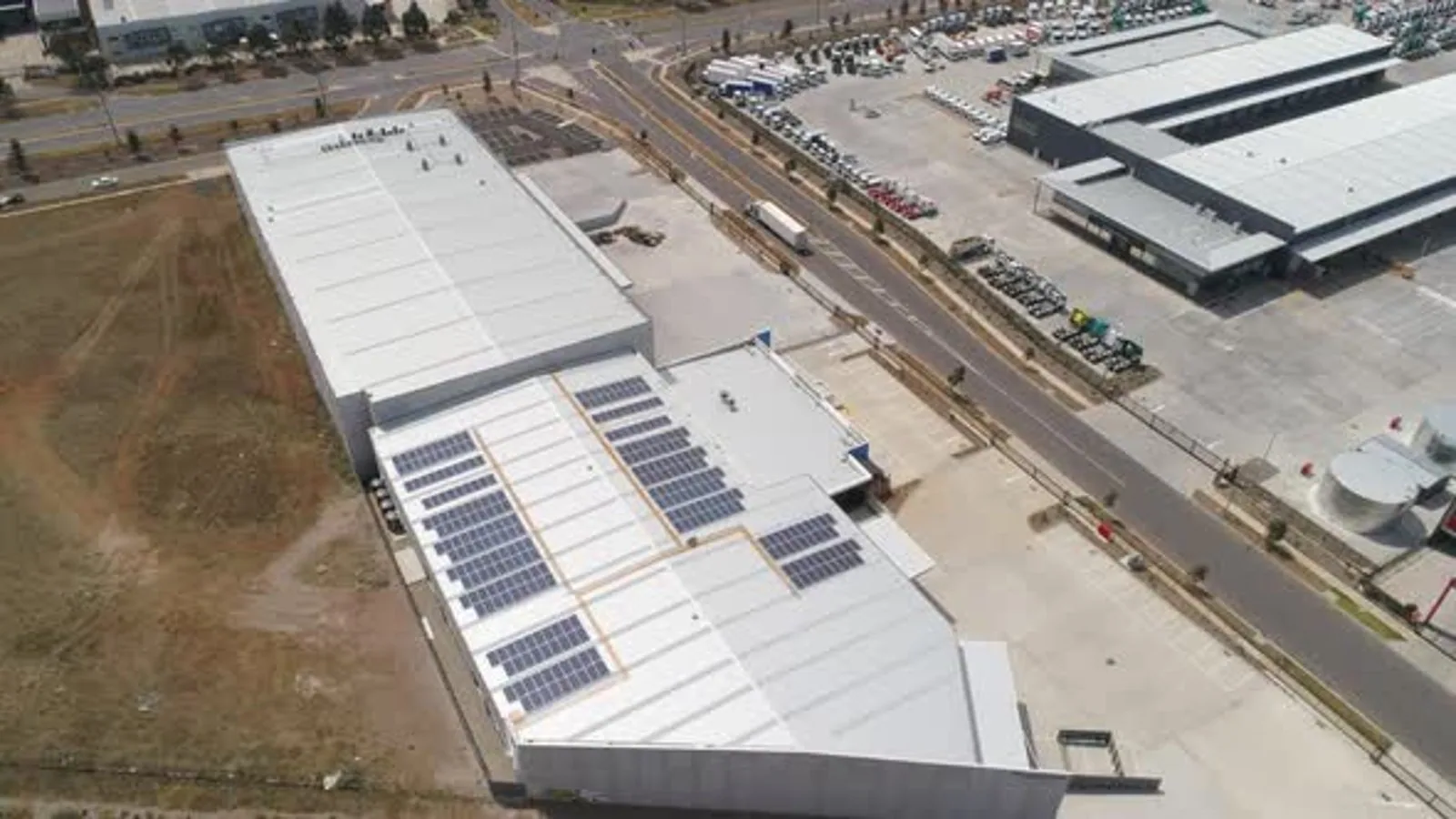
Warehouse Roofing in Sherman, TX
Warehouse roofing in Sherman, TX: how long flat roofs drain and move, where they leak, and how we inspect, repair, coat and replace them in use.
A warehouse roof is mostly empty field. Few penetrations. Long runs. A handful of drains. That simplicity is a strength and a trap. Water has a long way to travel. A single blocked drain can hold a pond across a large area. Heat has a long surface to work on. In Sherman, where the thermometer has reached 113 F and -3 F, a roof that long grows and shrinks by a visible amount every day. The movement concentrates at expansion joints, walls and seams. That is where warehouse roofs fail first.
Our inspection begins at those joints, and the repair plan follows what the tests show.
Warehouses vary. Some are tilt wall concrete. Some are steel frame with metal deck. Some have mezzanines, docks and offices. The deck and the framing change how the roof moves, how it can be accessed and what a leak will damage. We ask about all of it before we price.
A leak report might come from a tenant or a warehouse manager: a drip over racking, a puddle on the dock floor, a stain on an office ceiling panel. We ask where it is, what is under it and what the weather did. Then we go to the likely source. The note we send back names the cause, the step taken and the remaining risk.
Know What a Warehouse Roof Is Made Of
Most warehouse roofs are low-slope. They sit on steel deck, concrete or wood. Above the deck is insulation, often rigid board. Above that is the membrane, which might be single-ply, built-up, modified bitumen or metal. Drains are fewer than on a smaller building, and each drains a large area. Scuppers at the walls provide overflow. Rooftop units serve offices and dock areas. Skylights, smoke vents and hatches punctuate the field.
Warehouse use affects the roof. Stored goods sit below. A leak that would be a nuisance in an office can ruin inventory. Racks and sprinklers hang from the structure, and a manufacturing plant or a cold room under the same roof adds its own heat load. Refrigerated or heated zones change the temperature gradient across the roof. These facts shape priorities.
Roof loads matter on warehouses. Mechanical units, solar arrays and conduit add weight to a deck sized for light loads. A deck with rust or loose fasteners holds less. We look at the deck from below where we can, and we note rust, sags and loose connections. A roof that carries more than it was built for will pond and then leak.
Watch for How Warehouse Roofs Fail
Ponding comes first. A drain clogs or sits high. Water stands. Algae grows. Seams soften. The deck sags a little under the load, and the pond deepens. Seams open at expansion joints and at wall flashings. Fasteners back out and push bumps through the sheet. Rooftop units leak at their curbs. Hatches and smoke vents leak at their frames. Edge metal loosens in wind.
Wear follows traffic. Service technicians walk to units. They leave scuffs, punctures and thinning along the path. A warehouse owner may not visit the roof for years. A routine walk finds the problem when it is small.
Roof drains on warehouses often have large basins and heavy covers. Debris collects. Leaves, plastic, wind-blown trash and gravel all end up there. A drain that was clear in spring may be half blocked by fall. A short visit before the storm season clears them and costs little. We log which drains clog first, because the same three or four outlets tend to collect the leaves and trash every year, and a guard or a shorter visit cycle at those spots solves most of the problem. A blocked drain during a heavy rain costs a great deal.
Test Seams, Drains and Moisture
We walk the roof with a probe. We check seams, laps and flashings. We measure ponds. We clear drains and photograph the water level. We scan for moisture with infrared and a meter. Cores confirm. For large roofs, a drone pass maps ponds, stains and equipment in minutes. It does not replace the walk. It tells us where to walk first. Images are labeled and added to the file. A second pass after repair shows that ponds are gone.
The report lists each finding, a cause and a price. It sorts items into three groups: leaks now, failures within a budget cycle and items to watch. Owners hand it to a landlord, a lender or a tenant.
Count Hail, Wind, Ice and Snow Into the Plan
Hail bruises membranes and crushes insulation, and Grayson County reports run from dime-size stones north of Sadler to 1.25 inch stones at Denison's northwest edge. Wind is the other force, and tornadoes cluster in April and May. Edges and corners lift first, so edge metal gets a close look. We test fasteners at the perimeter, check the joints between metal pieces and look at the sealant. Where the sheet wraps the edge, we check the termination. A loose edge in one gust becomes a peeled roof in the next.
Winter loads the deck. A March 2008 snow band put up to 6 inches over Grayson County. Ponded water that freezes adds weight. Frozen drains hold ice. We check drains and low spots after winter events.
Build the Repair Step by Step
Clear and test the drain. Clean the seam. Weld, tape or patch as the system requires. Reflash the curb. Reset edge metal. Cut out wet insulation. Probe and photograph the result. A coating may extend life where wear is widespread. A dry base under a spent surface can take a recover, and wet insulation across the field points to replacement.
Work proceeds in sections that can be dried in each day. Goods below are protected. Dock traffic is kept clear. A call-back window is set for the warehouse manager.
The price tracks area, penetrations, deck condition, access and how long the dry-in window must be. A warehouse with a clear field costs less per square foot than one crowded with equipment. A roof that needs deck repair costs more. A roof that stays in use while the work goes on costs more than one that does not. The scope shows each driver so the owner can choose.
Match Warehouses to Sherman Corridors
US 75 and US 82 cross in Sherman, and industrial buildings with subdividable bays and 30 foot clear height have gone up within two miles of both. North Texas Logistics Park, at the Oklahoma line, is reached from US 75 and US 69. Foundation Business Park, in Denison, sits on State Highway 91. A distribution center roof is a close cousin of the warehouse roof. Tyson, Sunny Delight and Kaiser Aluminum are among the tenants at Progress Park, which has BNSF rail access, and rail-served buildings share the same dock-and-drainage concerns.
Ask What the Record Shows
The owner gets the file. Photographs. Pond maps. Moisture maps. Core results. Drain logs. The next visit dates. Roof systems often used on warehouses include TPO and standing seam metal.
Commercial Roofing Questions
Why do warehouse roofs pond?
Few drains serve large areas. One blocked drain can hold water across a bay.
Can the warehouse stay in use during repairs?
Usually yes. Work is sectioned, goods below are protected and docks stay clear.
How often should a warehouse roof be inspected?
Twice a year, plus after severe storms.
What is a drone pass for?
It maps ponds, stains and equipment quickly. It directs the walk.
When does a warehouse roof need replacing?
When insulation is wet across the field, seams fail widely or repairs stack up.
Send the Address and the Leak History
Send the building address and any leak history. We will walk the roof with you and explain what the readings show about the seams, the drains and the insulation.
Related Roofing Work
Manufacturing Plant Roofing
Manufacturing plant roofing in Sherman, TX: how process heat, exhaust and equipment load roofs, where plant roofs leak, and how we inspect and repair them.
Roof Coating Restoration
Commercial roof coating restoration in Sherman, TX: moisture scans, adhesion tests, seam prep and thickness checks that extend the life of a sound roof.
Roof Recover and Overlay Systems
Recover a sound commercial roof in Sherman, TX with a new membrane over dry insulation, after core samples and a moisture scan show the old roof can stay.
Commercial Roof Replacement
Full tear-off and replacement of low-slope and metal commercial roofs in Sherman, TX, planned around moisture findings, heat cycling and North Texas hail.