Edge Metal, Coping and Gutters in Sherman, TX
Edge metal, coping, gutter and downspout repair for commercial roofs in Sherman, TX: cleat fastening, joint sealing, thermal movement and wind uplift.
The edge is where a roof is most likely to fail. Wind speeds up as it flows over the parapet. Air pressure at the corner drops sharply. The membrane and metal there feel the largest pull on the whole roof. Metal also moves. A ten-foot piece of steel grows a fraction of an inch with heat and shrinks with cold. Each cycle works the fasteners and sealants.
Edge metal, coping and gutters are the parts that hold the perimeter. In Sherman, TX, where the gap between record high and record low is 116 degrees, those parts earn their keep. That range pulls a long run of metal several times across a season. The first sign of trouble is a hairline gap at a joint.
Know the Parts and What Each Does
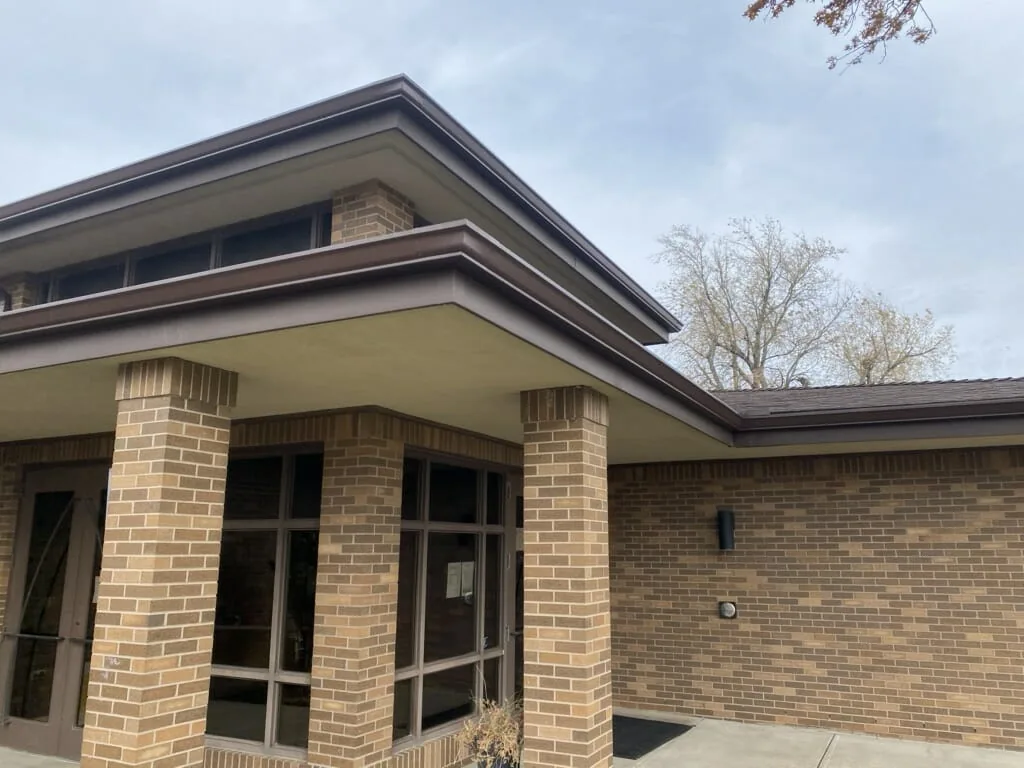
Edge metal, or fascia, caps the roof edge. It covers the end of the membrane and sheds water over the side. Coping caps a parapet. It keeps water out of the wall below. Gutters collect water at an eave. Downspouts carry it to the ground.
Each part has a cleat or a bar that holds it. A continuous cleat is a strip fastened to the wall. The metal hooks over the cleat and locks. Without a cleat, the metal depends on face fasteners, and those loosen with movement.
The roof's perimeter detail also decides how the membrane ends. Termination bars, sealant and flashing tie the membrane to the wall or edge. A failure in any one lets water in. Gravel stops serve the same job on built-up roofs. They hold the gravel and the asphalt edge. A gravel stop that lifts lets stone fall and water enter. Each part has a failure pattern, and we check for that pattern first.
Check the Attachment Against Wind Uplift
Uplift is highest at corners and edges. A cleat spaced too wide, a fastener too short or a joint left loose can let a whole run peel off. Once one piece lifts, the next follows. The membrane beneath is exposed.
Across North and Central Texas, tornado activity peaks in April and May. A tornado warning covered southeastern Grayson County on the night of the May 9, 2006 Westminster tornado, which was rated F3. Warnings like that are why perimeter metal matters. Strong wind often arrives before rain.
We pull test fasteners and measure cleat spacing. We check that splice plates, end caps and corners are locked. Weak runs get additional fasteners or a heavier gauge. A wind damage roof repair often starts at the edge for this reason. Pull tests give numbers. We pull a sample of fasteners along each run and record the force at failure. A run with weak readings gets a denser pattern. The record lets the owner compare edges across buildings and decide which perimeters to upgrade first.
Allow for Thermal Movement at Every Joint
Metal pieces are joined with gaps. The gap lets the metal expand without buckling. A sealant fills the gap and flexes. Over years, sealant dries and cracks. Gaps close and open. Joints leak.
We replace failed sealant with a type matched to the metal and the joint. We clean the surface first. We add a backer rod where the gap is deep. Where joints are fixed too tightly, we cut expansion breaks.
Long runs need breaks at set intervals. Without them, the metal pushes at fasteners and bends. Bent metal opens seams and invites water. The fix is a clean cut, a cover plate and sealant. Color matters in the heat. Dark metal runs hotter and moves more. Light metal moves less. When we replace a run, we consider the finish as well as the gauge. A lighter finish reduces movement and extends sealant life.
Keep Gutters and Downspouts Moving Water Away
A gutter holds water. If it sags, it holds more. Sagging comes from loose hangers, ice load and rust. Hangers need to be spaced and fastened to solid backing. A gutter that pulls away from the fascia sends water into the wall.
We check slope, joints and end caps. We clear debris. We flush the line and watch for leaks. Downspouts need to be sized to the roof area and carry water away from the foundation. A downspout that dumps beside a wall damages the wall and looks like a roof leak.
Ice adds load in winter. The December 2013 ice event left four to five inches of accumulation in the Sherman and Denison area, enough load to pull weak hangers loose. Hangers are re-set and, where needed, upgraded. Coordinate with roof drains and scuppers so water has a path in both places. Leaf guards help where trees overhang. They do not replace cleaning. A guard that clogs holds water just as a blocked gutter does, so the visit checks guards too. Where trees are the cause, we tell the owner so pruning can be scheduled.
Rebuild Edges Where the Membrane Ends
When edge metal is replaced, the membrane end gets attention. We inspect the termination. We re-seal or re-flash as needed. A stripping ply or a membrane flap may need replacement. Wall junctions with penetration flashing get the same attention.
The sequence is fixed. Remove old metal. Inspect substrate. Repair or replace blocking. Install the cleat. Lap the membrane or flashing. Hook the metal. Seal the joints. Test with water. Each step is photographed. Flashing at the wall below the metal needs the same inspection. A coping cap hides the wall flashing under it. When the cap is lifted for repair, we look at the flashing and the wall. Water damage to brick or block shows as stains, efflorescence or crumbling mortar. We note it and flag it for the owner. Photos before and after go in the file. Each repaired run has a plan number and a date. A later visit can check each run against its record.
Match the Detail to the Roof Type
Metal roofs have their own trim. A standing seam metal roof uses matched eave, rake and ridge trim. A membrane roof uses fascia and coping. A built-up roof may use gravel stops. The right detail depends on the roof and the wall.
A school roof or campus building with long parapets, and a plant or warehouse with long edge runs along US 75 through Van Alstyne, share the same issues. Long runs mean many joints and many chances for movement to show. Parapet height decides the coping detail. Low parapets may take a simple cap. Tall parapets need through-wall flashing and wider caps. The survey measures each and lists the right detail. Inspection of edges is quick on the ground and quicker with a drone. A drone pass along the perimeter shows lifted metal and open joints. A close visit then confirms and measures.
Commercial Roofing Questions
What is a cleat, and why does it matter?
A cleat is a strip fastened to the wall or deck. Edge metal hooks over it and locks. It resists uplift far better than face fasteners alone.
How often should edge sealant be replaced?
When it cracks, hardens or pulls away. A yearly check catches it. Many joints need new sealant every few years.
Can a loose coping be tightened?
Sometimes. If the cleat or substrate is sound, we refasten and reseal. If the backing is rotted, we replace it.
Do gutters need to be on a commercial roof?
Many have interior drains instead. Where gutters exist, they need slope, hangers and clear downspouts.
What gauge should edge metal be?
The wind zone and span set it. Heavier gauge resists bending in uplift. We match the spec to the building.
Send the Address and Any Edge Photos
Send the building address and photos of any loose or bent metal. We will walk the perimeter, test the attachment and explain what the readings show.
Related Roofing Work
Wind Damage Roof Repair
Wind damage roof repair in Sherman, TX: edge metal, fastener, membrane and flashing checks after storms, with moisture scans and written repair scopes.
Roof Drains and Scuppers
Drain, scupper and ponding correction for commercial roofs in Sherman, TX: sump repair, overflow sizing, crickets and tapered insulation that clear water.
Skylight and Penetration Flashing
Skylight, curb and penetration flashing repair for commercial roofs in Sherman, TX: pipe boots, vent stacks, dome seals and curb details that stop leaks.
Standing Seam Metal Roofing
Standing seam metal roofing in Sherman, TX: how clips and seams let panels float, where they fail in wind and hail, and how we inspect and repair them.