
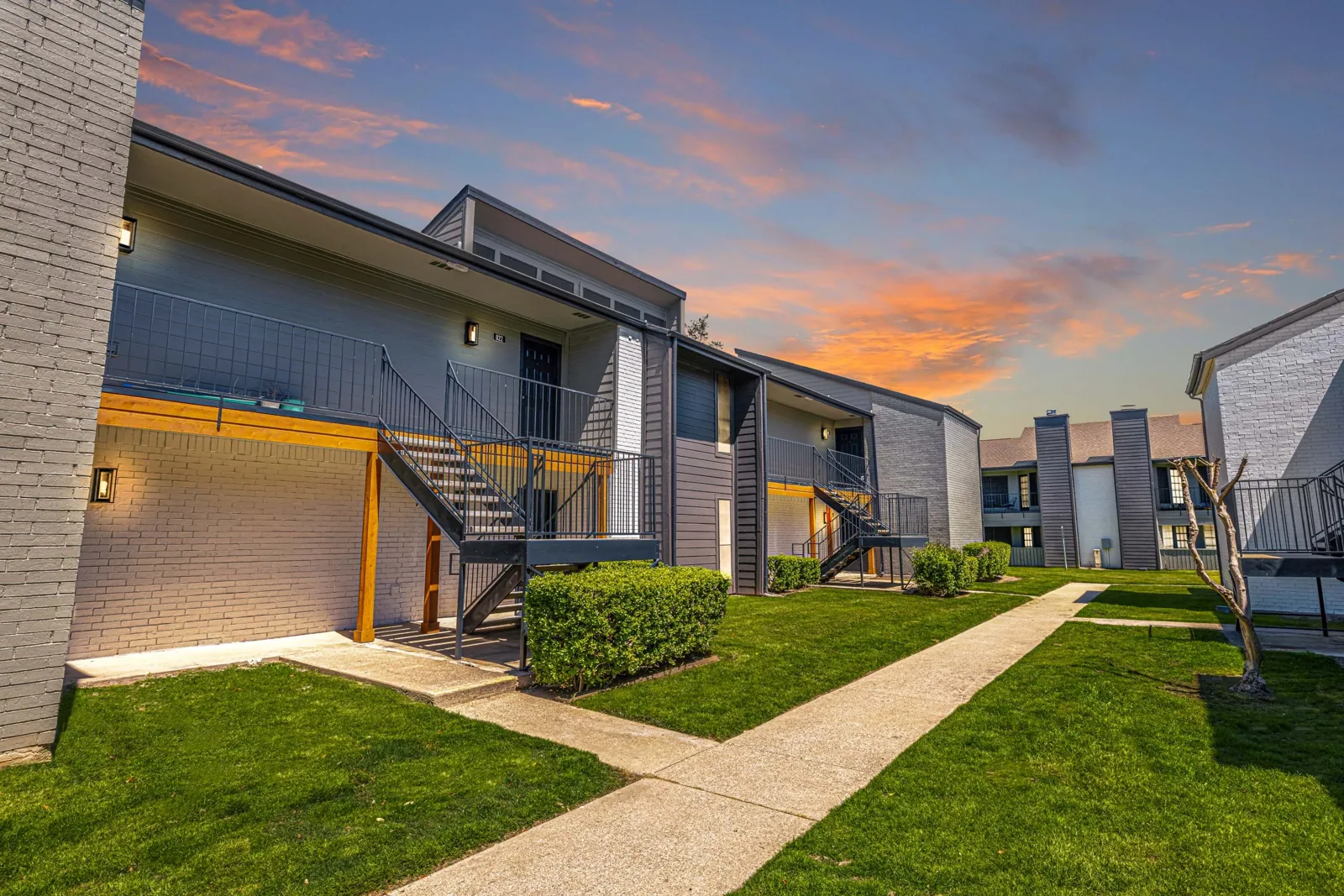
Apartment Roofing in Sherman, TX
Apartment and multifamily roofing in Sherman, TX: flat and low-slope roof repair, resident notice plans and phased reroofing across several buildings.
An apartment complex is a row of roofs that look the same and age differently. South-facing slopes cook. North-facing slopes stay damp. Roofs near trees collect leaves and hold water. Roofs near parking lots take reflected heat. Each building in one complex can need a different repair at a different time.
So we inspect every roof, not a sample. In Sherman, TX the climate swings from a record high of 113 F to a record low of -3 F. That motion stretches seams and loosens flashing on each roof across the complex. A moisture scan on each building shows which ones are dry, which are wet in spots and which are failing. The manager then sees a ranked list, building by building, instead of a single average.
Read the Complex Building by Building
Multifamily roofs come in several forms. Garden-style complexes often use low-slope or pitched roofs over two or three stories. Midrise buildings use flat membrane roofs with parapet walls. Mixed-use buildings add retail at street level and apartments above.
Each form has a favorite failure. Pitched roofs lose flashing at valleys and walls. Flat roofs pond at drains and scuppers. Parapet walls crack at the cap. Balcony junctions leak at the wall.
We catalog each building with a sketch and a photo set. The manager can compare buildings without guessing. A multi-site roof program turns that catalog into a schedule for the whole property.
Where a complex includes a leasing office, a clubhouse or a pool building, those roofs get their own line. They often hold more equipment than the apartment buildings, and a failure there closes an amenity. The approach used on a hotel roof, with exhaust curbs and humidity in mind, fits clubhouses well.
Penetrations get counted. Vent stacks, exhaust fans and satellite mounts each pierce the surface. A building can carry dozens of them. We seal each one and record the date.
Follow the Growth Along US 75
Population along the US 75 corridor has climbed. Sherman's population was 43,645 in 2020 and an estimated 50,229 in 2024. Towns on the Collin County end of the corridor, such as Anna, Celina and Melissa, have grown much faster than Sherman has.
Growth brings new buildings, and new roofs have early defects like any other. A missed weld, a loose coping or a sealant gap can leak in the first season. We recommend a first-year inspection for any new building. It also records a baseline for later comparison.
An older complex, whether in Sherman or a faster-growing town like Melissa, has a different pattern. Its membranes have aged through many heat cycles. Surface cracks, shrunken seams and failed pitch pans are common. We rank those roofs by risk and cost.
Protect Residents During the Work
Residents sleep, work from home and raise children under these roofs. A roofing crew is a disturbance they did not ask for. We keep the disturbance small and the notice clear.
Notice goes out in writing before work begins. It lists dates, hours, noisy steps and safe routes. We post it at every building door. We schedule loud work for midday, when more residents are out. We fence work zones, and we guard doors and walkways.
Unit access is sometimes needed for interior checks. We coordinate with the manager and give residents advance notice. Pets, balconies and parked cars need planning too. Material staging stays away from play areas and parking. The same process works for a senior living community, where residents are more sensitive to noise and routine changes.
Closing the loop with residents matters. A short note after the job tells them the work is done and who to call with a concern. Complaints drop when residents see an end date.
Plan for Storms and Ice
Tornado season in North Texas peaks in spring. On June 8, 2025 an EF1 touched down southwest of Sherman, and a hail report northwest of Denison gave stones about 1.25 inches across. Howe, which borders Sherman on the south, took an EF1 in April 2016 that damaged homes and its high school. Sherwood Shores took an EF2 in March 2022.
After any storm, residents call with stains. A baseline record helps the manager respond. We walk each roof, repeat each photo and compare. Real damage gets documented at once. That record supports an insurance claim and a repair order.
Ice and snow matter too. Sleet and freezing rain in December 2013 stacked ice 4 to 5 inches deep around Sherman and Denison, and January 2025 snow reached 9 to 11 inches at isolated spots. Drains and scuppers must be clear before the cold arrives. Ice dams along eaves push water under shingles and flashing.
Keep the Water Moving
Water on an apartment roof has to leave quickly. Flat roofs rely on interior drains or scuppers through the parapet. A clogged drain means ponding, and ponding means slow damage to the membrane and extra weight on the deck.
We clear and log every drain. We test the overflow scuppers. We check gutters and downspouts on pitched sections. Debris from nearby trees is the usual cause of trouble, so we ask the manager about tree work.
Poor drainage is also the main reason new membranes fail early. Sometimes the fix is a tapered insulation layer that adds slope. Ponding water repair can be cheaper than replacing a membrane that never had a chance to drain.
Balconies and breezeways add their own water. A balcony slab that slopes toward the wall pushes water into the joint at the door. We check those joints and the drip edges. Sealant ages in sun, and a split joint at a balcony door often shows up as a stain in the unit below.
Pick Repair, Recover or Replace
A dry roof with surface wear can take a coating. A roof with scattered wet areas takes cut-and-replace repairs. A roof with widespread wet insulation needs replacement.
A recover saves tear-off but only works over a dry assembly. Trapped moisture becomes vapor in summer heat, and vapor drive lifts the new sheet. We scan before we recommend.
Cost drivers are roof area, tear-off depth, insulation thickness, access, penetrations and edge metal. Each appears as its own line in the scope. A manager or an ownership group can compare bids on equal terms. Closeout includes photographs, materials and a care schedule for the manager. A TPO membrane suits many low-slope apartment roofs. It is reflective, so it cuts heat gain on the top floor, and its seams are welded. On pitched sections, metal or shingle systems apply, and we match them to the existing slope.
Commercial Roofing Questions
Can we reroof one building at a time?
Yes. The work can be phased over several seasons. We rank buildings by condition and schedule the worst first.
How much notice do residents get?
We post written notice before work starts. It lists dates, hours and any noisy steps. The manager can add more notice if needed.
Do all buildings in a complex need the same roof?
No. Different buildings may have different ages and conditions. Each gets its own scan and its own recommendation.
What if a resident reports a leak during a storm?
Send us the address and the unit. We make the area safe first, then trace the entry point. A baseline record speeds the work.
Is a new building roof safe from defects?
Not always. Early seam and flashing defects can show up in the first year. An inspection then fixes them while warranties still stand.
Send the Complex Address and Leak History
Tell us how many buildings are on site, which units have had stains and when roofs were last worked on. We will walk the roofs with you and explain what the readings show.
Related Roofing Work
Multi-Site Roof Programs
Multi-site roof programs for Sherman, TX and North Texas portfolios: one inspection method, one ranking and one schedule across every building you own.
Hotel Roofing
Hotel roofing in Sherman, TX: leak tracing above guest rooms, phased repairs that protect occupancy and storm checks before the busy season.
Sherman
Commercial roofing in Sherman, TX for fabs, food plants, hospitals and the college: moisture scans, seam repair, recovers and storm checks on flat roofs.
Melissa
Commercial roofing in Melissa, TX, where US 75, SH 5 and SH 121 meet: moisture scans, core samples, storm repairs and replacements for growing commercial roofs.