
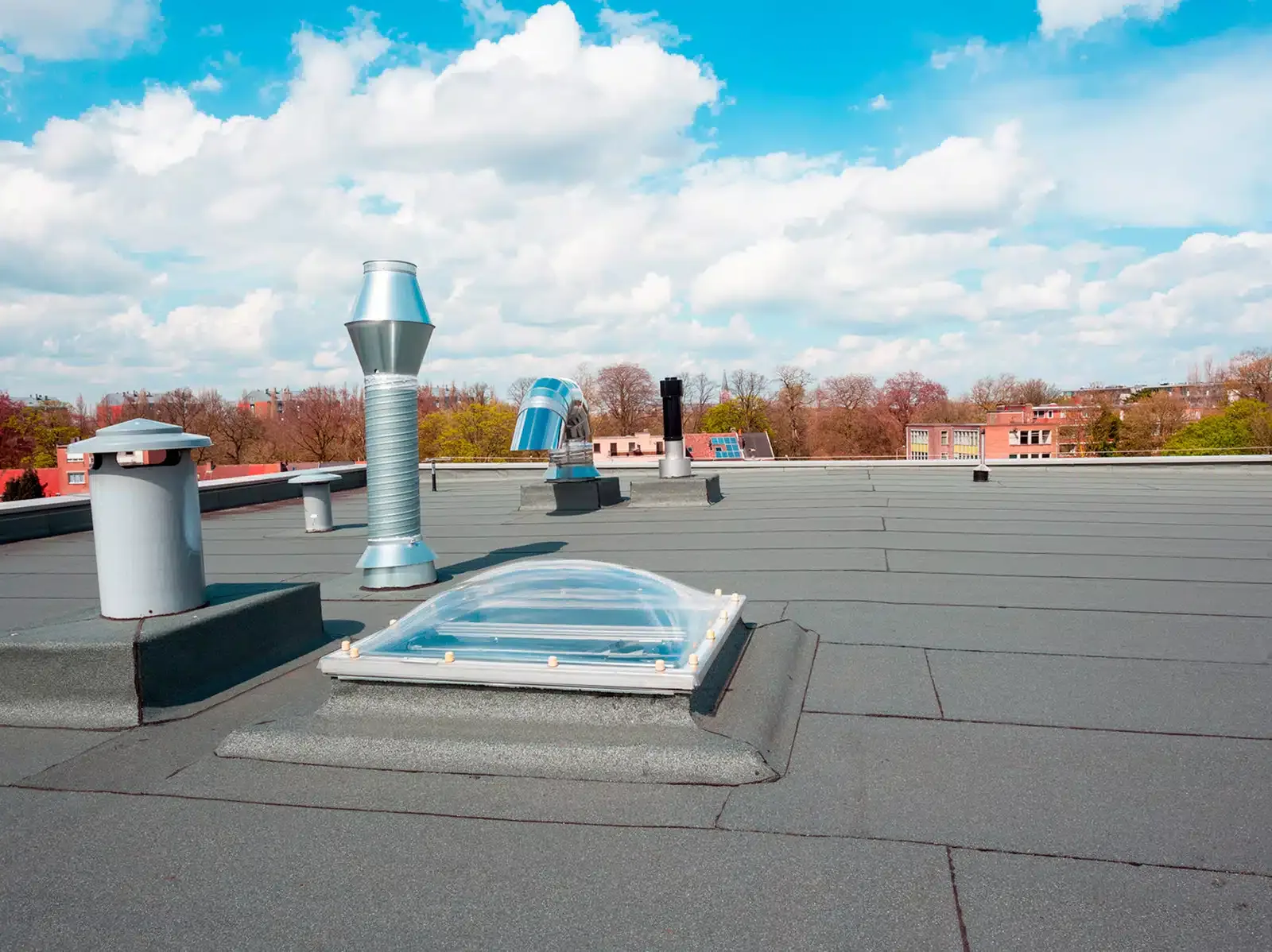
Soprema Roofing Systems in Sherman, TX
Soprema modified bitumen and liquid-applied roofing in Sherman, TX: lap checks, flashing resins, fire-safe installation and repair planning for roofs.
Asphalt is a slow liquid. Sun softens it, cold hardens it, and a roof built from it moves with the weather. Modified bitumen adds polymers to the asphalt and a reinforcing mat in the middle, which lets the sheet stretch and recover instead of cracking. Soprema makes modified bitumen membranes, liquid-applied membranes and flashing resins, along with other roofing components. In Sherman, TX the sheet is stretched from 113 F summer highs down to winter lows that have touched -3 F. The laps and the flashings take the strain, so we read them first on any Soprema roof, and we check how the assembly was applied.
Read the Layers
A modified bitumen roof is typically two or more layers. A base sheet or base ply is fastened or adhered to the deck or insulation. One or more cap sheets, often with a mineral surface, lie on top. The layers are joined at laps that overlap by several inches. Each lap is a place where movement collects.
We learn the layers through cut edges, core samples and the specification. The core shows layer count, insulation type and thickness, and the state of the deck. A roof that has been recovered once will show more layers than the specification suggests. That history decides whether another recover is possible and how a repair should be built.
Insulation sits under the membrane on many of these roofs, and its condition decides how much of the roof is salvageable. Wet board under a modified bitumen sheet does not dry out. We scan for moisture and confirm with cores before any repair plan is written, because cutting out a wet area and patching a dry area are two different jobs with two different prices. The Johns Manville assemblies we inspect raise the same question.
Know How It Was Applied
Application method matters. Some sheets are heated and set into place with a torch. Some are set in hot asphalt. Some are adhered with cold adhesive. Some are self-adhered, with a sticky back that bonds under pressure. Each leaves a different signature at the laps and affects the way a repair should be made.
Fire safety shapes the choice. Torch work puts an open flame on the roof, which raises fire risk near combustible materials, wood decks and rooftop equipment. Cold-applied and self-adhered methods avoid the flame. For roofs over food plants, hospitals and schools, we prefer methods that remove that risk, and we plan hot work permits and fire watch where flame is used. The scope states the method for each area, so the owner and insurer know the plan.
Temperature affects every method. Self-adhered sheets bond poorly on cold or damp surfaces, and adhesives cure slowly in cold air. Hot asphalt cools fast in wind. The winter low in Sherman has reached -3 F, and in December 2013 the city and Denison sat under four to five inches of ice, so winter work is limited to emergency measures. We schedule permanent work in milder, dry weather and write that into the plan.
Inspect Laps, Blisters and Granules
On a mineral-surfaced cap sheet, the granules protect the asphalt from sun. As they wear off, the binder beneath hardens and crazes. We look at the surface for bare patches and check how granules collect in drains and gutters. A heavy granule loss points to an aging surface.
We probe laps for lifted edges and check for blisters, which are bubbles formed by trapped moisture or air between layers. A small intact blister may only need monitoring. A split blister lets water in and needs repair. Hail adds to the load. A June 2025 hail report from the Denison side measured half-dollar stones, and hail can fracture the layers below a surface that looks whole. After events like that we scan for moisture. Our modified bitumen roofing work and the built-up roofing approach follow the same checks.
Edge metal and gravel stops get the same scrutiny. Water running off a hardened cap sheet carries granules and debris to the edge, where it can clog a scupper or stain a wall. We clear it, check the metal for gaps and note where sealant has split. These small items cost little to fix when found, and they are the usual start of larger problems when missed.
Use Liquid Flashings for Complex Details
Flashing details are hard to build from sheet material. A cluster of pipes, a curb with odd corners or a drain with an irregular outline have many seams. A liquid-applied flashing resin is poured or troweled into the shape, then cures into a continuous membrane with no seams. It bonds to many substrates when the surface is prepared correctly.
Preparation decides the result. The surface must be clean and dry, and primer must be applied where the manufacturer's instructions call for it. We reinforce the resin with fabric at corners and transitions. Our skylight and penetration flashing work uses this approach where a prefabricated part will not fit. We record each flashing by location, so repeated trouble at a spot can be traced to its cause.
Resin repairs are tested before they are trusted. We make a small trial application on an inconspicuous area, wait for the specified cure time and check the bond. If it peels, the surface needs more preparation or a different primer. A trial adds a short delay but prevents a failure that would otherwise show up as a leak. The results of each trial go into the repair log with the temperature and humidity on the day.
Plan for Fire and Heat Safety
Fire is a risk in the roofing process and in the building. We plan hot work with the building contact, place extinguishers and a watch person, and cool the area after work stops. If a fire has already damaged a roof, the repair has its own rules. Our fire damage repair begins with a deck check and removal of charred insulation, because heat can damage material that still looks intact.
Heat also ages asphalt. A dark surface absorbs sun, softens and loses oils faster. A reflective coating can lower the surface temperature and slow aging. We test whether the roof is dry, clean and sound enough to take one, and we state the expected life gain in the scope.
Plan Work Around Sherman Buildings
Industrial plants in Progress Park, hospitals, schools and the buildings of Austin College each have their own limits on noise, odor and access. Modified bitumen work can produce smell and smoke, depending on method. We coordinate with building staff about intakes, hours and the position of air handlers, and we cover or shut intakes where needed. Occupied building reroofing follows this plan.
We confirm the local permit requirements in Sherman, Denison and the towns nearby before we price. Systems from GAF can be compared in the same scope.
Commercial Roofing Questions
Does modified bitumen need a torch?
Not always. Cold-applied and self-adhered methods avoid open flame.
What is a blister?
A bubble between layers formed by trapped moisture or air. Split blisters let water in.
Why use a liquid flashing?
It forms a continuous layer around complex shapes where sheet material would have many joints.
Can a coating extend an asphalt roof?
On a dry, sound roof, yes. A reflective coating lowers surface temperature and slows aging.
How do you protect a building's air intakes?
We locate them first, coordinate with staff and cover or shut them during work that creates fumes.
Send the Address and the Roof Papers
Send the building address, any leak history and the roof papers you have. We will walk the roof with you and explain what the readings show.
Related Roofing Work
Johns Manville Roofing Systems
Johns Manville roofing and insulation assemblies in Sherman, TX: moisture scans, dew point checks, cover boards and repair or replacement planning.
Modified Bitumen Roofing
SBS and APP modified bitumen roofing in Sherman, TX: how layered asphalt sheets move, where laps and flashings fail, and how we test, repair and replace them.
Built-Up Roofing
Built-up (BUR) multi-ply roofing in Sherman, TX: how felts and asphalt layer into a membrane, where blisters form, and how we test, repair and replace BUR.
Skylight and Penetration Flashing
Skylight, curb and penetration flashing repair for commercial roofs in Sherman, TX: pipe boots, vent stacks, dome seals and curb details that stop leaks.