
Roofing for Logistics and 3PL Operators in Sherman, TX
Roofing for logistics and 3PL operators in Sherman, TX: drain and seam control over racked inventory, dock-side flashing, storm response and phased repairs.
Water on a distribution roof has one job: reach a drain. On a roof this wide, the drain is a long way off. The membrane tilts only a little toward each outlet. A leaf pile, a plastic bag or a stuck strainer stops the flow, and the pond that forms adds weight to a deck that was not sized for it. The seam at the pond edge softens and opens. Water then runs through the insulation and drops onto racked pallets.
In Sherman, TX the roof also rides a range of 113 F down to -3 F, both on record. That movement opens seams over time. For a 3PL operator, a leak is not a roof problem alone. It is a customer claim. We keep the drains clear and the seams sound so the inventory below stays dry.
Keep the Drains Open Between Storms
A large logistics roof may have few drains for its size, with scuppers as overflow. We walk the roof after leaf fall, after spring wind and before the first freeze. We clear each outlet, test the flow with water and photograph the result. Ponds that stay more than a day after rain get measured, and we find out whether the deck has sagged or a drain sits high.
Fixes range from a new drain bowl to tapered insulation that carries water to the outlet. A drain and scupper upgrade often costs less than the damage from one wet pallet row. Overflow scuppers get the same attention as drains. If the primary outlet clogs, the scupper is the only path for water, and it needs to be clear, sized right and flashed tight to the wall.
Heat cycling adds to the drain problem. A white membrane stays cooler than a dark one, but even a white sheet stretches and relaxes each day. At a pond edge, the sheet is also wet and under extra load, so seams there give way first. We check seam probes at every ponded zone and weld or re-tape what has opened. Drains are cheaper to clear than seams are to rebuild.
Watch the Dock Walls and the Edge
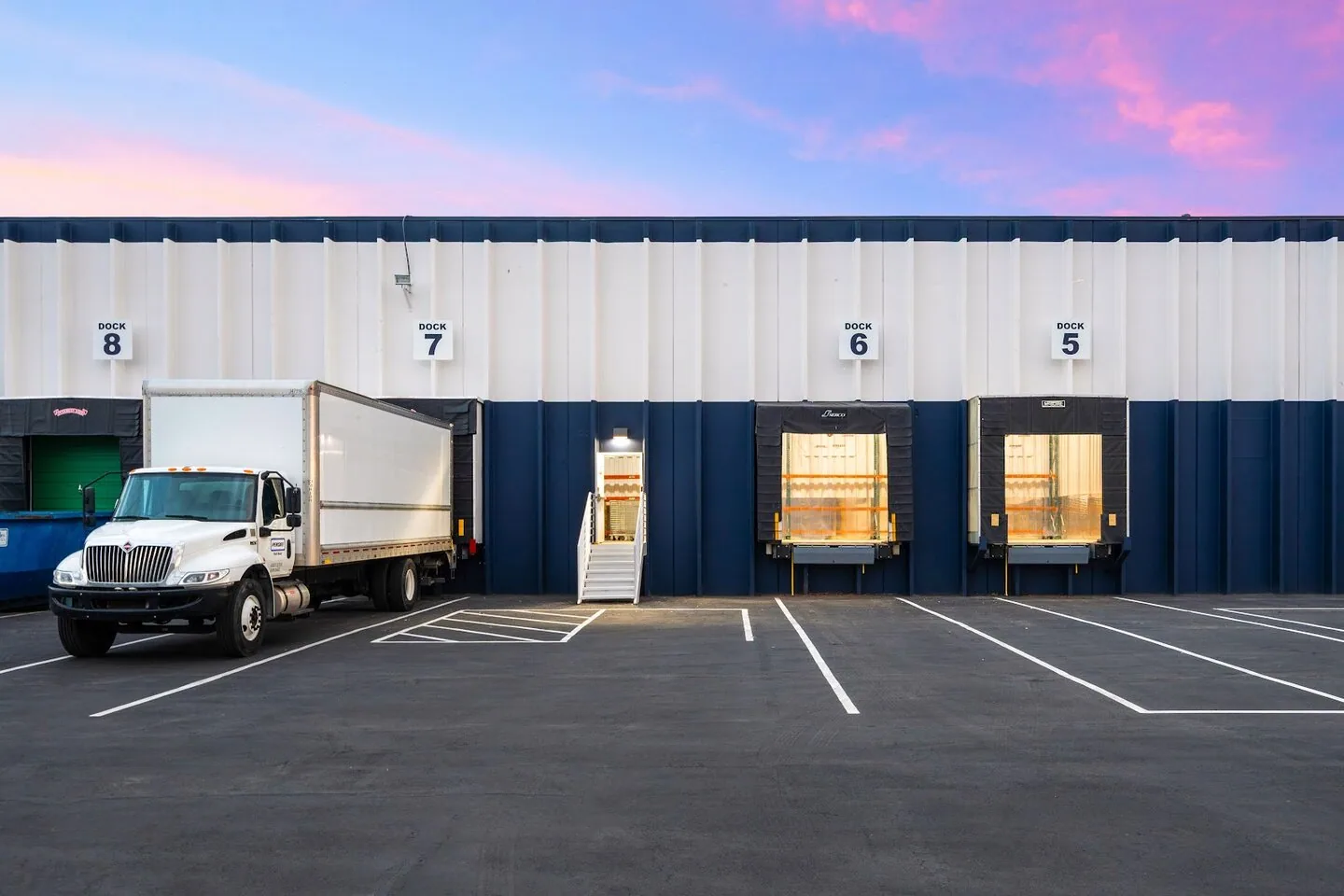
Dock walls take a beating. Trucks bump the bumpers, and the vibration shakes the wall. Tilt-up panels shift slightly, and the roof-to-wall flashing shifts with them. Coping on the parapet loosens at the joints. Water enters behind it and runs down the inside of the wall near the dock doors, where inventory is staged.
We check the wall flashing along the whole dock side. We look for gaps at the cap, cracks in the sealant and rust on the edge metal. High winds lift loose edge metal and tear membrane from the wall. A repair at the joint takes a short time. A repair after a storm has stripped the edge takes much longer. Distribution center roofing depends on keeping that edge tight, since the wall is where the roof starts to fail first.
Dock seals and canopies add penetrations to the wall. A canopy bracket that pierces the wall near the roofline needs its own flashing, and a leveler pit below the dock needs drainage that does not feed back toward the building. We note each of these when we walk the dock side, because they are common sources of water that looks like a roof leak but starts at the wall.
Read the Corridors Where Logistics Space Is Growing
North Texas Logistics Park occupies about 260 acres at the Oklahoma line and has frontage on US 75 and US 69. Its 4,000 acre-feet of water a year supports distribution and manufacturing buildings. North Texas Logistics Park and Foundation Business Park in Denison, which fronts State Highway 91 within a mile of US 75, both offer large sites for distribution users. Progress Park in Sherman has BNSF rail access.
Sherman sits about an hour north of DFW, and more than 2 million people live within a 60 mile radius. Newer industrial buildings with subdividable bays sit close to the US 75 and US 82 crossing. At Foundation Business Park, low-slope roofs over metal and tilt-wall shells should be common. We read each building on its own, since a park listing says little about the roof.
Respond Fast When Weather Hits the Racks
Hail of half-dollar size and an EF1 on Rockport Road southwest of Sherman arrived together on June 8, 2025, and tornadoes cluster in April and May across North and Central Texas. When storms hit, a 3PL has to answer to customers before the roof is dry. Our emergency response runs around the clock, holidays included. We tarp openings, stop the water and move on to a planned repair.
A moisture scan after a storm shows where water entered the insulation. An infrared moisture survey on a large roof gives the operator a map of wet zones, and the map points to the bays that need inventory moved. Photographs and counts support the claim. The operator can then show the customer a clear record of what happened and what was done.
Racked inventory complicates the response. Water that enters at a drain can run along a purlin for forty feet before it drops. We trace it back to the opening and mark the path on a sketch so the operator knows which aisles to check. Sprinkler pipes, fixtures and forklift charging stations get covered as well, since wet electrical gear is a bigger risk than wet cartons.
Phase Repairs Without Stopping the Docks
Operators cannot close a building for a roof job. Work moves in sections, beginning over low-activity zones. We stage materials away from dock aprons, keep fire lanes clear and tarp the areas below before any membrane comes off. Racking and sprinkler lines get protection. Inventory below the work zone gets covered or moved on the operator's schedule.
Operators with several sites along the corridor can group them into one multi-site roof program with common reporting and one schedule. Landlords that hold these buildings, including investors and REITs, can use the same condition grades the operator uses, and the roof of a typical warehouse gives both sides a common starting point.
An operator may serve manufacturers whose product moves through the same buildings, so a leak can affect two businesses at once. A written phase plan that both sides have seen keeps the work from surprising either one. It lists the bays by date, the equipment that will sit on the apron and the person at each end who can approve a change on the day.
Commercial Roofing Questions
What causes ponding on a distribution center roof?
A clogged or high drain, a deck that has sagged or too little slope. Ponds soften seams and add weight. We measure depth, clear outlets and correct the cause.
Can you repair a roof while docks are running?
Yes, in phases. We work over quiet zones first, tarp the area below and keep dock aprons and fire lanes clear.
How do you protect racked inventory from a leak?
We tarp or screen before any membrane comes off and coordinate with the operator on which pallets to move. If water has already entered, we stop it first and then repair.
Why do dock walls leak so often?
Truck impact and thermal movement loosen the cap and the flashing at the wall. Water runs behind the edge and down the inside face. A tight cap and fresh sealant fix most cases.
What proof will a customer want after a roof leak?
Dated photographs, a moisture map and a description of the repair. We give the operator all three.
Send the Building Address and Dock Layout
Tell us where leaks have come in, which bays hold the most sensitive inventory and when the docks are quietest. We will walk the roof with you and explain what the readings show.
Related Roofing Work
Roof Drains and Scuppers
Drain, scupper and ponding correction for commercial roofs in Sherman, TX: sump repair, overflow sizing, crickets and tapered insulation that clear water.
Distribution Center Roofing
Distribution and fulfillment center roofing in Sherman, TX: how very large flat roofs drain and leak, and how we inspect and repair them around dock schedules.
Commercial Roofing at North Texas Logistics Park near Sherman, TX
Commercial roofing at North Texas Logistics Park near Sherman, TX: ponding control, wide-span roof scans, dock-friendly repairs and storm checks for flat roofs.
Foundation Business Park, Denison
Commercial roofing in Foundation Business Park, Denison, TX: tilt-wall parapet repair, metal roof restoration and membrane scans for plants and warehouses.