
Silicone Roof Coatings in Sherman, TX
Silicone roof coatings in Sherman, TX: how the liquid membrane cures, why it tolerates ponding, where it fails, and how we test, prepare and apply it.
Silicone is a liquid that cures into a rubbery skin. It is applied with a roller or a sprayer. It bonds to the old roof beneath. It forms one continuous layer over seams, fasteners and flashings. Water does not break it down the way it breaks down some other coatings. A silicone coating can sit under standing water and keep its bond. That is why it suits roofs that pond. It is not a cure for a leaking roof. It is a skin that works only on a sound surface.
Sherman strains a skin like this from both ends, with 113 F and -3 F on record. A coating that stays flexible across that spread lasts. The order of work is surface, test, preparation, coating.
Surface prep decides the outcome. Silicone sticks poorly to dirt, oil and chalk. A roof is washed with a pressure washer and a cleaner. Mildew and algae are treated. Rust on metal is wire-brushed and primed. Loose old coating is scraped off. Only then does the coating go on. A crew that rushes prep will see the coating peel within a year, and the cost of redoing it is far above the cost of doing it right.
A coating has limits. It can seal small cracks. It can seal fastener heads and lap edges. It can lower surface temperature. It cannot dry wet insulation. It cannot fix a failed seam by itself. It cannot save a roof that has reached the end of its life.
Know What Silicone Coating Is Made Of
The base is silicone polymer in a solvent or a water carrier. It cures by reacting with moisture in the air. Once cured, it is a flexible film. Silicone is highly resistant to UV, ozone and water. It stays flexible in cold and heat. It does not chalk the way some coatings do. It does hold dirt, because the surface is slightly tacky. Dirt reduces reflectivity over time. A wash can restore some of it.
Silicone is one of several coating chemistries. Acrylic is water-based and costs less. Polyurethane is tough and handles traffic. Each has a place. Silicone is the one that holds up under ponding and under sun, and it is the one we choose when the roof ponds or when it is a metal roof with many fasteners to seal.
Thickness is measured in mils. A mil is a thousandth of an inch. A typical coat is a few tens of mils when applied in passes. Thickness controls life. A thin coat wears fast. A thick coat lasts. The scope states the target thickness and the method of checking it.
Watch for How Silicone Coatings Fail
Poor adhesion is the main failure. Silicone does not stick to every surface. Some old coatings, some bitumen and some dirty surfaces repel it. Bad prep leads to peeling. A coating also fails where it is applied too thin. It can fail at laps if the old roof moves. It can be cut by foot traffic. Dirt build-up reduces reflectivity.
A coating hides problems if it is applied over them. Over wet insulation, it traps water. Over open seams, it bridges them temporarily and then tears. Over blisters, it follows the shape and may crack. This is why testing comes before coating, not after.
Compatibility matters. Silicone cannot be recoated with most other coating types without a special primer, and most other coatings do not stick to cured silicone. A roof that gets silicone is committed to silicone for later recoats. The owner should know this before the first coat, so the choice is not made by accident.
Test Adhesion and Moisture First
We clean a test patch and apply a small amount of coating. After it cures, we cut a cross-hatch and pull a tape strip. If the coating stays, adhesion is good. If it lifts, we change the primer or the plan. An infrared scan and a meter map moisture, and cores confirm it. We probe seams. We look at every fastener and lap. Anything open gets repaired first.
We also check drainage. Silicone tolerates ponding, but deep ponds still add weight and stress the deck. We measure ponds and note their location. If a drain is blocked or high, we fix it before coating. Overflow scuppers are checked as well, since a pond that has nowhere to go can spill onto a wall.
Count Hail, Wind and Cold Into the Plan
Hail pits coatings and can puncture them. A June 8, 2025 report northwest of Denison measured the stones at 1.25 inches, and the April 2014 hail north of Sadler was dime-size. After hail, we walk the roof and mark each hit. Small hits are patched. Many hits may call for a recoat. Cold matters during application. Silicone cures with moisture and slows in cold, dry air. Ice from the December 2013 event ran 4 to 5 inches deep in the Sherman and Denison area, and winter work is limited to milder days.
Rain interrupts application. The coating must cure before it gets wet. Crews watch the forecast and stop early when rain threatens. Wind carries overspray. We mask nearby surfaces and cars. Spring is tornado season in North Texas, and an EF1 came down southwest of Sherman on June 8, 2025. Application is scheduled in gaps between storms, with material kept under cover and equipment tied down when severe weather is forecast.
Build the Coating Step by Step
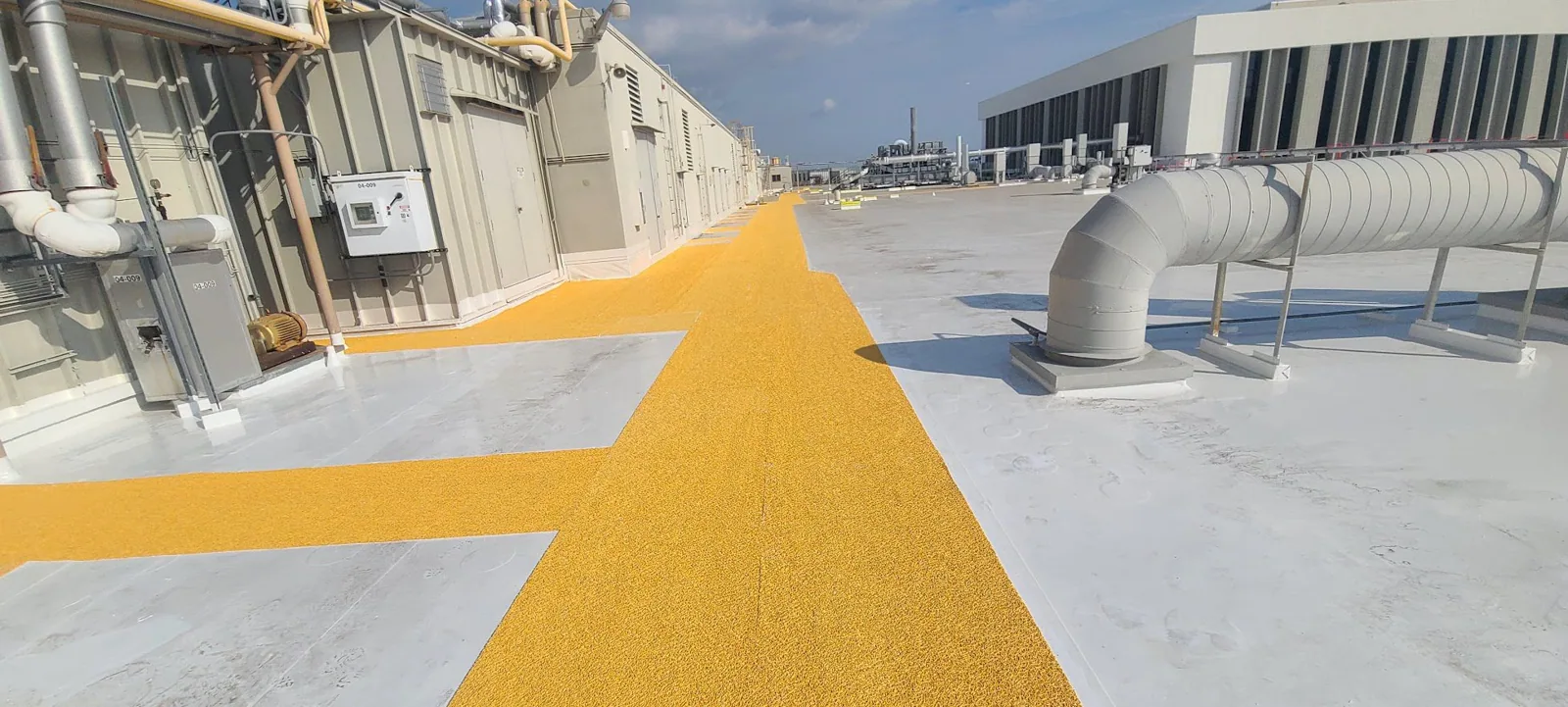
A pressure washer takes the roof down to clean substrate. Open seams, flashings and punctures get repaired, wet insulation comes out and loose fasteners are reseated. Primer goes on where adhesion needs it. The base coat follows, with reinforcing fabric bedded into seams, laps and penetrations. The second coat builds to the target thickness, a gauge confirms it and photographs record each stage. Walk pads mark the traffic routes.
The result is a continuous surface. The file that follows holds the thickness readings, the weather on application days and the product data. Price follows area, prep, repairs, number of penetrations and access. Compare it to a coating restoration alternative and to a replacement.
Match Silicone to Sherman Buildings
Silicone suits low-slope roofs with ponding, old metal roofs and roofs where replacement is not yet needed. A low-slope roof that ponds at Progress Park, at North Texas Logistics Park or in Sherman fits that pattern. A metal roof retrofit often uses it to seal fasteners. A flat roof with long drainage runs benefits from it too. Foundation Business Park in Denison offers 3 to 20 acre parcels for manufacturing and distribution users, and the same logic applies there. A hospital or school roof can take silicone where a replacement would disrupt operations, because a coating can often be applied in less time and with less noise than a tear-off.
Ask What the Record Shows
What the owner keeps: the adhesion test results, the moisture maps, the thickness readings, the weather logs and the dates for the next inspection and recoat. For a lower-cost option on well-drained roofs, compare acrylic roof coatings.
Commercial Roofing Questions
Can silicone go over any roof?
No. Adhesion depends on the surface. A test patch proves it.
Does silicone handle standing water?
Better than most coatings. It keeps its bond under ponding.
Why does silicone hold dirt?
Its surface is slightly tacky. A wash restores reflectivity.
How thick should it be?
The scope sets a target in mils. A gauge confirms it.
Will a coating stop a leak?
It seals small defects. It cannot dry wet insulation or fix a failed seam.
Send the Address and the Leak History
Send the building address and any leak history. We will walk the roof with you and explain what the readings show about adhesion and moisture.
Related Roofing Work
Roof Coating Restoration
Commercial roof coating restoration in Sherman, TX: moisture scans, adhesion tests, seam prep and thickness checks that extend the life of a sound roof.
Commercial Roof Replacement
Full tear-off and replacement of low-slope and metal commercial roofs in Sherman, TX, planned around moisture findings, heat cycling and North Texas hail.
Progress Park
Commercial roofing in Progress Park, Sherman, TX: scans, seam repair and recovers for food, beverage and metals plants, with baseline surveys for new buildings.
Commercial Roofing at North Texas Logistics Park near Sherman, TX
Commercial roofing at North Texas Logistics Park near Sherman, TX: ponding control, wide-span roof scans, dock-friendly repairs and storm checks for flat roofs.