
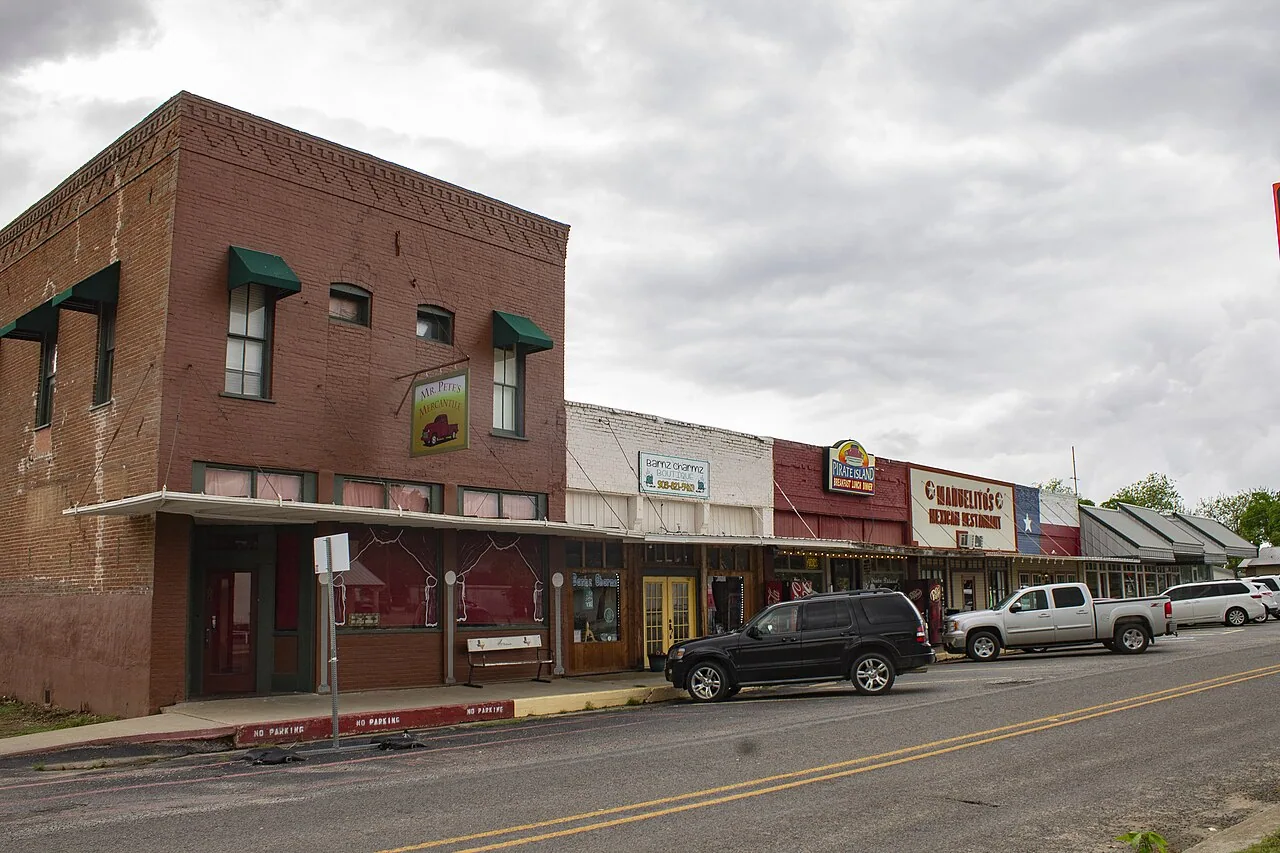
Commercial Roofing in Collinsville, TX
Commercial roofing in Collinsville, TX along US 377: moisture scans, core samples, and repairs or replacements for school and small-business roofs.
Water finds the lowest weak point in a roof and follows it. It moves along the deck, down a fastener, into a wall. The stain appears far from the entry. In Collinsville, TX, we trace that path before we quote any repair. The trace decides the scope.
Collinsville sits in southwestern Grayson County with US 377 on its west side, about 7 miles south of Whitesboro. It had 1,866 residents in 2020, up from 1,624 in 2010. A town this size has a few commercial roofs, and each one carries real weight for its owner. A small mistake on one roof is a large part of a small budget.
Trace the Entry Point
We begin inside. We note where the stain sits and how big it is. Then we go up and mark the roof directly above, plus a ring around it. Every penetration in that ring gets checked. So do the seams, the drain, the wall flashing and any rooftop equipment.
Next comes a moisture scan. It shows wet insulation as a cool or damp patch. We take a core sample from the center of any large patch. The core shows the layers and the wetness. It tells us if the water is new or has soaked in for years. That answer sets the repair. When the owner wants every wet area mapped, an infrared moisture survey scans the whole roof in one pass.
Then we sort the findings. Some defects are the entry point. Others are old and dry. We mark each one. Entry points get repaired first. Old damage gets watched. The owner sees a short list with prices. No item appears without a photograph and a location on the roof plan.
Check the School Building First
Collinsville High School was rebuilt in 1995, and the original academy dates to 1904. Those dates tell us about a school, not about a roof. Roofs are replaced on their own schedule. Still, a public school building is a type of owner we serve, and the questions are the same: what is the membrane, how old is it, and what does the next summer allow?
School work follows the calendar. Summer break gives the widest window. Tear-off is loud and dusty, so it waits for empty halls. During the term, we make repairs from the roof side only. A school roofing plan names the phases, the noise hours and the safe routes for students and staff. It also lists the records a district keeps for each roof.
A school roof carries extra equipment. Exhaust fans, air handlers and kitchen vents all pierce the membrane. Each opening is a flashing that can fail. We list every penetration and mark its condition. Sealant that has split gets replaced. Boots that have cracked get swapped. These are small jobs. Left alone, they become the leaks that stop a classroom.
Plan the Site Along US 377
US 377 runs along the west side of town. Roof work along a highway needs a delivery plan. Trucks must pull off without blocking the road. A lift needs firm ground. Debris needs a place to go. We confirm these points with the owner before the first load arrives.
Small commercial buildings often have tight lots. We split deliveries into smaller loads when needed. We hoist rolled membrane and insulation instead of carrying it. We keep sharp debris off the ground near customers. Parking stays open where the layout allows it. An occupied building reroofing schedule records each of these steps.
Hours matter on a commercial street. Customers arrive in the morning and at midday. We start early, finish the loud work before lunch and leave the afternoon for cleanup and sweeping. A magnet sweep covers the lot at the end of each day. Nails and screws on a parking surface are a real cost to a business owner, so we treat the sweep as part of the job.
Count the Weather Load
Sherman, to the east, has seen 113 F and minus 3 F, and a membrane in Collinsville moves with that swing. Seams stretch, flashing pulls and sealant dries and splits. We look for those signs at laps, curbs and wall joints.
Ice is the other load. The December 2013 sleet laid 4 to 5 inches of ice over the Sherman and Denison area, and ice blocks drains while water backs up behind it. A snow and ice roof damage repair starts with drain clearing and a check for crushed insulation under the load.
Thermal movement is slow. A roof that looks fine in April may show a split by September, so we record seams and flashing at each visit and the change becomes visible. A seam that has opened an eighth of an inch since the last visit is a repair now. One that has not moved is a watch item.
Inspect After Hail and Wind
On April 3, 2014 the weather service logged dime stones north of Sadler and penny stones near Luella. Small hail still bruises some membranes. A bruise does not leak at once. The fiber or the film cracks below the surface. Water enters later. We scan after any hail report, even small.
Wind starts at the edges. Low pressure forms at corners and along the perimeter. A loose edge metal joint opens the membrane. We pull-test the edge, check the fasteners and look for lifted laps. If damage exists, we photograph it before any repair. That record supports an insurance claim.
Ponding follows storms. A low spot holds water for days. The water adds weight and speeds membrane wear. We mark any area that stays wet 48 hours after rain. Some ponds need a drain adjustment. Others need tapered insulation. We price both so the owner can choose.
Choose Repair or Replacement
We give the owner both prices. The first covers the repair. The second covers replacement. A short note lists what each includes and what it assumes. A dry roof with isolated defects points to repair. Wide wet areas and patches that keep coming back point to replacement.
Before we price a commercial roof replacement, we ask the town what it requires. A property owner who also holds buildings in Tioga or Whitesboro receives one scope format across them.
Records close the loop. Each visit produces dated photographs, the moisture map and the scope. They go to the owner in one file. A lender, buyer or insurer can read them later and see what was done.
Commercial Roofing Questions
Why is the stain far from the leak?
Water runs along the deck and insulation before it drops. The stain marks where it came out, not where it went in. We trace the path from the stain back up the slope. A moisture scan confirms it.
Can a school roof be repaired during the term?
Small repairs can, from the roof side. We keep noise low and routes clear. Larger work waits for summer so tear-off happens with empty halls.
What does a core sample show?
It shows each layer of the roof. It shows how wet the insulation is and how well the roof is attached. We patch the hole and log its location.
Does small hail matter?
It can. Dime-size hail has fallen in Grayson County, and some membranes bruise at that size. A scan finds the damage that the eye misses.
How do you handle a tight lot on US 377?
We agree on truck placement before delivery. Loads are split if needed. Material goes up by hoist, and debris leaves by chute to one marked point.
Send us your Collinsville building address
Send the building address and any past leak history. We will walk the roof and explain what the readings show.
Related Roofing Work
Infrared Moisture Survey
Infrared and core-cut moisture surveys for commercial roofs in Sherman, TX, mapping wet insulation so repair and replacement dollars go where water sits.
School Roofing
School roofing in Sherman, TX: moisture scans, seam repair and phased replacement planned around classes, with storm and freeze damage found early.
Occupied Building Reroofing
Reroofing Sherman, TX hospitals, schools, plants and offices while they stay open, with sectioned tear-off, dust and noise control and daily closure.
Snow and Ice Roof Damage Repair
Repair of snow load and ice damage on commercial roofs in Sherman, TX: drain blockage, frozen seams, ponding, crushed insulation and a documented repair scope.