
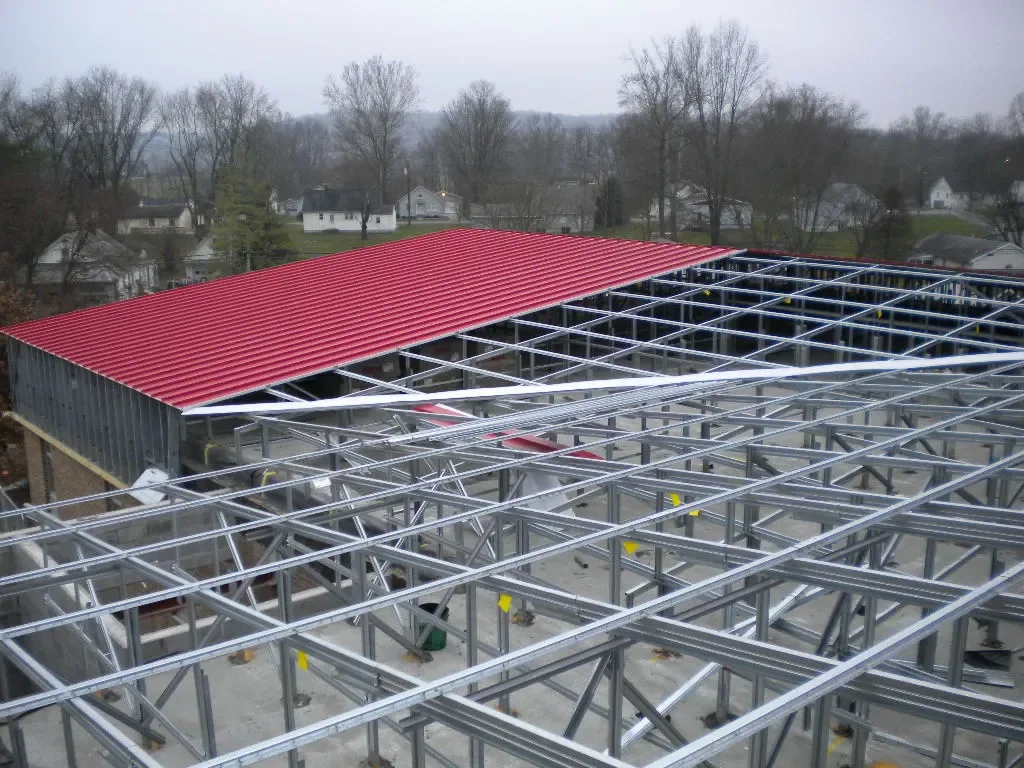
Metal Roof Retrofit in Sherman, TX
Retrofitting and restoring exposed-fastener metal roofs in Sherman, TX: why screws back out, how panels leak, and how we re-fasten, reseal, coat or cover them.
An exposed-fastener metal roof is held down by screws that pass through the flat of the panel. Every screw is a hole with a rubber washer. Every washer ages. Sherman bakes at 113 F and drops to -3 F, and the panel moves under those screws all the while. The screw holes elongate. The washers crack. The screws back out a little. Water follows the threads. That is the main mechanism of leaks on this roof, and it is why a retrofit usually begins with fasteners.
We start there. Then we test. Then we match the fix to the damage.
Retrofitting means working with the roof you have. It may mean re-screwing. It may mean sealing and coating. It may mean covering the old panels with a new system. Each path has a cost and a limit, and the right one depends on the condition of the panels and the structure under them. The decision is not about preference. It is about what the readings say, what the budget allows and how long the building will stay in use.
Know What an Exposed-Fastener Roof Is Made Of
The panels are corrugated or ribbed steel, often with a painted or galvanized finish. They lap at the sides. Screws with neoprene or EPDM washers secure them to purlins. Ridge caps and trim cover the ends. Sealant tape sits in the laps. The system is simple and low cost. It is also maintenance heavy. Every screw is a point to watch.
The structure is often steel framing with open purlins. Insulation may be a blanket below. Condensation can drip from cold panels. That drip looks like a leak. We check dew point conditions before we blame the roof.
Gauge matters. Thin panels corrode through faster and hold screws poorly. Thicker panels hold fasteners better and take repairs. We measure panel thickness with a gauge where we can reach an edge. Galvanized and painted finishes wear at different rates. A finish that is chalking still protects. A finish that is gone leaves bare steel, and bare steel rusts.
Watch for How Exposed-Fastener Roofs Fail
Screws back out. Holes elongate and no longer grip. Washers crack and let water in. Panels expand and contract, which works the screws loose. Laps open. Sealant tape dries. Panels rust at cut edges and at scratches. Fastener heads rust. Gutters and trim corrode. Panels can thin from corrosion until a screw pulls through.
Penetrations leak next. Pipe boots crack. Vents loosen. Skylights, if present, lose their seals. Roof-mounted units may have been added over the years, each with its own holes. We list every penetration and its condition. A boot made of rubber ages in sun. A metal boot with sealant ages as the sealant dries. Either needs checking.
Wind adds uplift. A panel held by loose screws can lift and flap. Howe's high school was damaged by an EF1 tornado in April 2016, and Sherwood Shores took an EF2 in March 2022. Hail dents thin panels and cracks coating. The June 8, 2025 storm dropped stones of 1.25 inches northwest of Denison. After such events we look at screw heads, edges and panel fatigue.
Test Screws, Panels and Substrate
We check screw tightness on a sample. We note backed-out screws, stripped holes and cracked washers. We press panels at laps to find movement. We check for rust at edges and at fasteners. We look at the purlins from below, where we can. Rusted or bent purlins hold screws poorly. We scan for moisture on roofs with insulation. We note condensation marks inside.
The report counts the problem screws, the problem laps and the corroded areas. It estimates how much of the roof can be saved by re-fastening and how much needs new panels.
Safety shapes the work. Old metal roofs can be slippery, and corroded panels can fail underfoot. Crews walk on purlin lines and use fall protection. Skylights and rusted panels are covered or marked. A roof that cannot be walked safely is inspected from a lift or by drone, and the plan says so.
Choose Among Re-Fasten, Seal, Coat and Cover
Re-fastening means replacing screws with larger ones in sound holes, or in new holes between the old. New washers are fitted. Sealing means new tape in laps and new sealant at trim and penetrations. Coating means a liquid-applied system, often silicone or acrylic, that seals fasteners and laps and reflects sun. Covering means a new roof over the old one, usually a new metal system on top-hat framing or a spray foam system.
Each path suits a condition. If panels are sound, re-fastening and sealing may suffice. If panels are sound but the finish is gone, a coating adds years. If panels are thin or rusted, a cover or replacement is better. A silicone coating and an acrylic coating each seal fasteners differently.
Count Heat Cycling and Ice Into the Plan
Heat cycling is the engine of fastener back-out. A steel panel can change length by a fraction of an inch each day. Over thousands of cycles, the movement works every screw. White coatings reduce surface temperature and slow the cycle. In winter, roofs in the Sherman and Denison area carried 4 to 5 inches of ice after the December 2013 sleet and freezing rain. Ice and snow slide on metal and tear gutters and trim. Snow in January 2025 piled to 9 to 11 inches in isolated Grayson County spots. After winter events we check eaves, gutters and snow guards.
Cost follows area, panel condition, access, the number of penetrations and the path chosen. Re-fastening costs the least and lasts the least. A coating costs more and adds years if the panels are sound. A cover system costs the most and resets the clock. The scope prices each path so the owner can compare them by cost per remaining year.
Match Retrofit to Sherman Buildings
Exposed-fastener roofs are common on industrial buildings, storage and agricultural structures. Sherman's industrial base includes plants such as Tyson, Coherent, Emerson, Eaton B-Line and Presco. A metal-clad plant among them, or a warehouse roof with a metal skin, becomes a candidate once the screws have backed out. The same check applies on any older metal building in Sherman or Denison. A building with sensitive contents needs interior protection while the work is done. Drilling screws above stored goods can drop metal shavings, so we lay protection and sweep as we go. Food plants, machine shops and storage buildings each have rules, and we ask for them before we start.
Ask What the Record Shows
The owner gets the file. Screw counts. Lap checks. Corrosion notes. The chosen path and its price. The next visit dates. For a newer metal system, compare standing seam metal roofing.
Commercial Roofing Questions
Why do screws back out?
Panels move with temperature. The movement works the screw until the hole is too big.
Can I just add sealant?
Sealant helps for a while. It does not fix a loose screw or a corroded panel, and sealant over a loose screw hides the movement that will open the seal again.
Is a coating a good option?
If the panels are sound, a coating can seal fasteners and laps and reflect sun.
What is a cover system?
A new roof installed over the old one, usually on framing that spaces it above the old panels.
Does re-fastening last?
With larger screws in sound holes and new washers, it can last years. Corroded panels will not hold, and the report says which panels are which, so the owner can see how much of the roof the fix can save.
Send the Address and the Leak History
Send the building address and any leak history. We will walk the roof with you and explain what the readings show about the screws, the laps and the panels.
Related Roofing Work
Silicone Roof Coatings
Silicone roof coatings in Sherman, TX: how the liquid membrane cures, why it tolerates ponding, where it fails, and how we test, prepare and apply it.
Acrylic Roof Coatings
Acrylic roof coatings in Sherman, TX: how water-based reflective films cure, where they fail, and how we test, clean and apply them on well-drained roofs.
Warehouse Roofing
Warehouse roofing in Sherman, TX: how long flat roofs drain and move, where they leak, and how we inspect, repair, coat and replace them in use.
Sherman
Commercial roofing in Sherman, TX for fabs, food plants, hospitals and the college: moisture scans, seam repair, recovers and storm checks on flat roofs.