
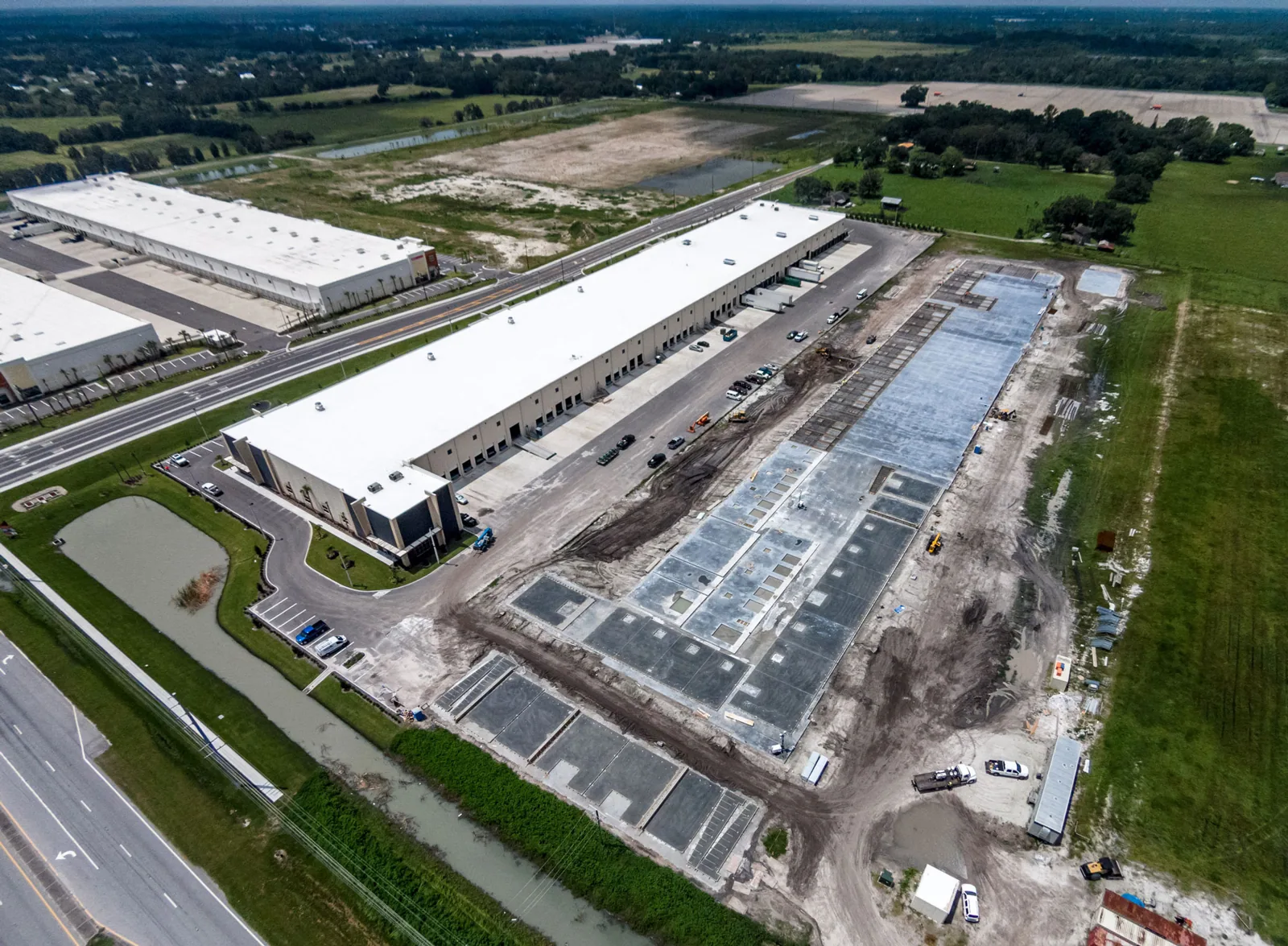
Distribution Center Roofing in Sherman, TX
Distribution and fulfillment center roofing in Sherman, TX: how very large flat roofs drain and leak, and how we inspect and repair them around dock schedules.
A distribution center roof is vast. Many run to hundreds of thousands of square feet, with a handful of drain sumps. Rows of dock doors along the edge. The same few mechanisms govern it, only larger. Water has far to go. Heat has far to work. A roof this long grows and shrinks by an inch or more across a day between the extremes Sherman has recorded, 113 F and -3 F. Joints and walls absorb the movement, and seams take the strain. The seams are where the inspection begins, and because the building runs on a schedule, the repair plan works around the trucks. A manufacturing plant roof adds process heat and exhaust to the picture, but the dock-and-drainage logic carries across.
Owners of these buildings care about two things: uptime and inventory. A roof problem threatens both. A good roof program prevents the first and protects the second. It is built on regular visits, clear drains and quick response to the first sign of water.
Know What a Distribution Center Roof Is Made Of
The structure is usually a steel frame or concrete tilt wall with a steel deck. Insulation board sits on the deck. The membrane is often a white single-ply, such as TPO or PVC, mechanically attached or adhered. Some buildings use metal. Drainage is by interior drains or perimeter scuppers. Parapets rise at the edges. Roof hatches, smoke vents and rooftop units sit in the field. Fire-protection and electrical lines may cross the roof.
Docks run along one or more walls. Trailers back to the doors. The roof edge above them is a place where leaks hit people and product. Exhaust from trailers and forklifts settles on the roof. Refrigerated sections add heat and moisture. Each feature goes on the sketch.
Fire-protection piping deserves its own note. Sprinkler mains and risers pass through the roof. Each passage is flashed. A cracked flashing at a riser leaks into a sprinkler room, and corroded pipes make the problem worse. We photograph each passage and note the condition of the seal and the pipe. We do not touch the system. We tell the owner what to hand to the fire-protection contractor.
Watch for How These Roofs Fail
Drains fail first. Debris and standing water block them. Ponds form over seams. Seams soften and open. Flashings at parapets crack where the building moves. Fasteners back out. Rooftop units leak at curbs. Hatches and vents leak at frames. Wind lifts perimeter edges. Foot traffic wears routes to units.
Size adds its own problem. On a roof this large, a small problem is hard to see. A stain on the floor may be a hundred feet from the source. Water follows the deck and the insulation. We trace it with infrared and a meter, then confirm with a core.
Roof size also hides slow leaks. A small leak into insulation spreads. It soaks the board. It rusts the deck. It may show nowhere inside for months. By the time a stain appears, a large area may be wet. That is the case for routine scans. A scan every year or two catches wet areas while they are small, and the repair is a patch instead of a replacement.
Test With a Drone, a Scan and a Probe
A drone pass maps the roof in minutes. It shows ponds, stains, equipment and obvious damage. A walk follows, guided by the images. We probe seams, check flashings and clear drains. We scan for moisture. We cut cores at suspect spots. Large roofs justify a grid of readings. The grid is numbered and mapped, so a repeat scan next year can be compared, and a second drone pass after repairs shows whether the ponds have closed.
The report ranks findings. Items that leak now. Items that will fail within a budget cycle. Items to watch. The ranking helps an operator plan around peak season and downtime.
Access for inspection is a plan item. A big roof has hatches, ladders and sometimes a lift. We check that the access is safe and that the fall-protection points are in place. If they are not, we say so. The same access serves later visits, so improving it once pays back every year.
Count Hail, Wind and Winter Into the Plan
Grayson County has a hail record. Stones of 1.25 inches were measured northwest of Denison on June 8, 2025, and the April 2014 hail north of Sadler ran dime-size. Hail bruises membranes and crushes insulation across a big roof. Wind matters too. Spring brings North Texas its tornado peak, and an EF1 came down southwest of Sherman the day of that hail. A long roof has a long perimeter, so edge metal gets a thorough check.
Winter adds ice and snow too: 4 to 5 inches of ice stood on the Sherman and Denison area after December 2013, and January 2025 snow hit 9 to 11 inches at isolated Grayson County spots. Ponds freeze. Drains freeze. Weight rises. After winter events we check drains and low spots first.
Spring storms bring debris. Loose items from nearby lots, trailers parked with doors open and unsecured materials can blow onto a roof. A visit after a storm looks for strikes, tears and blocked drains. The visit is short, and the photographs make a difference to an insurer.
Build the Repair Step by Step
Clear drains. Clean and repair seams. Reflash curbs and walls. Reset edge metal. Cut out wet insulation and replace it. Patch punctures. Probe and photograph each repair. Larger problems call for section replacement. A recover may add a new sheet over a dry roof. A replacement removes the old system.
Dock operations shape the plan. Sections above active doors are done at quiet hours. Material is staged away from truck paths. Cranes are placed outside turning areas. The plan names a contact on each shift, and the crew radios the dock supervisor before and after any lift. Price follows area, penetrations, deck condition, access and the length of the dry-in window.
Match Distribution Roofs to Sherman Corridors
Sherman sits at the crossing of US 75 and US 82, about an hour north of DFW. North Texas Logistics Park covers about 260 acres on the Oklahoma border with two access points off US 75 and frontage on US 75 and US 69. Foundation Business Park in Denison fronts State Highway 91. BNSF rail serves Sherman industrial sites with direct spurs. A warehouse roof is the smaller cousin of the distribution roof.
Ask What the Record Shows
Commercial Roofing Questions
How do you inspect a roof this large?
With a drone first, then a guided walk, a probe and a grid of moisture readings.
Can trucks keep running during repairs?
Usually. Work above docks is staged for quiet hours and traffic paths stay clear.
Why do stains appear far from the leak?
Water travels along the deck and under the membrane before it drips.
How often should a large roof be checked?
Twice a year, plus after hail or wind events, with the dates set ahead of peak season so drains are clear before the busiest months.
What drives replacement cost?
Area, penetrations, deck condition, access and the length of the dry-in window, with each item priced as its own line so the operator can see where the money goes and where a phasing change would save it.
Send the Address and the Leak History
Send the building address and any leak history. We will walk the roof with you and explain what the readings show about the seams, the drains and the insulation.
Related Roofing Work
Manufacturing Plant Roofing
Manufacturing plant roofing in Sherman, TX: how process heat, exhaust and equipment load roofs, where plant roofs leak, and how we inspect and repair them.
Roof Recover and Overlay Systems
Recover a sound commercial roof in Sherman, TX with a new membrane over dry insulation, after core samples and a moisture scan show the old roof can stay.
Commercial Roof Replacement
Full tear-off and replacement of low-slope and metal commercial roofs in Sherman, TX, planned around moisture findings, heat cycling and North Texas hail.
Commercial Roofing at North Texas Logistics Park near Sherman, TX
Commercial roofing at North Texas Logistics Park near Sherman, TX: ponding control, wide-span roof scans, dock-friendly repairs and storm checks for flat roofs.