Commercial Roofing in Pottsboro, TX
Commercial roofing in Pottsboro, TX: fire-aware roof assemblies, post-fire make-safe work, and moisture scans and repairs for storefront and highway roofs.
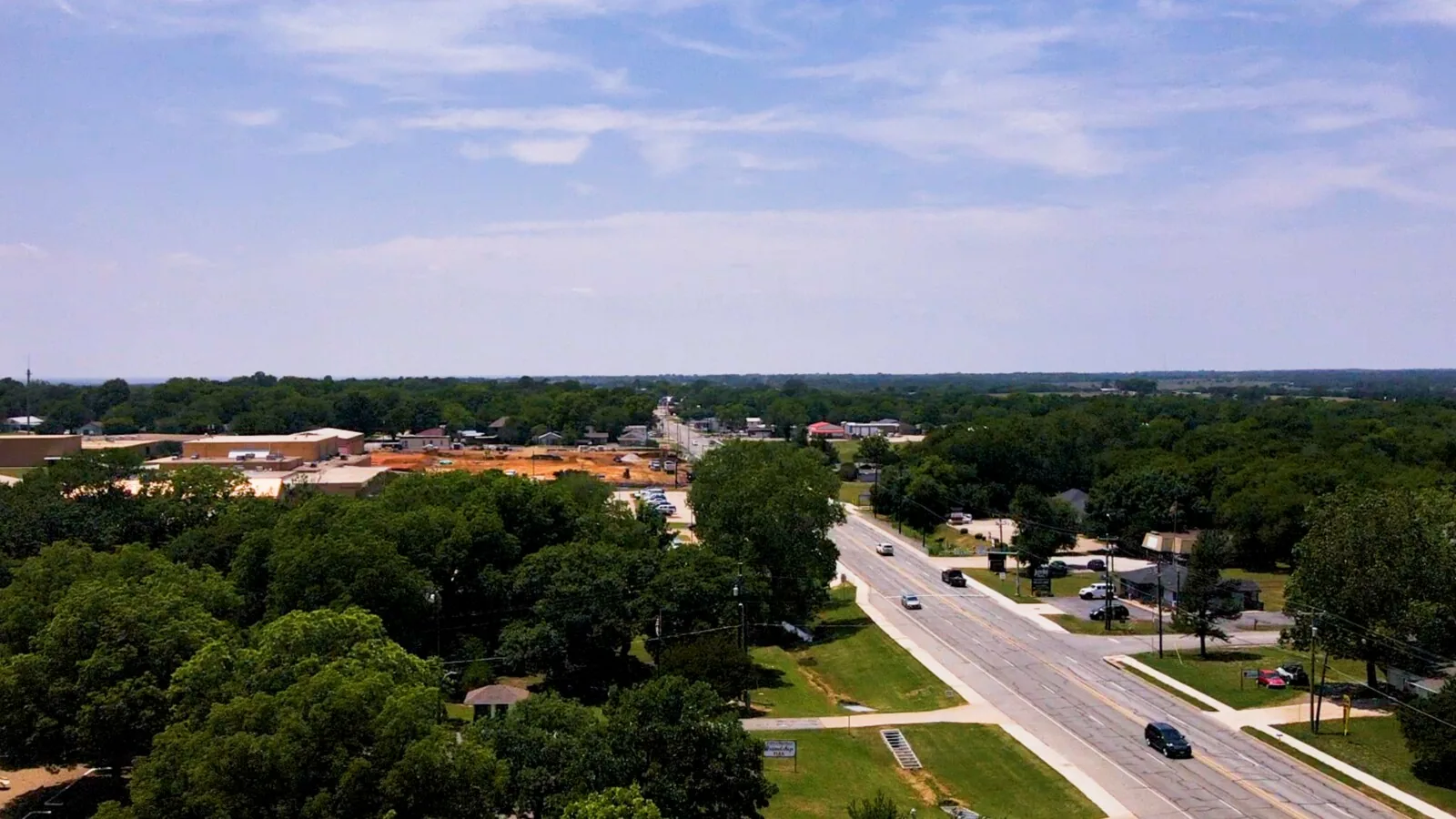
Fire is the oldest roof test Pottsboro knows. Fires destroyed much of its business district in 1890, 1902, 1923 and 1924. A roof assembly decides how a fire reaches a building: whether embers catch on the surface, whether heat passes through to the deck, and whether the insulation feeds the flame. Pottsboro, TX sits in northern Grayson County on Highway 289 and FM 120, about 8 miles west of Denison, and its commercial roofs deserve a fire-aware look.
We check the layers, the equipment and the wiring above and below the roof. Then we match the repair to what the readings show.
Understand How Fire Reaches a Roof
A roof meets fire three ways. Embers land on the surface. Heat from below comes up through the deck. Flame from a rooftop fault spreads across the membrane. Each path calls for a different defense.
Surface defense is the roof covering. Some single-ply sheets and coatings carry fire ratings that a plain membrane lacks. Deck defense is a cover board or a layer of gypsum that slows heat. Equipment defense is clear space around units and clean wiring.
We read the label on the system, not the memory of the owner. A roof with several overlays may carry a rating on paper that no longer holds in the field. A core sample shows the layers, and the layers tell the real story. The same layer-by-layer reading drives fire damage roof repair.
Coatings change the picture too. A reflective coating over an old membrane may carry its own fire classification, or it may lower the rating of what lies under it. Product data sheets settle the question, and we read them before we recommend any coating over an existing sheet.
Check Rooftop Equipment and Wiring
Rooftop equipment is a common ignition point. A failed motor, a loose lug or a heating cable under a worn insulation jacket can spark. Trash and leaves collect around units and add fuel.
We walk the roof with a simple list. Are units clear of debris? Are conduits supported and sealed? Do cables lie on the membrane or on stands? Are fuel lines and gas feeds protected from foot traffic? We note anything unsafe for the electrician or mechanical contractor and mark the spot on the roof plan.
Membrane near a unit also tells a story. Dark streaks, brittle patches and blisters can point to heat or leaking fluid. We photograph them and compare with earlier visits when records exist.
Grease from restaurant exhaust is its own hazard. It collects on the roof around the fan, soaks into the membrane and burns hot. A grease pan under the fan, emptied on a schedule, protects the sheet. Where grease has already stained the roof, we check for softening and swelling, which signal that the membrane has begun to fail.
Respond After a Fire Without Making It Worse
After a fire, the first job is safety. A roof that has burned may have a weak deck, hidden charring or damaged supports. No one should walk it until someone has checked. We look from a ladder or a lift first, then step onto sound sections only.
Water is the second problem. Fire crews soak the building, and the water runs into insulation and decks. Wet insulation does not dry in place. We seal the roof against rain with a temporary cover, then scan to find the wet zones.
Permanent repair follows the scan. Burned decking is replaced. Charred or wet insulation is removed. New layers are built back with the correct rating. Photos of every stage support an insurance claim. For related storm losses, roof insurance claim assistance follows the same record.
Smoke and soot deserve attention as well. They stain surfaces, and soot can hold moisture against the membrane. We wash and test suspect areas before deciding whether to repair or replace them. Salvageable sections stay, so the owner pays only for what the fire actually damaged.
Keep Storefront and Highway Roofs Sound
Highway 289 and FM 120 are the town's routes, and businesses along them carry a range of roof types. A low-slope roof over a storefront is a common case. It collects water at drains and scuppers, and it takes heat from the sun all afternoon.
We inspect drains first. A clogged drain holds water for days and speeds membrane wear. Then we check seams, flashings and walls. On a masonry storefront, mortar and coping often let water in before the membrane does.
If the owner plans a sale or a refinance, a roof condition report helps. It lists age, moisture, repairs and remaining life. Our roof condition reports are built to be read by a lender or a buyer.
Older storefronts often share a wall with a neighbor. Where a roof ends at a shared wall, the flashing carries the load of keeping two buildings separate. We check that termination closely, since water entering there can travel into the neighbor's space and create a dispute.
Weigh Hail, Wind and Ice
Pottsboro's 2020 population was 2,488, and its roofs meet the same regional weather as Sherman's, which has logged 113 F and -3 F. North Texas tornadoes bunch up in April and May, and a report from northwest of Denison on June 8, 2025, only a few miles east of here, measured half-dollar hail.
After wind we check edges and units. After hail we scan, then core. Hail bruises insulation without always splitting the membrane, so the eye alone misses it.
Ice adds weight. The December 2013 sleet laid a 4 to 5 inch layer over Sherman and Denison, and January 2025 brought more than 6 inches of snow along the Red River. Drains choked with ice hold water against the sheet. We clear them before winter.
Spring cleanup protects the roof. Leaves, seed pods and windblown trash collect at drains and behind curbs. A walk with a broom and a camera takes little time and prevents many service calls.
Pick the Repair That Fits the Reading
On a storefront or highway roof the choice follows the wet area. Dry insulation under a sound sheet leaves room for a repair or a coating, a tired sheet over a sound deck can take a recover, and wet board has to come out. We price from what the scan finds, and the town's permit rules are checked before any replacement is priced.
Pottsboro is 8 miles west of Denison. We reach it from Sherman and Denison, and we cover Gunter along the same Highway 289 route.
Timing follows weather and use. Dry air and moderate temperatures let a weld or an adhesive set, which is why midsummer heat and January cold change the plan, and any open section gets a temporary seal overnight.
Commercial Roofing Questions
Should a roof be checked after a small equipment fire?
Yes. Heat can char the deck and weaken the membrane without a visible hole. A scan and a few cores show the real extent.
What does a fire-rated roof assembly mean?
It means the layers together passed a standard test. Adding overlays can change the result. A core sample shows what the layers are today.
Why is wet insulation a problem after firefighting?
Wet board holds water and does not dry in place. It sags, corrodes fasteners and breeds mold. It must come out.
Does a storefront roof need drain checks?
Yes, twice a year. Clogged drains hold water for days and shorten membrane life.
What records help with an insurance claim after a fire?
Dated photos, a roof plan with damage marked, core results and a list of repairs. We prepare them as the work goes.
Send the Address and the Fire History
Send the building address and any fire, leak or repair history. We will walk the roof with you and explain what the readings show.
Related Roofing Work
Fire Damage Roof Repair
Fire damage roof repair in Sherman, TX: assess deck strength, melted membrane, wet insulation and smoke contamination, then rebuild the roof section by section.
Roof Insurance Claim Assistance
Documentation and coordination for commercial roof insurance claims in Sherman, TX: dated photos, moisture maps, test squares, scope lines and adjuster visits.
Roof Condition Reports
Written roof condition reports with photos for Sherman, TX buildings: probed seams, moisture readings, core samples and a ranked list of what to fix first.
Sherman
Commercial roofing in Sherman, TX for fabs, food plants, hospitals and the college: moisture scans, seam repair, recovers and storm checks on flat roofs.