
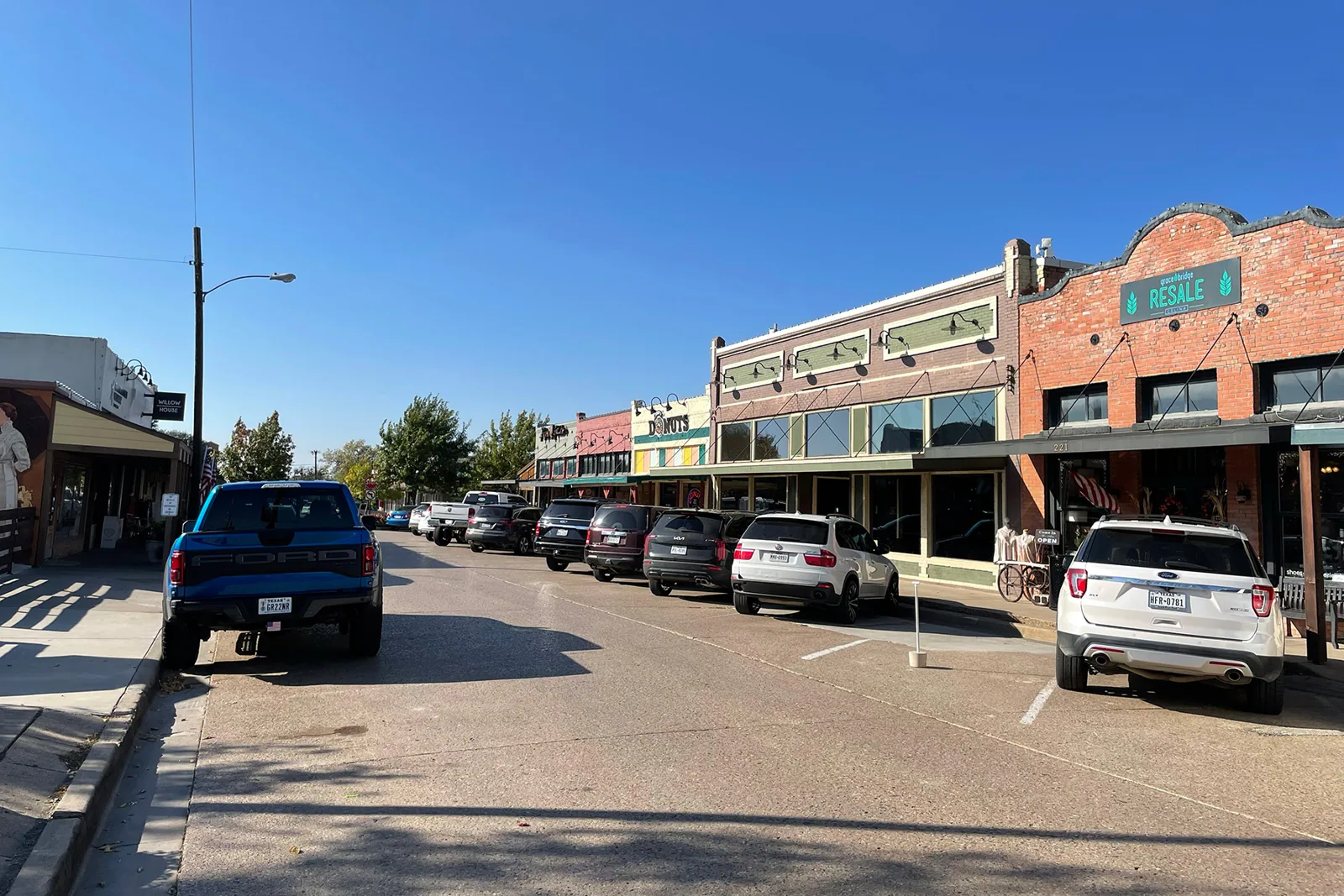
Commercial Roofing in Celina, TX
Commercial roofing in Celina, TX: first-year baseline scans, construction-damage repair, college and retail roof planning, and records that support warranties.
Fast building leaves little time for checking. Celina, TX grew from 16,739 people in 2020 to an estimated 64,427 in 2025, and it was named the fastest-growing city in the Dallas-Fort Worth area for 2019 to 2021. It straddles Collin and Denton counties on State Highway 289. Commercial roofs that go up at that pace meet their first trades before the first storm.
We read a Celina roof for faults that come from building quickly. Then we set a baseline the owner can use for years.
Set a Baseline in the First Year
A baseline scan reads a roof when it is new. It maps moisture, checks every seam and flashing and photographs every penetration. The result is a record of the roof as built.
That record has real uses. It shows a warranty reviewer what the roof looked like before a tenant added a unit. It shows a buyer what condition the roof is in. It shows a facility manager where to look when a stain appears.
We do the scan with a probe, a camera and a moisture meter. We number each finding and mark it on a plan. The owner receives a short list ranked by risk, plus a file for the building records.
Drainage is part of every baseline. We confirm that each drain bowl is clear, that overflow scuppers sit at the right height and that water has a path off every section. Where we find a dip, we mark it, since a pond on a new roof will deepen under its own weight.
Find Damage From the Construction Phase
Construction leaves marks. A dropped tool punctures a sheet. A ladder dents edge metal. A cable run crushes a seam. Debris blocks a drain. Sealant dries before it bonds. None of these leaks on day one.
They leak on day three hundred, after the sun has cooked the weak spot and the first heavy rain has found it. By then the damage is wider and the cause is harder to name.
So we look where trades work: around units, at walls, along cable paths and at drains. We compare the roof to its plan and flag every difference. Small punctures get patched. Loose flashings get re-fastened. Drains get cleared and photographed. Our commercial roof inspection routine is built to catch these early.
Sealant and adhesive timing matter in a fast schedule. A bead that skins before it bonds looks fine and leaks within a season. We press every visible bead and probe the weak ones. We also check that laps were rolled and welded at the right temperature, since a cold weld peels at the first hard heat.
Plan College Campus Roofs by the Calendar
Collin College opened its Celina campus in fall 2021. An education campus runs on terms, and roof work should follow. Large repairs belong in summer and in breaks. Small repairs can run during the term, with staging kept away from entrances and walkways.
We check drains, joints between sections, mechanical curbs and rooftop access. A campus that grows in phases adds new sections beside old ones. The joint between them moves more than the field, so it gets its own line on the plan.
A written record helps a facilities office. It shows what was found, what was fixed and what remains open. College and university roofing programs use the same file to plan budgets across several buildings.
Rooftop equipment on a campus runs hard. Air handlers cycle with class schedules, and condensate lines discharge near walkways. We follow each line and confirm it ends on a splash pad or a drain, not on bare membrane.
Check Retail and Office Roofs Along Highway 289
Highway 289 carries commercial growth through Celina. A strip of retail or office space often shares one roof across several tenants. Each tenant adds a rooftop unit, a vent or a sign. Each addition cuts the membrane.
We map every penetration and mark the ones added after the roof was built. Later additions often receive the least careful flashing. We check curbs, boots and sealant on each, and we follow condensate lines to their end. A line that dumps on the sheet wears a hole.
Drainage on long roofs needs care. Water travels toward drains or scuppers, and any dip holds a pond. We measure slope with a level and log low spots. A shopping center roof with many tenants gets a curb-by-curb review.
Foot traffic from maintenance crews is another factor. Technicians cross the roof to reach units, and bare membrane wears under their boots. A set of walkway pads protects the sheet and costs little.
Keep Records That Hold Up in a Sale
Buildings in a city this size change owners and tenants, and buyers and lenders ask about roofs. A dated file answers in minutes: moisture maps, core results, repair photos and open items.
The file also helps when a claim arises. Insurance carriers want to know what a roof looked like before a storm. A baseline gives that answer. A set of repair photos shows what was fixed afterward.
The file should list what was left alone as well as what was repaired. A coated bay, a patched seam and an untouched wing each get a dated line. Next year's scan then starts from facts.
Weigh Regional Storms and Winter
Celina lies in Collin and Denton counties, south of the Grayson County line. Westminster, to the northeast in Collin County, took an F3 tornado on May 9, 2006, and North Texas tornadoes crowd into April and May. The Sherman thermometer has logged 113 F and -3 F, and a Celina roof stretches through a similar range.
On a building this new the edge metal is held by fresh fasteners, and one loose section can run under a gust. We pull on the coping and drip edge at the first-year visit and once more after any strong storm. When hail is reported, a moisture scan comes first and cores follow, because bruised insulation can sit under a sheet that looks whole. That record supports hail damage repair and any claim.
Snow and ice are the lighter load this far south, but drains and scuppers should still be open before the first freeze, especially on roofs that have never seen one.
Pick the Right Scope for Each Roof
Pick the scope from the readings. A roof that scans dry and has a sound sheet is a repair candidate, a worn sheet on a good deck allows a recover, and wet board is cut out. On a fast-built roof most scope questions trace back to what the trades did in the first year, so those fixes are priced apart from any larger work, and we ask the city what it requires before we price a replacement.
Celina lies about 10 miles south of Gunter on Highway 289, south of Sherman. Weston, 8 miles to its east, and Anna belong to the same service area, and we reach all of them from Sherman.
Commercial Roofing Questions
Why scan a roof that was just finished?
Trades damage new roofs in the first months. A scan finds it cheaply and creates a dated record.
What is the most common construction-phase fault?
Punctures and loose flashing near units and walls. Both leak later, not on the first day.
Can a campus roof be repaired during the term?
Small repairs, yes. Large work waits for breaks. Staging stays clear of entrances.
How do I trace a leak on a shared strip roof?
Map interior stains, then walk the roof with that map. Check curbs added after the build first.
What helps a roof sale go smoothly?
A dated file with moisture maps, cores and repair photos. Buyers and lenders read it in minutes.
Send the Address and the Build Date
Send the building address, the year it was finished and any leak history. We will walk the roof with you and explain what the readings show.
Related Roofing Work
Commercial Roof Inspection
Hands-on commercial roof inspections in Sherman, TX, with photographed findings, moisture checks and a ranked list of repairs and budget timing for owners.
College and University Roofing
College and university roofing in Sherman, TX: roof records for mixed-age campus buildings, summer reroofing windows and storm checks before fall term.
Shopping Center Roofing
Shopping center and strip retail roofing in Sherman, TX: shared-roof leak tracing, rooftop unit curbs and phased reroofing that keeps every tenant open.
Hail Damage Roof Repair
Hail damage roof repair in Sherman, TX: find bruises, fractured membranes and dented metal with moisture scans and core samples, then repair and document.